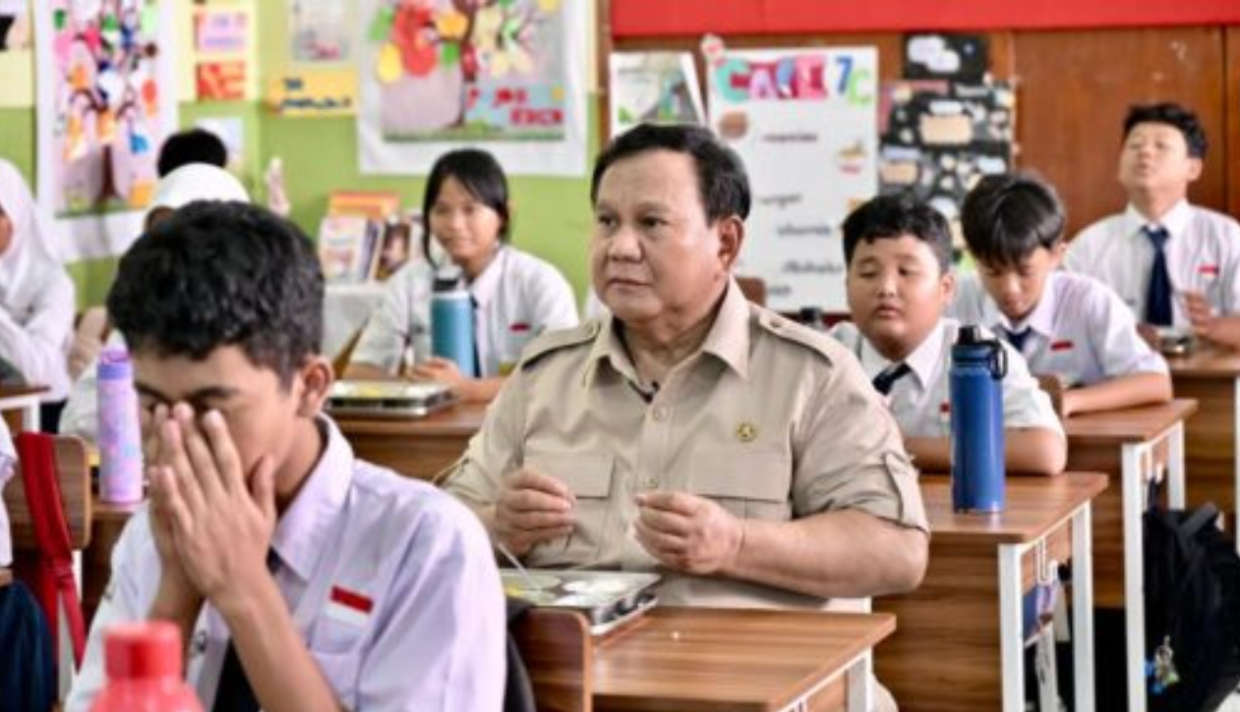
President Prabowo Subianto's signature free nutritious meal initiative has become a focal point of intense scrutiny in Indonesia, with multiple stakeholders now demanding a comprehensive review and potential suspension. The programme, which expanded to cover 61 million students and pregnant women by March this year, is confronting a perfect storm of implementation failures, legal challenges and public pressure that threatens its political future despite government determination to keep it running.
The National Commission on Human Rights has formally documented what it describes as systematic violations across the programme's operations. Komnas HAM commissioner Pramono Ubaid Tanthowi articulated serious concerns about inadequate implementation, opacity in decision-making processes, documented cases of food poisoning among beneficiaries, and inadequate systems for responding to health crises. The commission went further, asserting that these failures constitute breaches of fundamental human rights, particularly affecting vulnerable populations—children and pregnant women—who depend on the scheme. The oversight body emphasised that the programme's rights violations extend beyond nutritional shortfalls to encompass denials of information access and remedies for poisoning victims.
The scope and ambition of the programme, originally designed to combat malnutrition across the archipelago, has become a liability rather than an asset. Komnas HAM argues that the relentless push to maximise beneficiary numbers has fundamentally distorted the initiative's purpose, causing quality and safety to deteriorate. The commission recommends strategic refocusing—concentrating resources on genuinely vulnerable populations in remote and geographically underserved areas where malnutrition rates remain acute. This represents a tacit acknowledgement that universal expansion, while politically attractive, may be operationally unsustainable given current institutional capacity.
Student mobilisation has provided crucial political momentum to the reform agenda. University campuses across Indonesia have witnessed coordinated protest movements demanding governmental action to halt the programme, reflecting growing youth frustration with implementation failures. These demonstrations carry particular symbolic weight because students represent a constituency with institutional platforms and media visibility, capable of shaping public narrative around the initiative.
The legal dimension presents perhaps the most serious challenge to programme continuity. Seven separate petitions have reached Indonesia's Constitutional Court, filed by teachers' unions, civil society coalitions and student organisations. These petitions attack the fundamental constitutional validity of allocating Rp 335 trillion from the 2026 state budget to the meals programme, particularly objecting to the diversion of education sector funds. This framing weaponises Indonesia's constitutional commitment that twenty percent of state expenditure must fund education, arguing that the free meals budget partially cannibalises resources theoretically protected for teacher remuneration and educational infrastructure.
During recent Constitutional Court hearings, a teacher's emotional testimony underscored the perverse consequences of the current budgetary arrangement. Despite constitutional protections supposedly guaranteeing improved teacher compensation, many educators remain inadequately remunerated while unprecedented sums flow toward meal preparation. This narrative—pitting impoverished teachers against an expansive new programme—has proven politically resonant, positioning the initiative not as progressive social policy but as evidence of misallocated priorities. Edy Kurniawan Wahid, representing petitioners through the Indonesian Legal Aid Foundation, forcefully argued that the programme's legal foundations are sufficiently compromised that implementation should cease pending court adjudication.
Muhammadiyah, one of Indonesia's largest Islamic organisations, has joined the opposition coalition, with representative Muhammad Busyro Muqoddas articulating concerns about transparency deficits and net negative social impacts. By framing the programme as causing cumulative harm outweighing benefits, civil society actors have reframed the conversation from implementation improvements toward fundamental programme validity. Even sympathetic observers acknowledge the case for temporary suspension pending comprehensive evaluation—a position that suggests the political ground has fundamentally shifted.
Food safety crises have punctuated the programme's operation since launch, generating recurring headlines about poisoning incidents and inadequate emergency protocols. These episodes crystallise public anxiety about state capacity to manage large-scale food service operations and feed public scepticism about whether safety protocols receive sufficient institutional priority compared to numerical expansion targets.
Despite mounting pressure, the government has signalled resolute commitment to programme continuity. The Government Communications Agency framed suspension demands as disrespectful to Prabowo's campaign commitments, suggesting that political prestige and electoral promises now outweigh operational considerations. This rhetorical positioning—privileging campaign pledges over implementation quality—has further alienated constituencies worried that programme problems are being subordinated to political considerations.
The newly appointed leadership at the National Nutrition Agency, however, has adopted a more pragmatic approach. Under Nanik Sudaryati Deyang's direction, BGN has proposed using the mid-June to mid-July school break as an operational pause for comprehensive kitchen audits across all 27,000 facilities nationwide. This audit strategy represents implicit acknowledgement that significant structural problems require investigation, while the moratorium on new facility designations suggests institutional recognition that expansion should cease pending quality assurance. BGN deputy head Agustina Arumsari emphasised that auditing will evaluate not merely production volumes but food quality maintenance and safety standard compliance.
The agency's proposed redesign of incentive structures addresses genuine operational inefficiencies—the current flat Rp 6 million payment per kitchen irrespective of beneficiary numbers creates perverse incentives favouring facilities with larger client bases rather than proportional compensation. Potential consolidation of catering units could theoretically streamline operations, reduce administrative overhead, and enable more targeted assistance to populations with greatest nutritional vulnerability. BGN's stated intention to realign distribution with actual beneficiary numbers reflects awareness that current mechanisms misallocate resources.
For Malaysia and Southeast Asian observers, Indonesia's meal programme struggle illustrates the implementation challenges inherent in massive public provisioning initiatives, particularly when political objectives drive expansion faster than institutional capacity matures. The case demonstrates how universal or near-universal programmes can deteriorate when administrative systems lack readiness, transparency mechanisms prove inadequate, and quality assurance receives insufficient emphasis relative to numerical targets. The political dynamics—where programme defenders invoke campaign promises while critics emphasise rights violations and constitutional violations—mirror tensions likely emerging across the region as governments launch similarly ambitious social initiatives.
The outcome remains uncertain. Constitutional Court proceedings will ultimately determine whether the programme's current funding architecture can withstand legal scrutiny. Meanwhile, the BGN's audit and reorganisation efforts may generate genuine operational improvements or merely provide cosmetic reforms sufficient to justify programme continuation. What appears certain is that the free meals initiative, once a triumphant symbol of Prabowo's governance agenda, has become an embattled programme requiring fundamental institutional overhaul simply to justify its continued existence.

