Indonesia's ambitious free nutritious meal programme, a cornerstone initiative of President Prabowo Subianto's administration, has become a focal point of public contention as simultaneous protests from opposing camps underscore deep divisions over its continuation. The multi-trillion-rupiah scheme, launched in January last year to combat malnutrition and child stunting, has generated fierce debate across university campuses, government buildings, and regional assemblies from Bali to Lampung, revealing fundamental disagreements about fiscal responsibility, programme efficacy, and the government's spending priorities during an economically challenging period.
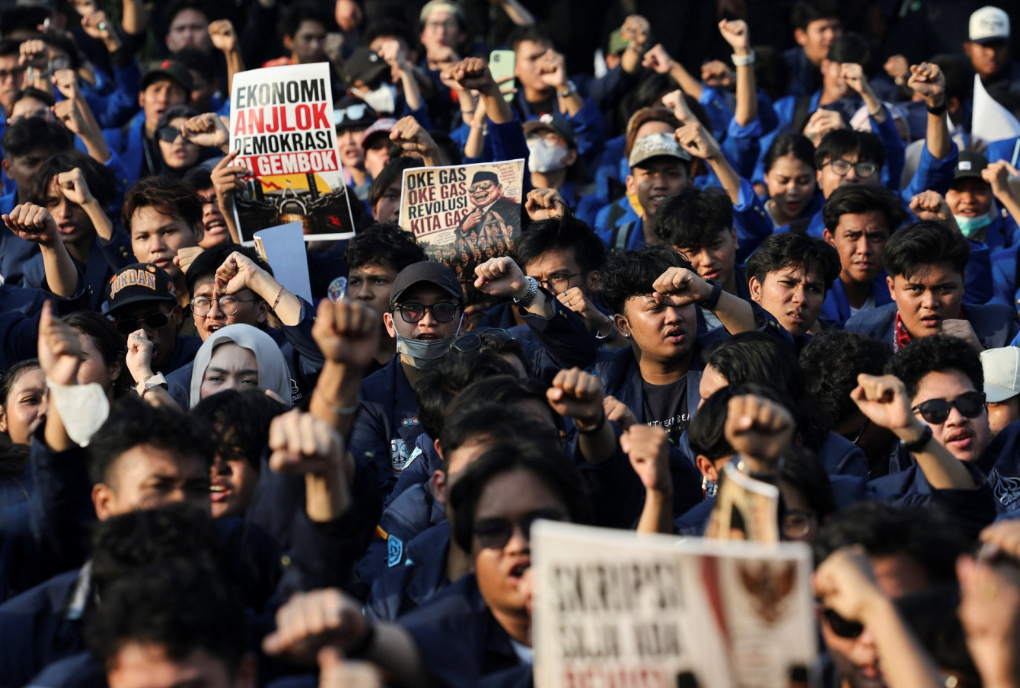
Students opposing the initiative have staged coordinated demonstrations demanding comprehensive audits and potential suspension of the programme. In Bali, hundreds of university students gathered outside the regional legislative council in Denpasar on Monday, articulating concerns that stretched beyond the meal scheme itself to encompass broader questions about government economic stewardship and democratic governance. Their calls for intervention by the Supreme Audit Agency (BPK) reflected growing apprehension that allocated resources might not be reaching intended beneficiaries efficiently, particularly given allegations of mismanagement and the recent arrest of three senior officials from the National Nutrition Agency (BGN) on corruption charges.
The Jakarta demonstrations proved equally significant in scale and intensity. Students affiliated with the Indonesian Islamic Student Movement (PMII) converged outside the House of Representatives complex, with thousands protesting not merely the meal programme but what they characterised as a pattern of excessive governmental expenditure. Their grievances encompassed inadequate teacher remuneration and insufficient economic stimulus measures, positioning the free meal scheme within a wider critique of budgetary misallocation. The timing of these protests—occurring just days after previous demonstrations at the same venue—suggested mounting frustration among youth activists regarding prioritisation of flagship initiatives over foundational economic reforms and public sector improvements.
Critical to understanding student opposition is the tension between programme ambition and fiscal sustainability. With an original budget allocation of Rp 335 trillion (approximately US$15 billion) targeting approximately 83 million beneficiaries including schoolchildren and pregnant women, the scheme represents extraordinary expenditure. Student protesters questioned whether resources of this magnitude could be justified when government agencies face systematic spending restrictions, and when corruption allegations suggest funds may not reach intended recipients. Their demand for presidential intervention to suspend what they termed wasteful spending reflected deeper anxieties about Indonesia's fiscal trajectory and whether such allocations serve genuine public need or primarily function as populist gestures.
Government officials have responded to such criticism by emphasising programme necessity and implementing efficiency measures rather than suspension. Muhammad Qodari, head of the Government Communications Agency, argued that the initiative should be refined and improved rather than abandoned. The administration subsequently reduced budget allocation to Rp 228.4 trillion and introduced operational constraints including suspension of meal distribution during school holiday periods and curtailment of service in seventy-six schools located in relatively affluent districts deemed capable of financing nutritional provision independently. These modifications attempt to address fiscal concerns whilst maintaining programme continuity.
Yet the efficiency measures have generated unexpected opposition from programme beneficiaries and workers dependent upon the scheme for livelihoods. In Batam, approximately 1,500 kitchen workers staged counter-demonstrations outside local government buildings, protesting reductions from six-day to five-day weekly distribution and holiday suspensions. Their coordinator, Langga Husein, emphasised the hardship such modifications impose on daily-wage workers supporting families through scheme-related employment. The concern extended beyond kitchen staff, encompassing the nutritional consequences for vulnerable populations including pregnant women, breastfeeding mothers, and infants who require continuous dietary support regardless of school schedules.
Farmers and agricultural producers have similarly mobilised in support of programme continuation, perceiving economic benefits extending beyond direct nutritional provision. In Bandar Lampung, residents rallied to advocate for sustained implementation, with organiser Maradoni articulating how the scheme's procurement requirements absorb significant volumes of locally-produced commodities including rice, corn, cassava, fruits, and vegetables. This agricultural dimension illustrates how the programme functions as implicit market support for farming communities, stabilising commodity prices and generating downstream economic activity. From this perspective, suspension would impose hardship not merely on programme workers and recipients but on rural producers reliant upon guaranteed demand.
The geographical distribution of competing demonstrations reveals regional variation in programme perception. Whilst Bali, Jakarta, and Batam witnessed substantial student-led opposition, simultaneous pro-continuation rallies emerged in West Nusa Tenggara, East Java, and other regions where agricultural interests and worker communities predominate. This spatial divergence suggests that programme assessments fundamentally depend upon stakeholder position: urban middle-class students perceive fiscal profligacy and governance failure, whilst rural and working-class constituencies experience genuine nutritional and economic benefit.
The corruption dimension adds particular urgency to debates. The arrest of three senior BGN officials on alleged corruption charges provided specific justification for student demands regarding comprehensive investigation and leadership overhaul. Such scandals undermine public confidence in institutional integrity regardless of programme merit, generating legitimate concerns that substantial budget allocations may be diverted through corrupt practices rather than reaching intended beneficiaries. Students framed their activism partly as demand for accountability and transparency, insisting that any programme commanding such resources must demonstrate robust oversight mechanisms and corruption prevention.
Food safety allegations have further complicated public perception. Reported poisoning incidents connected to the programme generated health concerns alongside budgetary criticism, suggesting that rapid scaling and implementation challenges may have compromised quality assurance. These concerns resonate particularly among student activists and educated urban constituencies who prioritise both fiscal prudence and programme safety. The intersection of corruption allegations and food safety incidents created composite narrative suggesting systemic management deficiencies.
For Malaysian observers, Indonesia's free meal programme controversy offers instructive parallels and contrasts. Both nations confront childhood malnutrition and stunting requiring policy responses, yet Indonesia's approach—massive budget allocation with centralised national implementation—differs markedly from Malaysia's more modest, regionally-differentiated provision. The Indonesian case demonstrates risks accompanying large-scale social programmes: corruption vulnerability, implementation challenges in diverse geographical contexts, and tensions between fiscal responsibility and social provision. It also illustrates how such initiatives inevitably generate coalition-building amongst beneficiaries with material stakes in continuation, complicating withdrawal or modification even when efficiency questions arise.
The programme's trajectory remains uncertain. Government commitment to continuation alongside efficiency modifications suggests neither complete suspension nor substantial expansion will occur imminently. Yet sustained student activism, corruption investigations, and growing public scrutiny indicate that the political space for uncritical programme defence has narrowed significantly. Future implementation will likely involve intensified oversight, budget constraints, and potential geographical reorientation towards demonstrably disadvantaged areas, reflecting pressure from student activists and budgetary realists within government itself. The competing demonstrations ultimately reflect Indonesia's broader developmental challenge: balancing ambitious social provision against fiscal constraints whilst combating corruption and ensuring genuine resource allocation to intended beneficiaries.

