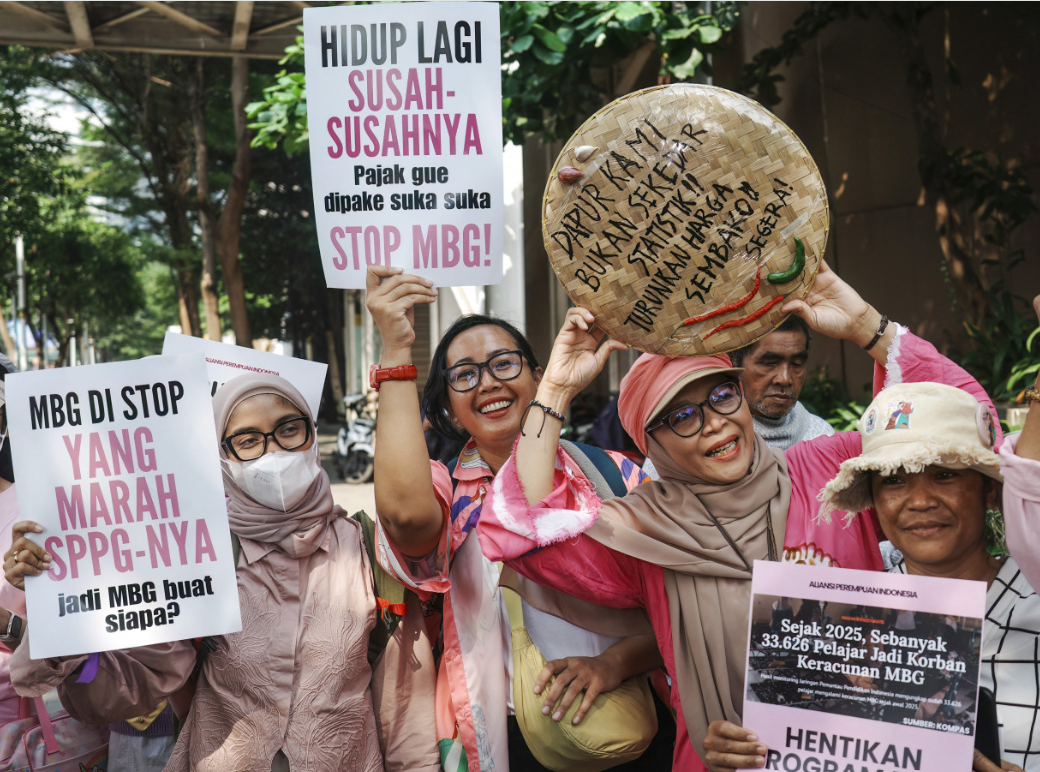
Parents and caregivers enrolled in President Prabowo Subianto's ambitious free nutritious meal initiative are signalling a remarkable willingness to abandon the government assistance if systemic quality problems continue unaddressed. This position emerges amid escalating public criticism of the multi-billion-rupiah programme designed to combat child malnutrition and stunting across Indonesia, with beneficiaries themselves becoming vocal advocates for temporary programme suspension to enable comprehensive evaluation and reform.
The frustration boiled over when Nesti Nagari, a 29-year-old mother from Kediri in East Java, publicly documented the meal provided for her eight-month-old infant—a portion of unidentifiable clumped white paste that she deemed unsuitable for consumption and ultimately fed to her poultry instead. Her social media post detailing the incident attracted over 11,000 likes within 24 hours, crystallising widespread concerns about meal quality and nutritional adequacy. Rather than continuing to accept meals she viewed as substandard, Nagari opted out of the programme entirely, emphasising that she possessed the financial capacity to prepare adequate nutrition for her child independently. She indicated support for either temporary programme suspension pending review or outright termination, suggesting that redirecting the substantial budget allocation towards education and healthcare infrastructure might yield greater societal benefit.
Similar quality grievances plague beneficiaries across multiple provinces. Diah Farika, a breastfeeding mother in Semarang, Central Java, documented systematic deterioration in meal standards throughout her enrollment since May, including unripe fruit portions and inadequate serving sizes. Despite repeated complaints to the nutrition fulfillment service units (SPPG) responsible for meal preparation, Farika received dismissive responses that prompted her programme withdrawal. Her assessment pinpoints kitchen-level management failures as the fundamental problem, suggesting that despite the programme's conceptual merit, implementation quality varies dramatically depending on individual SPPG operational competence. Farika similarly advocates for temporary programme suspension coupled with comprehensive kitchen inspections by the National Nutrition Agency (BGN), indicating that beneficiary communities themselves recognise the need for systemic reset rather than programme continuation under compromised conditions.
The beneficiary-level dissatisfaction reflects broader institutional challenges. BGN's recent corruption scandal involving former leadership prompted the incoming administration to halt further SPPG network expansion, which currently comprises approximately 27,000 kitchens across Indonesia. This decision creates uncertainty for investors who reportedly invested hundreds of billions of rupiah in kitchen infrastructure and facility construction. Dozens of investors recently approached BGN offices demanding clarity regarding programme continuity and compensation guarantees should operations cease, highlighting how implementation failures ripple through multiple stakeholder ecosystems beyond direct beneficiaries.
Operational disruptions compounded the crisis. Multiple SPPGs experienced temporary closures during early June attributable to delayed funding disbursement, though some subsequently reopened. These interruptions undermine programme reliability and beneficiary confidence, making it increasingly difficult for families to depend on nutritional assistance. MBG Watch, an independent civil society oversight platform, documented how accumulating problems have systematically eroded public confidence in programme administration and effectiveness.
Policy researchers affiliated with the Center of Economic and Law Studies (CELIOS) have identified structural inefficiencies within beneficiary targeting frameworks. An internal CELIOS assessment determined that approximately 34 percent of current recipients—roughly 61 million children and pregnant women—fall outside priority vulnerability categories, including households demonstrating economic security and adequate nutritional access. This inclusion of economically capable families represents significant budgetary inefficiency and misallocation of scarce public resources to populations not requiring government intervention.
The 2026 budget allocation reflects escalating political pressure regarding programme costs. The original Rp 335 trillion (US$18.74 billion) budget was subsequently trimmed to Rp 268 trillion following sustained public scrutiny concerning the initiative's substantial price tag and implications for competing budget priorities, particularly education funding. This reduction strategy indicates government sensitivity to broader fiscal sustainability concerns while attempting to maintain programme continuity despite operational challenges.
In response to mounting beneficiary and stakeholder concerns, BGN has implemented targeted beneficiary pool recalibration, progressively removing recipients deemed capable of independently meeting nutritional requirements. As of Thursday, the agency eliminated 76 schools across Java from programme rolls, affecting more than 39,000 beneficiaries. BGN deputy head Agustina Arumsari framed this contraction as necessary programme refocusing, asserting that narrower beneficiary targeting would enable effective resource concentration among Indonesia's most nutritionally vulnerable populations requiring genuine government intervention.
Simultaneously, BGN introduced operational austerity measures designed to enhance efficiency and reduce redundant expenditure. These reforms include elimination of daily kitchen incentives during non-operational periods and systematic evaluation of underperforming kitchen facilities to identify management failures and operational deficiencies. This dual approach—contracting beneficiary scope while simultaneously tightening operational standards—signals institutional recognition that programme sustainability depends upon demonstrable results and beneficiary satisfaction rather than expansive coverage metrics.
The situation illuminates fundamental tensions within large-scale social assistance programming in developing economies. Beneficiaries' demonstrated willingness to forgo assistance rather than accept substandard provision suggests that communities increasingly demand quality-accountability tradeoffs rather than accepting aid regardless of implementation standards. This philosophical shift from recipient passivity to active programme evaluation reflects growing middle-class consumer expectations penetrating social assistance recipient communities, particularly in urban areas where alternative nutritional options exist for economically capable families.
For Malaysian policymakers monitoring Indonesia's experience, the programme dynamics offer instructive lessons regarding implementation governance in mass nutrition initiatives. The persistent quality-control failures despite centralised BGN oversight underscore how kitchen-level management autonomy requires robust monitoring systems and accountability mechanisms. Indonesia's experience suggests that social assistance programme success depends equally upon beneficiary-level satisfaction metrics alongside coverage expansion targets, and that rushing large-scale deployment without adequate quality assurance infrastructure generates credibility deficits difficult to reverse subsequently.
The evolving situation will likely continue shaping regional approaches toward nutrition assistance policy. Indonesia's willingness to contract beneficiary pools and implement systematic kitchen evaluation represents pragmatic policy recalibration prioritising sustainability and legitimacy over headline coverage numbers. Whether these reforms prove sufficient to restore beneficiary confidence and programme credibility remains uncertain, but the current trajectory indicates that quality and accountability concerns now substantially constrain further programme expansion regardless of budgetary availability.

