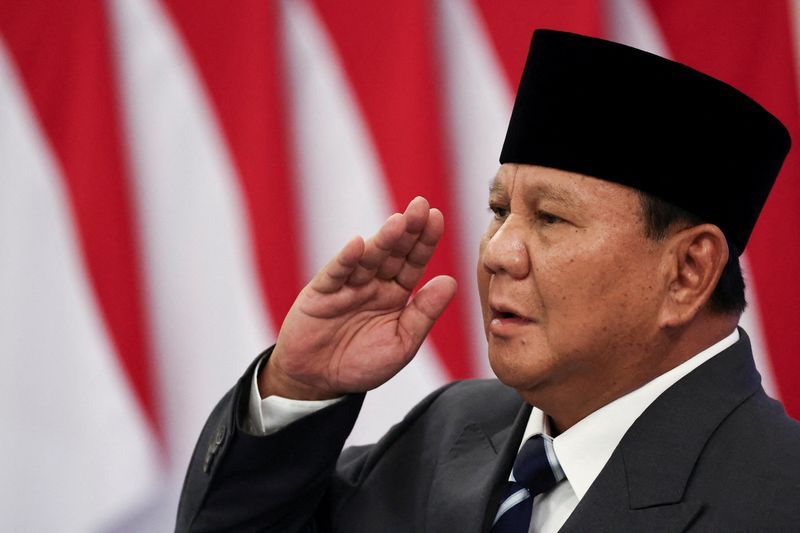
Indonesia is poised to become the latest Southeast Asian nation to embrace artificial intelligence as a tool for modernising public services, with a presidential regulation draft revealing plans to weave AI technology into some of the country's most ambitious and costly government initiatives. The strategy targets a potentially transformative outcome: lifting Indonesia's gross domestic product by 12 percent, equivalent to roughly $366 billion, by the end of the decade. While the draft regulation awaits President Prabowo Subianto's signature, it represents a significant shift in how Jakarta intends to tackle operational challenges in critical areas ranging from food security to public health.
Central to this initiative is the deployment of AI within Indonesia's $15 billion free meals programme, a cornerstone policy designed to improve nutrition and educational outcomes among the nation's school-age population. According to the draft regulation, artificial intelligence will perform multiple functions within this sprawling initiative: developing region-specific menus tailored to local preferences and nutritional needs, monitoring kitchen hygiene standards through automated systems, predicting food demand to minimise waste and ensure adequate supply, detecting irregularities in procurement and preparation, and integrating health data to issue early warnings of potential public health emergencies. Such applications would address persistent vulnerabilities that have plagued the programme in recent years.
The free meals scheme has attracted considerable scrutiny and criticism, particularly following a major food poisoning outbreak that affected tens of thousands of children last year. Earlier this month, the head of the programme was dismissed and arrested following investigations into irregularities discovered in kitchen setup, alongside concerns about safety standards and response procedures during health crises. These operational failures have compounded worries about inefficient spending at a time when Indonesia's government is operating under significant budgetary constraints. Proponents argue that AI-driven oversight and automation could substantially enhance transparency, accountability, and safety across the sprawling network of facilities responsible for serving meals nationwide.
Beyond the meals initiative, the regulatory framework envisions AI adoption across multiple government departments and regional administrations between 2026 and 2029. The regulation emphasises using AI to develop, facilitate, and deploy the technology within presidential priority programmes, framing this expansion as essential to Indonesia's competitive positioning both regionally and on the world stage. The government also intends to apply AI to health screening initiatives and tuberculosis testing programmes, potentially streamlining diagnostics and improving early detection of disease across the population.
Indonesia's push into AI deployment arrives at a critical juncture when regional competitors have already established significant momentum. Singapore and Malaysia have aggressively positioned themselves as development hubs for artificial intelligence infrastructure, successfully attracting billions of dollars in investment from global technology corporations seeking to build data centres and cloud computing facilities to service the region's explosive demand for AI-enabled services. By contrast, Indonesia's progress in building AI capabilities has lagged markedly, reflecting structural constraints that experts argue require urgent attention before meaningful domestic AI development becomes viable.
The regulatory draft was developed with input from technology industry leaders, including contributions from Meta Platforms, IBM, and Microsoft, which collectively shaped elements of the policy framework. In 2024 alone, Microsoft committed to investing $1.7 billion over several years specifically to expand cloud infrastructure and AI capabilities within Indonesia, signalling confidence in the market despite acknowledged challenges. However, experts caution that such corporate involvement, while beneficial, does not automatically translate into comprehensive AI sovereignty or the development of domestic technological expertise.
Indonesia confronts substantial structural obstacles that constrain its ability to emerge as a genuine AI developer rather than remaining primarily a consumer of foreign technology. The country lacks critical infrastructure including semiconductor manufacturing capacity, faces pronounced shortages of workers with specialised AI skills, and has not yet built the research ecosystem necessary to drive innovation. Derwin Suhartono, an artificial intelligence professor at Bina Nusantara University in Jakarta, articulated this challenge bluntly, suggesting Indonesia risks permanently occupying the position of a consumer purchasing AI products created and marketed by foreign corporations rather than developing indigenous capacity.
Scholars and analysts highlight a gap between rhetorical commitment and practical execution. While the government's roadmap appears comprehensive on paper, implementation has proven inconsistent, with questions persisting about whether institutional capacity and political will exist to translate ambitious targets into functioning systems. Suhartono emphasised that although structured application of AI within government programmes is theoretically feasible and potentially beneficial, current efforts remain largely aspirational without demonstrated operational performance.
The regulation also incorporates provisions for managing the risks and downsides accompanying AI expansion. Government bodies will be required to report AI-related risks including unauthorised use of biometric data, violations of intellectual property rights, and the creation and spread of deepfakes. These safeguards reflect global recognition that AI deployment without adequate governance frameworks can create new vulnerabilities and social harms, a consideration that appears to have influenced Indonesia's policymaking approach.
Financially, the framework proposes establishing a "sovereign AI fund" to be administered largely through Danantara Indonesia, the country's recently established wealth fund mechanism. The regulation also suggests providing fiscal incentives targeted at AI researchers and initiatives to attract and develop domestic talent capable of addressing current shortages. Such financial mechanisms represent an attempt to address supply-side constraints limiting AI development, though experts question whether these measures alone will prove sufficient to reverse Indonesia's competitive disadvantage relative to more advanced regional neighbours.
The regulatory draft builds upon conceptual work contained in a white paper circulated previously, suggesting this initiative represents an evolution of longstanding government thinking regarding AI's potential role in economic transformation rather than an entirely novel strategic direction. The timing of Prabowo's signature remains uncertain, with his office declining to comment on the regulation's status or anticipated timeline for formalisation. Once enacted, the regulation would establish binding expectations for ministries and regional governments to integrate AI into their operations, creating accountability mechanisms for implementation across Indonesia's dispersed bureaucratic structure.

