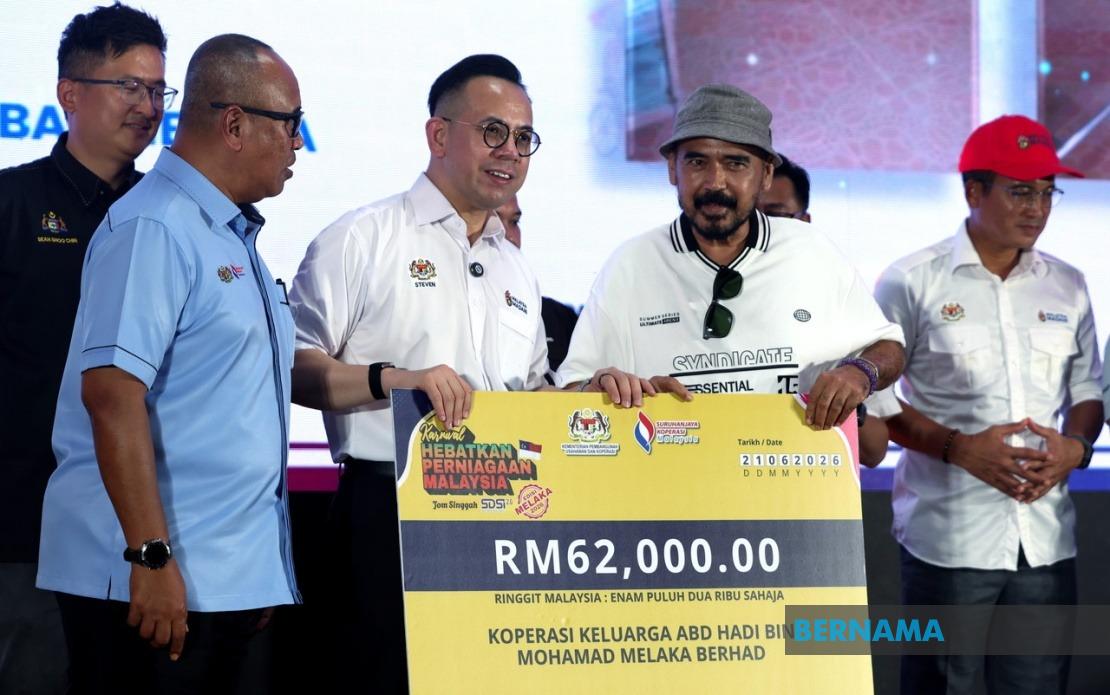
The Empowering Malaysian Businesses Carnival 2026, held in Melaka from June 19 to 21, delivered substantial results for the nation's entrepreneurial ecosystem, accumulating RM8.45 million in total business matching value and financing opportunities. The three-day event, organised under the Ministry of Entrepreneur Development and Cooperatives (KUSKOP), demonstrated the growing demand among Malaysian enterprises for structured networking and capital access platforms.
The carnival drew 70,000 attendees across its duration, reflecting significant interest from both established and aspiring business owners seeking to expand their operational reach and secure funding partnerships. Beyond mere footfall, the event translated visitor engagement into tangible commercial activity, with entrepreneurs recording RM532,802.77 in direct product sales during the carnival period. This figure underscores the dual benefit of such gatherings—they serve simultaneously as promotional venues for existing businesses whilst creating environments where transaction-ready partners can converge.
Central to the carnival's achievement was a structured business-matching framework that facilitated 72 formal sessions between entrepreneurs and potential investors or business partners. Through these curated interactions, organisers successfully catalysed RM6.4 million in identified business collaboration opportunities. This approach—moving beyond passive networking toward directed matchmaking—addresses a persistent challenge in Malaysia's entrepreneurial landscape: the information asymmetry and connection gaps that prevent capital and business expertise from reaching viable ventures efficiently.
The financing component proved equally significant for Malaysia's micro, small and medium enterprise sector. Fifty-five MSMEs participated in dedicated financial engagement sessions, resulting in RM2.05 million in assessed financing potential. These interactions with financial institutions and alternative lenders provide critical pathways for enterprises operating below the conventional banking radar, where cashflow constraints and collateral limitations often frustrate growth ambitions. The identified financing opportunities create real prospects for working capital expansion and asset acquisition.
The carnival operates within the broader Hebatkan Perniagaan Malaysia initiative, championed by KUSKOP Minister Steven Sim Chee Keong. This agenda encapsulates four strategic pillars under the ABCD framework: accelerating productivity through business process improvement, reducing bureaucratic impediments to entrepreneurship, improving capital accessibility for enterprises at all scales, and developing market access channels beyond domestic boundaries. Such carnivals function as practical extensions of policy intent, converting ministerial directives into ground-level entrepreneurial support.
Geographically, the carnival's itinerary reflects a deliberate expansion strategy across Malaysia's economic zones. The Melaka edition marked the third instalment in the 2026 series, with subsequent events planned for other regions. The organisers have scheduled the next carnival for Penang from July 17 to 19 at the Penang Waterfront Convention Centre, indicating momentum toward establishing these events as regular fixtures in Malaysia's business calendar. This progression suggests recognition that regional variations in entrepreneurial ecosystems and sectoral strengths demand tailored, location-specific engagement.
For Malaysian SMEs, such platforms offer advantages beyond immediate transactional benefits. The structured interaction model creates knowledge spillovers, as entrepreneurs encounter peer businesses addressing similar challenges and learn about emerging market trends and operational practices. The collective effect—when aggregated across multiple carnival iterations—contributes toward raising the sophistication and ambition ceiling of Malaysia's enterprise base, particularly among smaller operators who might otherwise remain isolated within local networks.
The financing potential identified at the carnival—RM2.05 million across 55 enterprises—deserves contextualisation within Malaysia's broader credit landscape. Many MSMEs continue to report difficulty accessing conventional bank financing due to stringent collateral requirements and risk aversion toward unproven business models. Structured carnival sessions connecting enterprises directly with financial institutions and fintech lenders can bypass some conventional gatekeeping, though the extent to which identified potential translates into actual disbursed capital remains an important metric for future evaluation.
The RM6.4 million business matching value similarly requires nuanced interpretation. This figure represents identified collaboration opportunities and partnership potential rather than committed contracts. The genuine test lies in subsequent weeks, when featured enterprises and identified partners pursue formalised agreements. Carnival organisers might benefit from post-event tracking mechanisms that measure actualisation rates, providing evidence of impact beyond the immediate carnival window.
From a regional perspective, Malaysia's systematic approach to entrepreneurial enablement through events like the HPM carnival contrasts with less structured environments across Southeast Asia. The integration of financing access, business matching, and policy-level ABCD frameworks suggests institutional maturity in recognising that entrepreneurial success requires simultaneous interventions across capability, capital, and market dimensions. This model potentially offers valuable lessons for neighbouring economies developing their own SME support infrastructure.
Looking ahead, the carnival's evident popularity and quantifiable outputs justify continued investment in this modality, particularly as the nation targets SME-driven economic diversification and job creation. However, sustained impact will require complementary measures: simplified pathways for enterprises to convert carnival contacts into actual partnerships, streamlined financing approval processes following carnival participation, and policy adjustments addressing structural constraints that persist despite these engagement forums. The carnival represents enablement infrastructure; it cannot fully substitute for foundational improvements in regulatory frameworks, infrastructure quality, and educational attainment that ultimately determine enterprise success.

