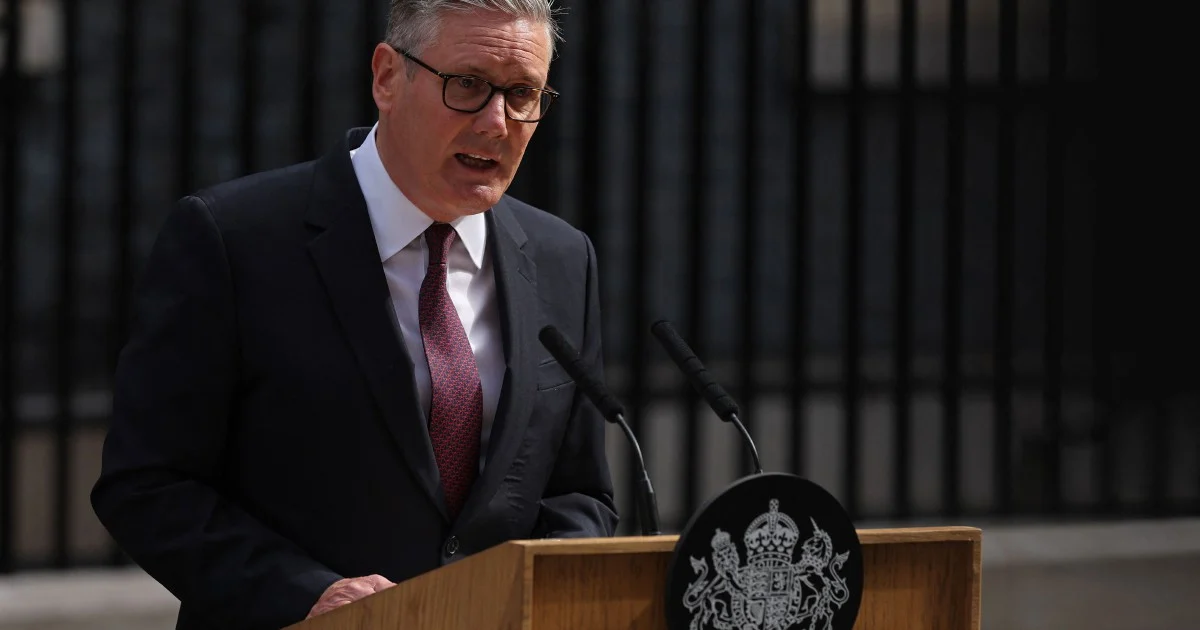
Keir Starmer declared his intention to step down as Prime Minister on Monday, setting a deadline for the Labour Party to install a replacement by the time parliament returns in September. The announcement marks a pivotal moment in British politics, as the nation prepares for its seventh change in leadership within just ten years—a striking illustration of the political turbulence that has characterised the past decade of Westminster governance.
The mechanism for selecting a new British Prime Minister differs substantially from democratic systems elsewhere in the Commonwealth and beyond. Unlike presidential systems where the population directly elects the head of government, Britain's constitutional framework vests this responsibility in the ruling party. The Labour Party, currently holding the parliamentary majority, will conduct an internal election to determine Starmer's successor, and whichever candidate wins that party vote automatically becomes Prime Minister by virtue of commanding the support of the House of Commons.
Labour's leadership selection process typically unfolds across several distinct phases. The first involves nominations from sitting Labour Members of Parliament, establishing an initial threshold that candidates must clear. This ensures that any prospective leader commands at least a baseline of support from the parliamentary party itself. The nomination requirements are designed to prevent the race from becoming unwieldy, concentrating the field on individuals with genuine backing among Westminster MPs.
Once the nomination period closes, candidates who meet the parliamentary threshold proceed to the next stage. Labour's membership—comprising hundreds of thousands of activists, donors, and supporters across the country—then participates in the final voting round. In recent leadership contests, this has involved multiple ballot stages, with the candidate receiving the fewest votes eliminated after each round until a clear winner emerges. This ensures the chosen leader has secured support from both the parliamentary party and the broader membership base.
The timeframe Starmer has outlined creates distinct pressures on the selection process. With parliament reconvening in September, the Labour Party must complete its entire leadership election procedure during the summer months when many MPs, activists, and voters are away on holiday. This compressed schedule means the contest will be characterised by intensive media coverage, accelerated campaign periods, and potentially limited opportunity for extensive grassroots engagement compared to previous Labour leadership races. The urgency may favour candidates with higher profiles and established fundraising networks.
The identity and positioning of potential successors carries significant implications both domestically and internationally. For Malaysian readers and Southeast Asian observers, British Prime Ministers shape London's foreign policy architecture, including diplomatic engagement, trade relationships, and defence posturing across the Indo-Pacific region. Leadership changes at this level invariably signal potential shifts in Britain's strategic priorities, bilateral relationships with regional powers, and commitment to existing partnerships and frameworks governing regional security.
Britain's rapid succession of prime ministers in recent years reflects deeper fractures within Westminster. The past decade has witnessed extraordinary political upheaval stemming from the European Union referendum, its contested aftermath, and the subsequent challenge of navigating divergent visions for Britain's post-Brexit identity and direction. Each leadership transition has represented not merely a change of faces but often a substantial recalibration of policy emphasis, governing style, and the faction of the Labour or Conservative party wielding greater influence.
The seven leaders in ten years is particularly striking when compared internationally. Most stable democracies experience significantly lower rates of chief executive turnover. This instability has prompted concern about governmental continuity, institutional effectiveness, and Britain's capacity to implement sustained policy initiatives requiring years to demonstrate results. For external observers assessing British reliability as a partnership nation, this leadership volatility raises questions about consistency and follow-through on international commitments and agreements.
Labour's current position as the ruling party grants the selection process particular weight. The winning candidate will inherit command of a parliamentary majority and immediate responsibility for governing, with no interim transition period or electoral campaign before assuming office. This differs markedly from situations where leadership elections are conducted in opposition, where the chosen candidate must subsequently convince the broader electorate to grant the party governing power. Labour's new leader will assume office immediately, making the selection stakes exceptionally high for both party and nation.
The successor will face an intricate constellation of challenges spanning domestic economic management, the consolidation of Labour's relationship with voters after recent electoral victory, navigation of intra-party tensions, and the maintenance of Britain's standing amid complex international relationships. The race will inevitably involve debates about the direction of Labour under new stewardship, the balance between left and right wings within the party, and which candidate possesses both the vision and the operational competence to govern effectively under pressure.
For the broader Commonwealth and Britain's network of global partners, this leadership transition represents a moment of strategic recalibration. Whether the new Prime Minister maintains continuity with Starmer's foreign policy orientations or charts a notably different course will have consequences rippling across international relationships, including Britain's positioning within emerging geopolitical alignments and its engagement strategies across critical regions including Asia-Pacific.

