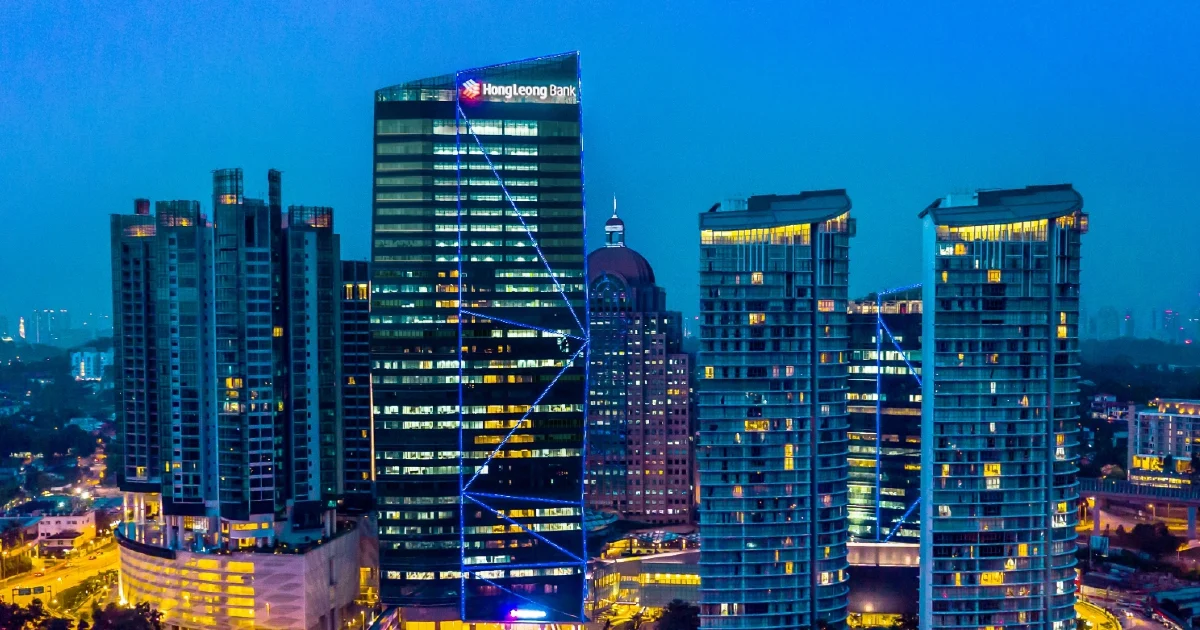
Malaysia's financial sector received a boost this week as Hong Leong Bank Bhd proceeded with a RM640 million subordinated notes offering, drawing on its multi-currency Tier 2 capital instrument framework. The move underscores the bank's proactive approach to maintaining robust capital buffers amid an increasingly competitive and dynamic banking landscape across Southeast Asia.
Tier 2 subordinated debt instruments serve a critical function within modern banking architecture, occupying the second layer of a lender's capital cushion. These notes rank below deposits and senior debt in the event of default, but above equity holders, making them an attractive funding source for banks seeking to strengthen their risk-weighted asset position without immediately diluting shareholder stakes. For Hong Leong Bank, the issuance represents a calculated refinancing decision that leverages favourable market conditions while satisfying regulatory capital adequacy requirements.
The establishment of a multi-currency Tier 2 subordinated notes programme provides Hong Leong Bank with significant flexibility in its funding operations. Rather than committing to a single large issuance at fixed intervals, the bank can access capital markets opportunistically across different currencies and time horizons. This tactical advantage has become increasingly valuable for regional lenders navigating volatile foreign exchange environments and shifting investor demand across different yield curves.
From a regulatory perspective, Tier 2 capital holds particular significance under the Basel III framework that Malaysia adopted through Bank Negara Malaysia's implementation guidelines. The central bank's capital requirements mandate that financial institutions maintain minimum ratios of common equity tier 1, tier 1 capital, and total capital relative to risk-weighted assets. Subordinated notes contribute directly to the total capital calculation, enabling banks to meet these increasingly stringent standards while maintaining operational flexibility and supporting credit expansion to households and businesses.
Hong Leong Bank's decision arrives at an interesting juncture for Malaysia's banking sector. The country's major lenders have demonstrated consistent appetite for capital-raising activities throughout recent quarters, responding to credit demand from both retail borrowers and corporates recovering from pandemic-related disruptions. By securing RM640 million in fresh capital, Hong Leong Bank positions itself to sustain lending momentum across its portfolio, particularly in competitive segments including mortgages, business financing, and trade finance.
The subordinated notes programme also reflects evolving investor preferences within the Asian fixed-income market. Institutional investors, including insurance funds, pension schemes, and asset managers across the region, have shown sustained interest in bank subordinated instruments offering higher yields than conventional senior debt. Malaysian banks' consistently strong credit profiles and stable regulatory environment make their capital instruments particularly attractive to yield-seeking portfolios managing risk across diverse asset allocations.
For Hong Leong Bank's broader stakeholder ecosystem, the capital reinforcement carries meaningful implications. Depositors benefit from enhanced loss-absorption capacity, reducing idiosyncratic risk exposure. Borrowers gain assurance of lender stability, supporting continuity in credit relationships and pricing terms. Employees benefit from organisational strength that facilitates expansion and investment in digital capabilities. Shareholders meanwhile obtain a financial foundation supporting future dividend distributions and asset growth without incurring immediate equity dilution costs.
The regional banking context renders such capital-raising moves increasingly strategic. Competitors including Maybank, CIMB Group, and Public Bank have similarly pursued diversified funding approaches, while regional peers in Singapore, Thailand, and Indonesia compete intensely for deposits and market share. By maintaining optimal capital ratios, Hong Leong Bank sustains competitive positioning in an environment where financial strength translates directly into pricing power, customer confidence, and market opportunities.
Looking forward, the subordinated notes issuance signals management's confidence in operational momentum and medium-term credit demand trajectories. Banking executives rarely commit to capital-raising unless internal analysis supports assumptions about profitable deployment of the proceeds. This suggests Hong Leong Bank identifies concrete lending opportunities across its geographic footprint and customer segments, potentially indicating optimism about Malaysia's economic trajectory and regional business prospects.
The multi-currency framework deserves particular attention for Malaysian investors and banking analysts. By maintaining capacity to issue in different currencies, Hong Leong Bank reduces refinancing risk and captures opportunities to match funding sources with asset denominations. This sophisticated treasury approach, once confined to global systemically important banks, has become essential for regional lenders serving multinational corporations and supporting cross-border trade finance activities throughout Southeast Asia.
These capital management strategies ultimately serve the broader Malaysian financial system by supporting the banking sector's counter-cyclical capacity. Well-capitalised lenders can sustain lending during economic downturns rather than procyclically tightening credit, moderating recession depth and supporting faster recovery. Hong Leong Bank's proactive approach to capital adequacy therefore carries systemic implications extending well beyond the individual institution.

