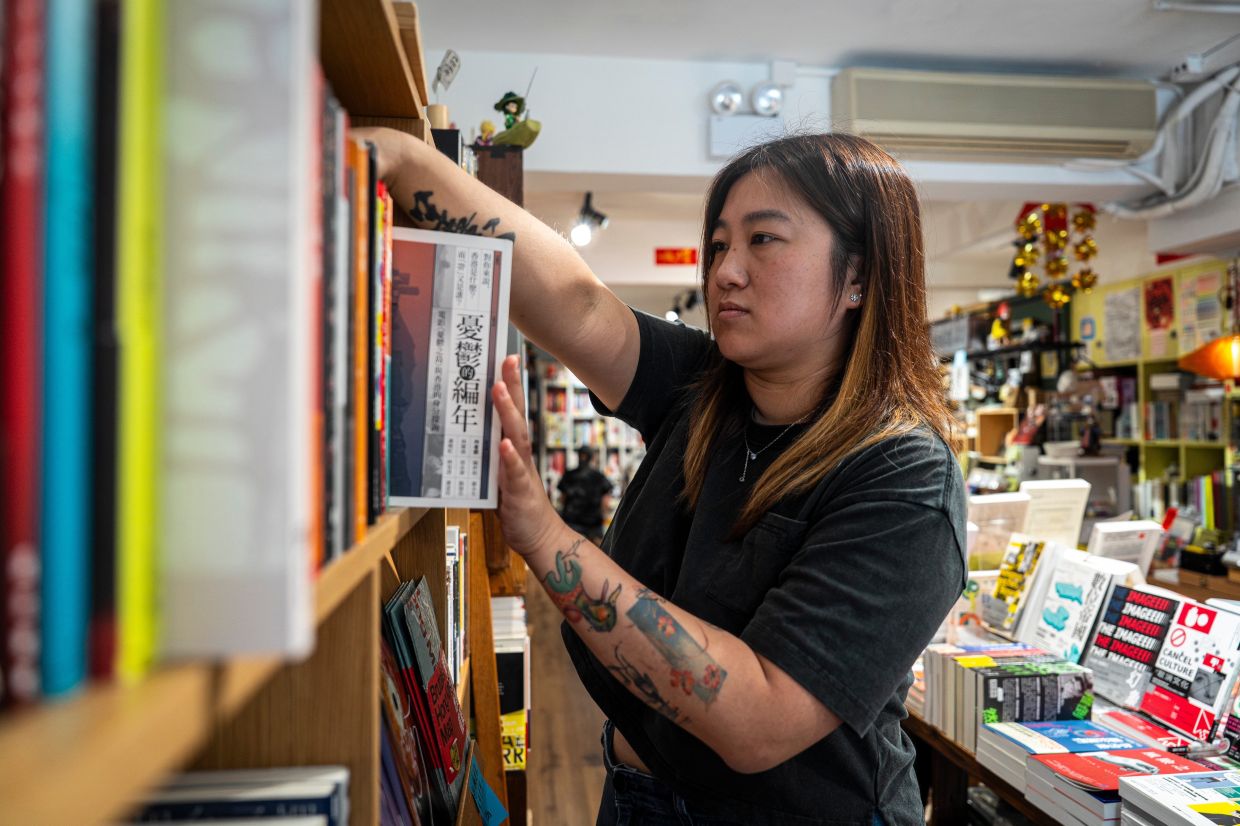
Hong Kong police have arrested two individuals on charges of distributing seditious materials and accepting funding from foreign political groups, operating under the powers granted by the 2024 national security law. The arrests, announced by the government on Thursday morning following the Wednesday operation, represent a significant intensification of Beijing's effort to control the narrative and suppress opposition voices in Asia's premier financial centre. Though authorities did not formally name those detained, multiple Hong Kong news organisations including the Chinese-language Ming Pao reported that one of the two is Leticia Wong, the owner of Hunter Bookstore and a former pro-democracy district councillor.
Wong's potential involvement in the arrest signals a troubling pattern for those advocating for civil liberties in Hong Kong. As a vocal advocate for democratic freedoms who has continued speaking out even as prominent activists have been imprisoned during the crackdown that followed the 2019 pro-democracy demonstrations, Wong had become a visible symbol of resistance within the city's intellectual and cultural sphere. Her bookstore in the Sham Shui Po district evolved into a gathering place for those seeking materials and perspectives critical of the government, making it a natural target for authorities determined to reshape the information landscape.
The timing of the arrests deserves particular scrutiny. Coming just one week before Hong Kong marks the 29th anniversary of its return to Chinese sovereignty in 1997, the operation appears strategically calculated to suppress dissent during a period when questions about the city's autonomy typically receive heightened public attention. The incident underscores the growing distance between Beijing's original promise to allow Hong Kong to maintain its Western-style democratic institutions and civil liberties under the "one country, two systems" framework and the reality on the ground today.
According to the government's official statement, the two individuals face multiple allegations under security legislation. They are suspected of displaying materials deemed seditious and selling publications with content that authorities claim incites hatred against the government, judicial system, and law enforcement agencies. Additionally, investigators allege that the pair received monetary transfers originating from foreign political organisations, raising the politically sensitive issue of external interference that Beijing frequently invokes to justify its security crackdowns. The statement, however, provided no specific details about which publications were involved or which organisations allegedly provided funding.
The bookstore business itself has become a flashpoint in Hong Kong's cultural and political struggle. Last year, a pro-Beijing newspaper published a critical report about an independent book fair held at Wong's store, describing it as bearing connotations of "soft resistance." The article specifically highlighted the store's plan to stock a biography of Jimmy Lai, the jailed pro-democracy businessman and media tycoon whose detention has attracted significant international concern. This public criticism appears to have triggered intensified government scrutiny of the operation.
Wong's own account reveals the systematic pressure that independent booksellers face. In an interview with international media last year, she detailed 92 separate government actions taken against her shop between July 2022 and June 2025, ranging from inspections and conspicuous police patrols outside the premises to official warning letters. An anonymous letter sent to an organisation planning to hold an event at her store successfully intimidated them into cancelling their booking, effectively extending governmental control beyond formal law enforcement into the realm of social pressure and self-censorship.
This arrest follows a similar operation in March when police detained the owner and staff of another independent bookstore on comparable charges related to selling seditious materials, including the Lai biography. Though those individuals were subsequently released on bail, the pattern demonstrates that authorities are conducting a coordinated campaign against the independent bookselling community. The recurring focus on biographical and political works suggests that controlling the written word and historical narrative has become a priority for security officials.
For Malaysian and broader Southeast Asian observers, Hong Kong's trajectory offers sobering lessons about the fragility of civil liberties in the face of centralised security measures. The erosion of press freedom and the targeting of intellectuals and cultural figures typically precedes broader restrictions on political participation and expression. Hong Kong's experience demonstrates how security legislation, once enacted, becomes an instrument for suppressing legitimate dissent rather than addressing genuine security threats, a cautionary tale as regional governments debate similar measures.
The Hong Kong government maintains that both the 2024 national security law and its predecessor are essential safeguards for the city's stability and prosperity. Officials continue to assert that freedom of speech remains firmly protected within the jurisdiction, a position that sits increasingly uncomfortably with the mounting evidence of bookstore raids, activist arrests, and the self-censorship spreading throughout the city's cultural institutions. Yet international observers and human rights advocates argue that the expanding definition of sedition and the political use of security legislation fundamentally contradict such assurances.
The international implications of Hong Kong's direction extend beyond the city itself. Foreign governments and human rights organisations have expressed concern about the declining space for independent voices, and these arrests will likely prompt fresh diplomatic tensions between Beijing and Western capitals. For businesses and individuals in the region considering Hong Kong as a base for operations or residence, the city's deteriorating civil liberties environment presents a growing consideration in decisions about investment and relocation.
Ultimately, Wong's arrest—if confirmed—exemplifies how security legislation becomes a tool for eliminating political opponents under the guise of protecting national interests. The targeting of booksellers and intellectuals rather than addressing any concrete security threat reveals the true objective: establishing a monopoly on acceptable discourse and narrative control. As Hong Kong approaches its anniversary of return to Chinese rule, the arc appears to bend increasingly away from the democratic freedoms that once distinguished the city from the mainland.

