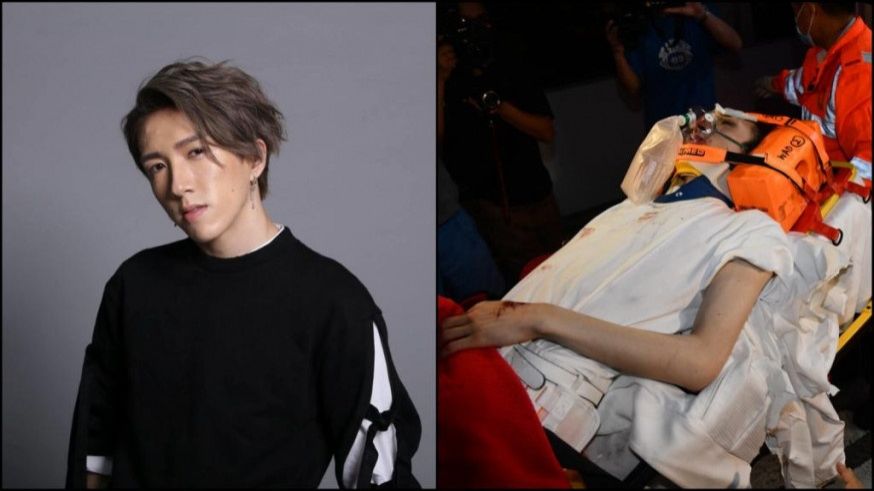
A Hong Kong court has delivered a landmark compensation ruling in favour of dancer Mo Li Kai-yin, awarding him HK$6.29 million (US$800,000 or approximately RM3.32 million) following a catastrophic stage accident that left him permanently disabled. The District Court decision, handed down on June 15, represents one of the most substantial payouts in a Hong Kong workplace injury case involving the entertainment industry, underscoring the profound consequences of safety failures in live performance venues.
The incident occurred on July 28, 2022, when a four-by-four-metre LED panel detached from the ceiling and fell directly onto the 31-year-old performer during the fourth show of what was meant to be a 12-concert run by the hugely popular Cantopop boy band Mirror at Hong Kong Coliseum. The impact was immediately catastrophic—Mo suffered a cervical spine dislocation that rendered him paralysed from the neck down. He was rushed to Queen Elizabeth Hospital for emergency surgery and intensive treatment, beginning a journey of medical intervention and rehabilitation that continues to the present day.
The court's language in describing Mo's condition was stark and unsparing. Judges found that the dancer had sustained "catastrophic" injuries resulting in permanent total incapacity, meaning he will never return to any form of employment or independent living. The ruling acknowledged that Mo now requires constant supervision and assistance from three full-time caregivers who manage every aspect of his daily existence, from personal hygiene to mobility and feeding. The court emphasised that he is "incapable of ever leading or appreciating an independent adult life," a sobering pronouncement that frames the true cost of the accident beyond mere financial terms.
The compensation award itself was comprehensive, reflecting the multiplicity of costs Mo will face for the remainder of his life. The judgment awarded him the maximum available compensation across several critical categories: permanent total incapacity payments, the substantial costs of round-the-clock caregiving, ongoing medical expenses, and periodic payments designed to adjust for inflation and future needs. These multiple streams of compensation recognise that Mo's situation is not a one-time medical bill but rather a lifetime commitment to his survival and basic quality of life.
Mo's employer, Studiodanz, bore ultimate legal responsibility for the accident, despite not participating in the trial proceedings. Beyond the compensation order, the company was further ordered to pay interest on the damages and cover Mo's legal costs—penalties that underscore judicial determination that the venue operator failed in its duty of care. The company had already been fined HK$132,000 by authorities for violations of occupational safety regulations, suggesting systemic gaps in how the venue managed equipment and performer safety during high-energy concert productions.
The backdrop to this tragedy reveals a promising career cut short in its prime. Mo had developed his passion for dance while studying at university between 2015 and 2019, and by 2019 he had transitioned to professional performance. Before the accident, he was an active and multifaceted performer, appearing in concerts, television programmes, commercial advertisements, and music videos. Simultaneously, he worked as a dance instructor at four different studios including Studiodanz, combining performance with teaching to build a sustainable career in Hong Kong's competitive entertainment sector.
The personal toll on Mo's family has been equally profound. His father, Reverend Derek Li Shing-lam, made the extraordinary decision to abandon his pastoral responsibilities and return from Canada to become his son's primary caregiver. This sacrifice continued until the reverend's death on April 25, leaving Mo's care responsibilities to be distributed among professional caregivers and potentially other family members. The loss of his father adds another layer of emotional burden to Mo's already severe physical circumstances.
Despite the gravity of his condition, Mo has demonstrated remarkable resilience and determination in pursuing recovery. He has been undergoing an intensive rehabilitation programme that leverages cutting-edge medical technologies, including regenerative medicine approaches and an implantable microstimulator designed to restore nerve function. These experimental and advanced treatments represent both hope and the extraordinary financial commitment required to maximise whatever recovery might be possible. The results, while modest compared to his original capabilities, have been encouraging within the constraints of his condition.
Progression in Mo's recovery has been documented through social media. In March, a video posted to his Instagram account showed him operating an electric wheelchair using his right hand—a development that signifies recovered motor function in that limb. Additionally, he has regained some sensation in his bladder and bowel functions, suggesting that neurological improvement, however incremental, remains achievable. These small victories, celebrated publicly by Mo himself, reflect his determination to reclaim whatever agency and independence his body might still permit.
The case carries significant implications for safety standards across Hong Kong's entertainment venues and the broader region. The incident and subsequent legal judgment place intense scrutiny on how concert organisers, venue operators, and equipment suppliers manage the risks inherent in large-scale productions involving suspended heavy equipment. For Malaysia and Southeast Asia, where similar large-scale concerts and productions are commonplace, the Hong Kong ruling serves as a cautionary precedent about the real costs—both human and financial—of inadequate safety protocols and equipment maintenance.
The Mirror concert series itself was a major cultural phenomenon in Hong Kong and across Sinophone audiences, making this accident a watershed moment for the Cantopop industry. The incident forced confrontation with questions about performer safety that had previously received insufficient attention. Venue operators and concert promoters across the region have since become more attentive to equipment certification, rigging standards, and emergency protocols, though ongoing vigilance remains essential.
Mo's case also illustrates the critical importance of comprehensive workplace compensation frameworks. While the HK$6.29 million award is substantial, reasonable observers might debate whether any financial sum adequately compensates for permanent paralysis and dependency. The ruling nonetheless establishes a benchmark for what courts consider appropriate redress in cases of severe workplace injury resulting from employer negligence, potentially influencing similar cases across common law jurisdictions in Asia.
Looking forward, Mo's journey continues as he pursues rehabilitation and adaptation to his new reality. The compensation awarded provides the financial foundation for ongoing treatment and care, but the true measure of success will be determined by his own resilience, family support, and the effectiveness of emerging medical technologies. His story serves as both a personal testament to human endurance and a powerful reminder of why rigorous safety standards in entertainment venues are not bureaucratic impediments but essential protections for the performers who bring joy to audiences.

