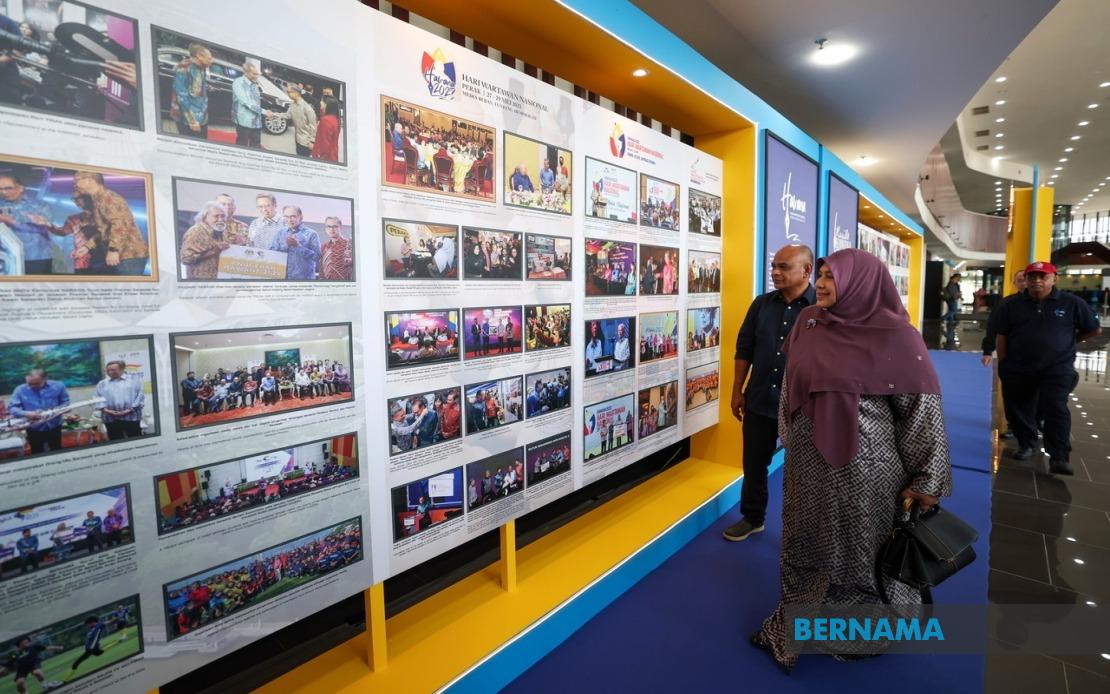
Penang's Butterworth waterfront will host the National Journalists' Day (HAWANA) 2026 Summit tomorrow, marking a significant gathering for Malaysia's journalism community. Prime Minister Datuk Seri Anwar Ibrahim will officiate the event at 3 pm, presiding over discussions centred on the theme 'Media Integrity Strengthens Credibility'. The summit represents a major occasion for the country's fourth estate to reflect on professional standards and future directions in an increasingly complex media landscape.
The HAWANA 2026 Working Committee, led by Bernama chief executive officer Datin Paduka Nur-ul Afida Kamaludin, has spent the past three days conducting final arrangements at PICCA@Arena Butterworth Convention Centre. According to Nur-ul Afida, preparations have reached 80 per cent completion, with multiple rehearsals conducted to guarantee seamless execution. The intensive final push underscores the scale and complexity of coordinating such a major professional gathering, particularly given the venue's distance from Malaysia's traditional media hub.
The relocation to Penang from the usual Kuala Lumpur setting introduces logistical considerations that required meticulous planning. Accommodation and transportation present distinct challenges when hosting a gathering expected to draw approximately 1,000 media practitioners from Malaysia and international locations. To address these concerns, the organising committee engaged closely with numerous hospitality providers across Penang, securing arrangements that would accommodate both the event team and visiting journalists. This collaborative approach reflects the regional approach now being adopted for the country's flagship media celebration.
Penang's selection as host city, while strategic in promoting events beyond the capital, does carry implications for participation levels. The HAWANA chief acknowledged that geography and logistical friction may affect attendance compared with previous iterations held in Kuala Lumpur. Media professionals facing competing work obligations, time zone challenges and personal commitments may find participation more difficult when travelling to the northern corridor. This trade-off between promoting inclusive representation across Malaysia and maintaining robust attendance numbers represents an ongoing consideration for event organisers seeking to balance national reach with practical convenience.
The summit operates under the broader stewardship of the Ministry of Communications, with Bernama serving as the implementing agency. This institutional structure reflects the government's commitment to maintaining platforms that foster professional discourse within the journalism sector. HAWANA itself functions as Malaysia's principal stage for acknowledging the contributions, commitment and professional standards demonstrated by media practitioners nationwide. The annual observance has become integral to how the country's journalism community recognises its own values and celebrates collective achievements.
Beyond the main summit, complementary programming organised by the Malaysian Media Council, the Federation of Malaysian Media Clubs (GKMM) and the Malaysian Press Institute (MPI) will run concurrently. These satellite events create a richer ecosystem for discussion, networking and professional development among attendees. Such layered programming allows media organisations and professional bodies to advance their own agendas while contributing to the overall success of the gathering. The coordination among multiple stakeholders demonstrates institutional maturity within Malaysia's media sector.
The choice of 'Media Integrity Strengthens Credibility' as the summit's central theme carries particular resonance in the contemporary Malaysian context. As digital platforms proliferate and information ecosystems fragment, questions of journalistic standards and public trust have intensified. The selected theme invites deliberation on how professional journalism can maintain and rebuild credibility amid competing narratives, misinformation and evolving audience expectations. This focus suggests organisers recognise pressing challenges facing the industry and wish to position HAWANA as a space for constructive problem-solving rather than merely ceremonial recognition.
The anticipated attendance of approximately 1,000 media professionals from domestic and international circles signals the summit's significance as a regional platform. International participation particularly reflects Malaysia's standing within Southeast Asian journalism circles and the country's openness to cross-border professional exchange. Such gatherings facilitate knowledge transfer, comparative insights and collaborative initiatives that strengthen journalism across the region. The international dimension elevates HAWANA beyond a purely national exercise into a meaningful regional conversation about media standards.
As the summit approaches, the logistics successfully managed by the working committee illustrate the operational sophistication required for hosting large-scale professional events. The 80 per cent completion figure and multiple rehearsals suggest confidence in execution, though the final day's preparations will prove critical. Successful delivery depends not merely on flawless logistics but on creating substantive discussion opportunities that leave attendees energised about their profession's future and commitments. For Malaysia's journalism community, the gathering represents both celebration of existing achievements and an opportunity to collectively chart constructive pathways forward within an increasingly demanding media environment.

