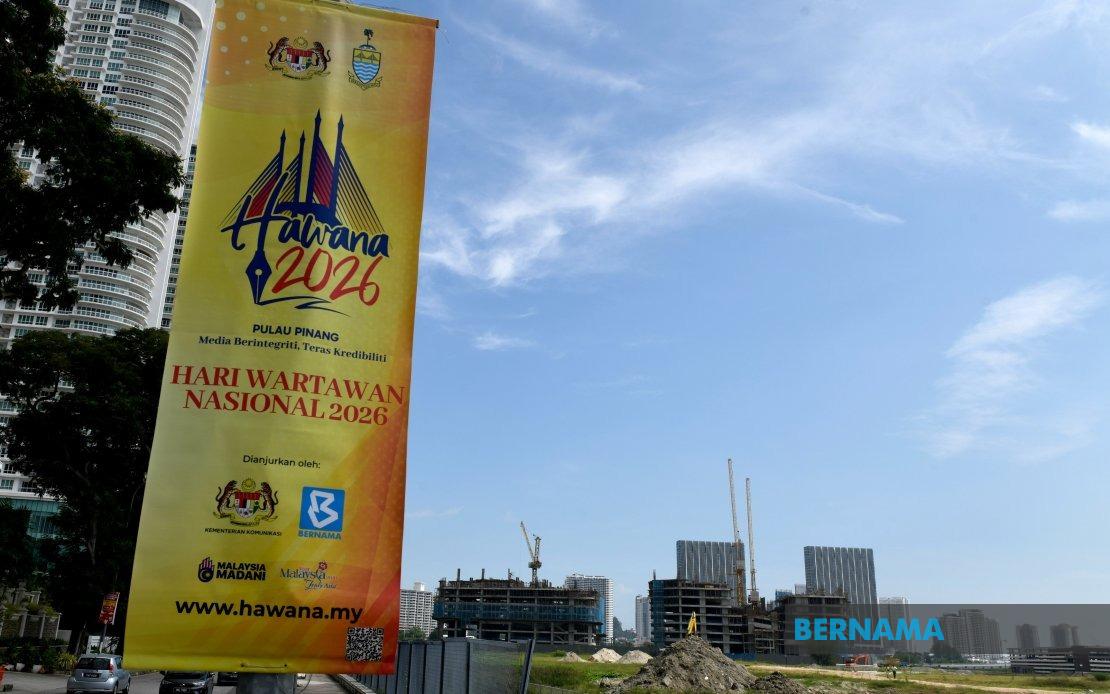
Penang is poised to leverage its selection as host for the 2026 National Journalists' Day (HAWANA) celebration to generate significant tourism revenue and international profile-raising for its creative economy sector. The three-day event, running from June 19 to 21, represents a strategic opportunity for the northern state to position itself on the regional media and cultural map while capitalising on the convergence of thousands of journalists, creative professionals, and tourism enthusiasts.
The choice of Penang as the inaugural host venue underscores recognition of the state's proven capability to organise large-scale international gatherings and its established reputation as a premier Malaysian tourism destination. According to Wong Hon Wai, the State Tourism and Creative Economy Committee chairman, the event validates Penang's credentials in hosting marquee events while simultaneously showcasing the breadth of attractions that differentiate it from competing tourism destinations across Southeast Asia. This positioning matters considerably in an increasingly competitive regional tourism landscape where states and countries vie aggressively for visitor spending and media attention.
The centrepiece of HAWANA 2026 will unfold at the PICCA Convention Centre at Butterworth Arena, where Prime Minister Datuk Seri Anwar Ibrahim will officiate proceedings on June 20. The formal celebration anticipates the gathering of approximately 1,000 media practitioners representing Malaysian news organisations alongside international counterparts from across the ASEAN region and beyond. This assembly of editorial decision-makers, reporters, photographers, and digital content creators creates an unparalleled opportunity for Penang to secure sustained media coverage and narrative positioning favourable to its tourism and investment agenda.
Wong highlighted the instrumental role media institutions play in destination marketing and economic development. Beyond traditional tourism promotion, he emphasised that credible journalism amplifies local creative talent, amplifies artistic endeavours, and builds international confidence in a destination's cultural offerings. For Penang specifically, this means the concentrated attention of regional and national media will illuminate the state's gastronomy scene, heritage attractions, contemporary creative practitioners, and emerging industries—categories that collectively constitute the foundation of modern experiential tourism.
Hotels and accommodation providers across Penang and neighbouring Seberang Perai are reporting robust advance bookings in anticipation of the influx of visitors and media personnel. Wong noted that the region possesses adequate lodging capacity to comfortably absorb the expected visitor surge, suggesting tourism operators have positioned themselves to capitalise on heightened demand. Beyond accommodation, the economic multiplier effects will ripple through hospitality, retail, transportation, dining, and attraction sectors as thousands of visitors require comprehensive services during their stay.
The economic case for HAWANA 2026 extends well beyond the event's official duration. Wong articulated expectations that both direct and indirect benefits would accrue to the state economy, with expenditure cascading through hotels, food and beverage establishments, shopping precincts, and tourist attractions. Media practitioners attending the event typically file stories, produce video content, and publish digital material that generates secondary waves of tourism enquiries and bookings extending weeks and months beyond the event itself—a sustained promotional benefit that should not be underestimated in calculating return on investment.
Complementing the formal journalists' gathering is the RIUH Pi HAWANA Carnival, a free public-admission showcase anticipated to draw approximately 30,000 visitors over the three-day period. This component democratises access to the event whilst simultaneously providing a commercial platform for local creative entrepreneurs and culinary businesses. The carnival will feature over 24 local creative brands alongside 20 food vendors, offering both direct sales opportunities and valuable consumer exposure for Penang's micro, small, and medium enterprises operating in creative sectors—from artisanal crafts to innovative food concepts.
The cultural programming represents a significant draw for general audiences. Sixteen live stage performances will showcase local musical and performance talent, with lineups including acts such as Exists, Bunkface, Masdo, Sakura Band, Budak Nakal Hujung Simpang, and Chelsea Ng. This curation balances established acts with emerging artists, providing discovery opportunities for music enthusiasts whilst offering meaningful performance exposure to developing creative practitioners. The carnival structure thus functions simultaneously as cultural celebration, commercial marketplace, and talent incubator—a multifaceted approach that deepens the event's impact across Penang's creative ecosystem.
The overarching theme of HAWANA 2026—'Media Integrity Strengthens Credibility'—carries particular resonance in Southeast Asia's contemporary information environment. The emphasis on journalistic integrity and trustworthy media aligns with broader regional concerns regarding misinformation, disinformation, and erosion of institutional credibility. For Penang, hosting this thematic conversation positions the state as a centre for professional discourse around media standards, ethical journalism practice, and the foundations upon which credible public discourse depends. This positioning has subtle but significant implications for the state's reputation as a thoughtful, culturally sophisticated destination.
The Ministry of Communications, with execution delegated to the national news agency Bernama, has structured HAWANA 2026 to honour Malaysian journalists' professional contributions and dedication to their craft. This celebratory framing matters because it establishes a fundamentally positive relationship between journalism practitioners and government institutions—a dynamic that tends to generate more favourable coverage of host destinations and organising authorities. The goodwill generated through professional recognition often translates into sustained positive media narratives extending well beyond the event calendar.
For Malaysia's broader regional positioning, Penang's HAWANA 2026 hosting demonstrates commitment to facilitating regional media dialogue and establishing the country as a convener of professional gatherings. Within Southeast Asia's competitive landscape for hosting international events and establishing regional thought leadership, such positioning carries measurable value. Media practitioners returning to newsrooms across Vietnam, Thailand, Indonesia, Singapore, and beyond will carry impressions of Penang's tourism infrastructure, creative vitality, and professional environment—impressions that coalesce into reputation and influence visitor, investor, and partnership decisions over subsequent years.
The convergence of formal professional programming, public carnival celebration, live cultural performance, and culinary showcase creates a comprehensive value proposition that should reverberate through Penang's economy well beyond June. The state has engineered an event structure that simultaneously serves multiple constituencies—professional media practitioners, general tourism audiences, local creative entrepreneurs, and international observers—a sophisticated approach likely to generate multiplied returns relative to narrower event formats.

