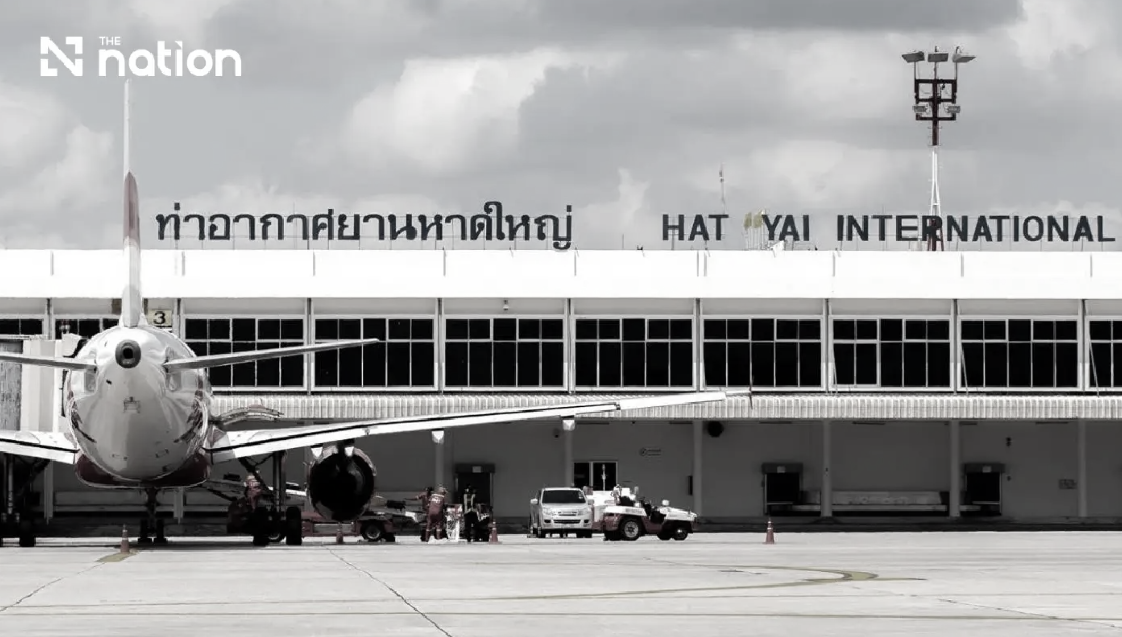
Hat Yai International Airport in southern Thailand experienced significant disruption on Wednesday afternoon when Runway 26 was forced to close following an accident involving an airport fire engine. The incident prompted airport authorities to issue an aviation notice restricting all inbound traffic, with some flights diverted to nearby Krabi Airport as a result of the operational constraints.
The runway closure remained in effect from 1.55pm until 4.30pm on June 17, as airport safety officials worked to secure and manage the incident area. Hat Yai Airport management prioritised passenger and aircraft safety during the three-and-a-half-hour window, preventing any landings at the facility while investigations and remedial work proceeded on the runway surface.
The disruption had immediate knock-on effects for airlines operating services into the southern Thailand hub. Flight-tracking data from Flightradar24 confirmed that at least two scheduled flights were redirected to alternative landing facilities during the closure period. Thai Airways flight TG263 and Thai Lion Air flight SL712 both diverted to Krabi Airport rather than proceed to their original destination, illustrating how even brief runway unavailability can ripple through regional air traffic networks.
The diversion requirement created uncertainty for travellers who were unaware of the reasons for the sudden change in their flight itineraries. One passenger's relative travelling on the Thai Airways service contacted Hat Yai Airport for clarity on why their inbound flight could not land. Airport officials confirmed an emergency had occurred at the facility but declined to elaborate on specific details at that time, leaving many passengers with incomplete information about the nature and severity of the situation.
For those affected by the routing change, the news that Thai Airways flight TG263 eventually touched down safely at Krabi Airport provided reassurance, though the disruption would inevitably cause inconvenience. Passengers faced the prospect of ground transportation from Krabi—approximately 240 kilometres away—to reach their final destinations in Songkhla Province or elsewhere in southern Thailand. The additional travel time and logistics complications represent the hidden costs of aviation incidents, even when resolved without injury.
Hat Yai Airport advised all travellers to maintain close contact with their respective airlines for real-time updates during the closure period. Such guidance underscores the importance of proactive communication channels between carriers and passengers during operational disruptions, allowing affected travellers to make informed decisions about onward arrangements and alternative transport options.
The incident highlights the critical role of ground support infrastructure at busy regional airports. Fire and rescue services are essential safety assets, yet their involvement in runway accidents poses a paradox—the very equipment designed to protect aircraft operations can itself create hazardous situations. This episode underscores the need for rigorous safety protocols governing the movement of large emergency vehicles across active runway surfaces, particularly at airports handling multiple daily flight movements.
Hat Yai Airport serves as a crucial gateway for southern Thailand, connecting the region to Bangkok and other major hubs. The facility handles a significant volume of domestic and regional traffic, making even brief operational disruptions noteworthy. For Malaysian business travellers and holidaymakers heading to Songkhla, Phuket, or other southern destinations, Hat Yai remains an important alternative to more congested airports, making the maintenance of reliable operations particularly valuable for cross-border traffic.
The temporary nature of this closure—limited to a single runway for just over three hours—prevented more severe economic consequences. Had the disruption extended longer or affected multiple runways simultaneously, the cascading effect on regional aviation could have been considerably more disruptive. The airport's swift response and containment of the incident situation reflected established emergency management procedures designed to restore normal operations as quickly as safely possible.
For the aviation industry across Southeast Asia, such incidents serve as reminders of the importance of continuous safety audits and operational discipline. Regional airports increasingly handle higher passenger volumes and flight frequencies, creating compressed margins for error. Ground safety procedures, vehicle maintenance standards, and staff training protocols require constant review to prevent accidents that can undermine airport efficiency and passenger confidence.
The broader context matters for Malaysian air travellers and logistics operators who may routinely use Hat Yai as a transit or connection point. Southern Thailand's airport infrastructure directly supports cross-border trade, tourism, and family visits that characterise regional connectivity. While this particular incident resolved without apparent injury or aircraft damage, it reinforces the fragility of air operations and the domino effects that even localised accidents can trigger throughout broader flight networks.