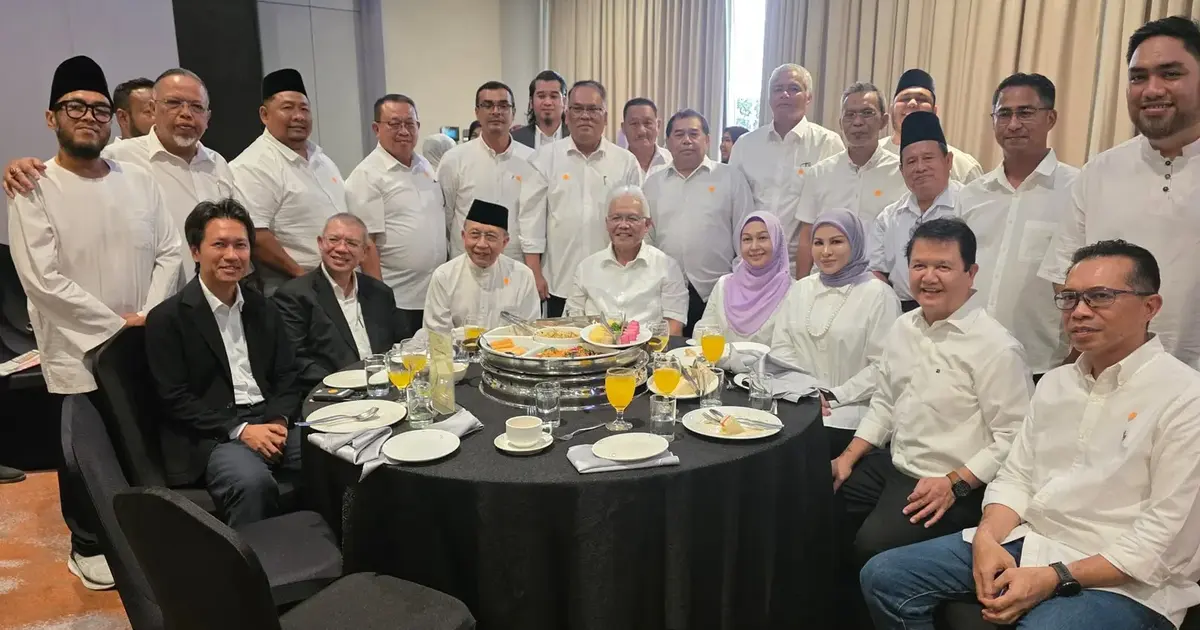
Hamzah has secured the presidency of Wawasan, marking a notable shift in the organization's command structure as it repositions itself within Malaysia's political landscape. The appointment signals fresh momentum for the entity and reflects confidence in Hamzah's ability to steer the organization through current challenges and opportunities.
Accompanying Hamzah's elevation to the top post, seasoned political operator Rais Yatim has been installed as chairman. Rais brings decades of experience across multiple ministerial portfolios and parliamentary service, positioning him as a stabilizing presence on the leadership board. His appointment underscores Wawasan's intention to leverage seasoned political expertise to guide strategic direction and governance.
Indera Mahkota MP Saifuddin Abdullah rounds out the senior leadership team as secretary-general, a position central to day-to-day organizational management and implementation of board decisions. Saifuddin's role represents a bridge between parliamentary representation and administrative function, ensuring that grassroots perspectives feed into strategic planning. His constituency background provides direct connection to ordinary Malaysians' concerns and priorities.
This leadership restructuring arrives at a moment when Malaysian political organizations face mounting pressure to demonstrate relevance and responsiveness to voter concerns. The appointment of three figures with distinct political pedigrees suggests Wawasan is attempting to consolidate influence across different constituencies and power bases. Hamzah's rise reflects his growing prominence in national political circles, while Rais's involvement signals attempts to anchor the organization in institutional stability and historical continuity.
The composition of this leadership trio carries implications beyond simple administrative hierarchy. Each brings different tactical strengths—Hamzah's contemporary political currency, Rais's institutional memory and elder statesman status, and Saifuddin's direct parliamentary platform. Together, they position Wawasan to engage multiple stakeholder groups simultaneously and pursue initiatives with broader credibility.
Regionally, such appointments matter because Malaysia's political organizations increasingly serve as nodes in a broader Southeast Asian network of democratic institutions and civil society actors. Leadership decisions ripple across borders, influencing how Malaysia's political culture is perceived internationally and shaping patterns of political cooperation and competition within the region. Wawasan's new direction under Hamzah may signal shifts in positioning on regional economic integration, geopolitical alignment, and governance standards.
For Malaysian observers, the reshuffle warrants attention to whether it precedes substantive policy announcements or organizational expansion. Leadership appointments often telegraph organizational intentions—increased emphasis on certain policy domains, geographic regions, or demographic constituencies. The timing and composition suggest Wawasan may be preparing a renewed push for relevance amid evolving political coalitions.
Rais Yatim's return to a formal organizational role after his own high-profile political career offers particular interest. His experience spanning cultural affairs, communications, and information portfolios means he understands both elite political dynamics and public perception management. His chairmanship suggests Wawasan plans enhanced engagement with media, public narrative-shaping, and cultural-political dimensions alongside conventional political organizing.
Saifuddin Abdullah's appointment as secretary-general carries weight given his frontline parliamentary presence. As an MP directly accountable to voters in Indera Mahkota, he maintains tangible connection to electoral politics while serving in administrative capacity. This combination potentially strengthens Wawasan's credibility with constituency-level party workers and ordinary members who view organizational leadership as either distant and disconnected or grounded in grassroots reality.
The broader context includes Malaysia's ongoing political fragmentation and realignment. With federal and state politics in flux, organizations like Wawasan must compete for relevance against established party machinery and emerging political movements. Leadership appointments become statements of ambition, signaling whether organizations intend to challenge existing power structures or consolidate existing alignments.
Moving forward, effectiveness of this leadership structure will depend on their capacity to articulate coherent organizational vision and mobilize members behind strategic priorities. Political organizations live or die based on their ability to translate leadership charisma and institutional position into tangible benefits for members—whether electoral support, policy influence, or expanded influence within broader coalitions.
The appointments also reflect generational dynamics within Malaysian politics. Hamzah represents mid-career political figures navigating post-transition politics, Rais embodies the establishment consensus-builder of the pre-transition era, and Saifuddin bridges generational divides through active parliamentary engagement. Their collective leadership attempts to span Malaysia's political time horizons and appeal across age-based political cohorts.

