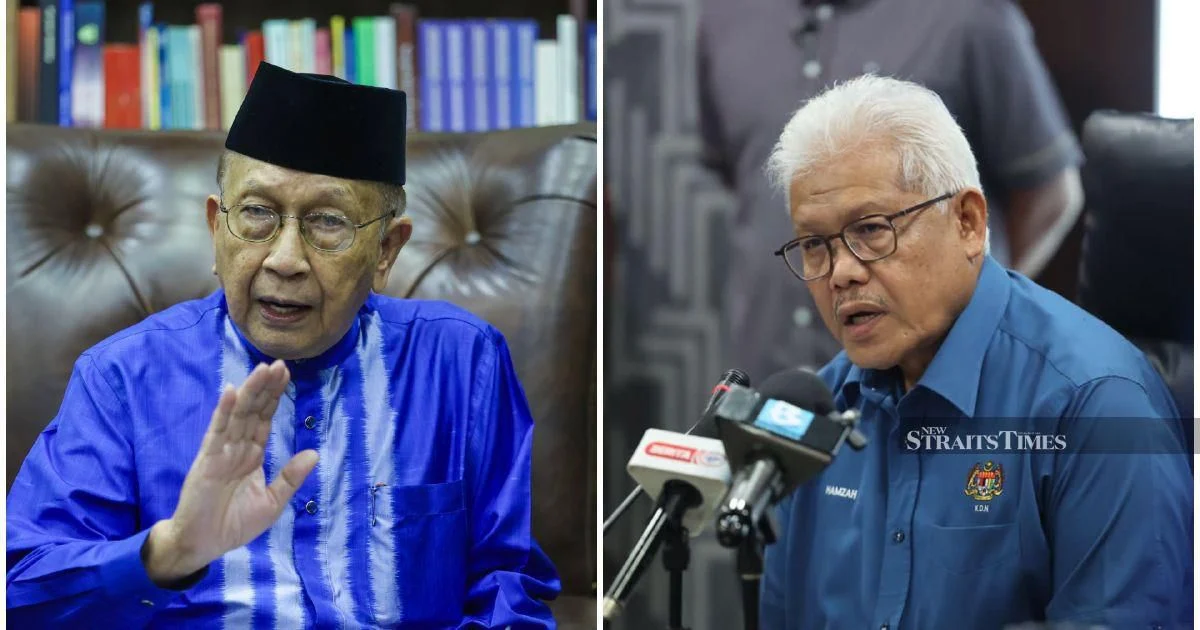
Parti Wawasan Negara has formally unveiled the composition of its central leadership team, assembling a coalition of seasoned political figures, former government ministers, sitting parliamentarians, and technical professionals into a structured governing body. The announcement marks a critical phase in the party's institutional development, establishing the formal mechanisms through which the relatively young political entity will coordinate its operations and strategic direction.
The appointment of Hamzah and Rais Yatim to head the leadership line-up reflects Wawasan's deliberate strategy to leverage the experience and political credibility of established figures within Malaysia's political landscape. Both individuals bring substantial track records from their previous roles in government and parliament, positioning the party to appeal to voters concerned about stability and competent governance. This combination of veteran leadership with fresh political branding represents a calculated approach to distinguishing Wawasan within an increasingly crowded Malaysian political marketplace.
The inclusion of former ministers within the central leadership structure demonstrates the party's commitment to drawing upon individuals with direct executive experience. Malaysia's political environment has increasingly valued technical competence and administrative acumen, particularly as voters assess parties' capacity to deliver concrete policy outcomes. By incorporating former ministerial figures, Wawasan signals its ambition to move beyond rhetorical positioning toward substantive governance proposals grounded in practical experience.
The presence of active parliamentarians within the leadership hierarchy ensures immediate connection to legislative realities and ongoing parliamentary business. This integration between party leadership and parliamentary representation creates institutional mechanisms for translating electoral promises into legislative action. For Malaysian voters evaluating Wawasan's viability as a governing alternative, the presence of sitting MPs within the party structure provides tangible evidence of existing legislative capability and parliamentary experience.
The deliberate inclusion of professionals from non-political backgrounds within the central leadership framework signals Wawasan's effort to project technocratic competence and cross-sectoral expertise. This approach aligns with broader regional trends toward parties emphasizing meritocratic selection and specialist knowledge in policy formulation. For a party seeking to establish credibility among educated, urban constituencies, the presence of professionals from various sectors strengthens appeals based on technical capacity rather than purely factional or ideological considerations.
The timing of this leadership announcement occurs within Malaysia's broader political realignment. Since the 2022 general election, the political landscape has continued shifting, with various party formations and reorganizations reshaping coalition dynamics. Wawasan's formal institutional structuring positions it within this evolving context, suggesting the party's intention to establish itself as a sustained political force rather than a temporary electoral vehicle.
The central leadership framework's composition reflects deliberate balancing between political experience and institutional diversity. Rather than concentrating power within a narrow faction, the structure appears designed to incorporate multiple voices and professional backgrounds. This approach potentially reduces internal factional tensions while creating representation across different constituencies and expertise domains—a structural consideration particularly relevant in Malaysian politics, where internal party cohesion has frequently challenged governing coalitions.
For Southeast Asian observers monitoring Malaysian political development, Wawasan's institutional formalization represents a broader phenomenon of party system consolidation across the region. As electoral competition intensifies and voter expectations for administrative performance rise, political parties increasingly invest in formal governance structures, professional staffing, and institutional mechanisms extending beyond charismatic leadership models. Wawasan's central leadership announcement exemplifies this regional pattern toward more institutionalized party systems.
The implications of this leadership structure extend beyond internal party management toward coalition mathematics within Malaysian politics. The specific composition of Wawasan's central leadership will influence the party's positioning within potential governing coalitions, its negotiating capacity with established political forces, and its ability to attract parliamentary candidates and constituency-level activists. The balance between veteran and newer figures may signal particular coalition preferences or policy orientations relevant to ongoing political negotiations.
From a longer-term perspective, the central leadership announcement establishes the institutional foundation upon which Wawasan must build sustained political presence. Initial leadership quality and internal organizational capability will influence whether Wawasan achieves its apparent ambition of becoming a significant force in Malaysian politics or remains a relatively marginal player within the broader party system. The party's capacity to retain talented figures, prevent leadership defections, and translate formal structure into effective organizational capacity will determine whether this leadership framework represents genuine institutional development or primarily symbolic positioning.
The unveiling of Wawasan's central leadership structure thus marks not merely an administrative announcement but a pivotal moment in the party's political trajectory. Through formal institutional structuring incorporating political experience, parliamentary representation, and professional expertise, Wawasan positions itself for potential expanded influence within Malaysian politics. Whether this leadership framework enables the party to achieve its apparent ambitions depends substantially on subsequent organizational execution and political circumstances beyond the control of internal institutional design.

