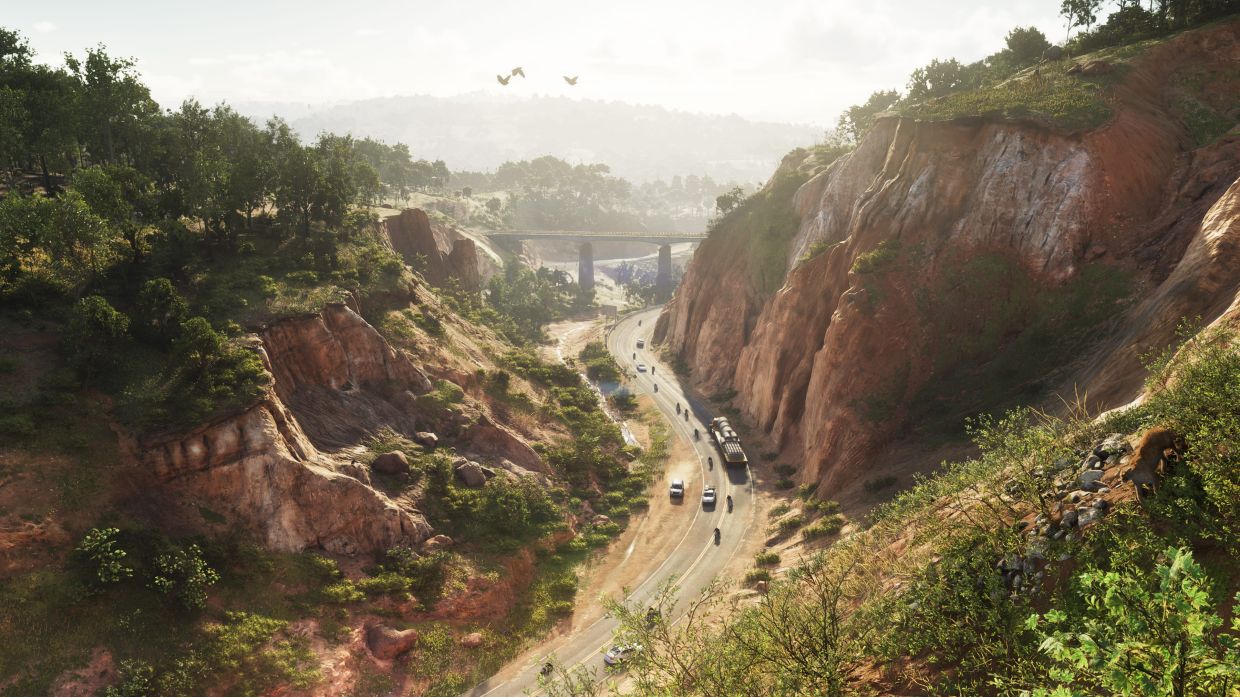
Rockstar Games, the studio behind one of gaming's most culturally dominant franchises, has confirmed that players can begin reserving Grand Theft Auto VI starting next week through both digital storefronts and physical retailers worldwide. The announcement, made through the company's social media channels, marks a critical milestone in the lead-up to what many industry observers consider the most eagerly awaited video game release in over a decade. Parent company Take-Two Interactive, headquartered in New York, simultaneously revealed the game's official cover artwork, though conspicuously avoided announcing the title price—a detail that has sparked considerable speculation across gaming communities and financial markets alike.
While Rockstar remained silent on cost, financial analysts and industry commentators have coalesced around expectations that the game will retail at US$80 (approximately RM329) for the base edition. This projection draws support from recent public statements made by Take-Two Interactive chief executive Strauss Zelnick and broader industry reporting on next-generation pricing strategies. The US$80 figure represents an industry standard established for premium console releases in the current generation, yet it has not forestalled considerable online speculation that the price could potentially edge toward US$100 (RM405), which would represent a significant recalibration of consumer expectations for premium gaming experiences.
The Grand Theft Auto franchise has cultivated a complex cultural identity since its inaugural 1997 release. Celebrated for its expansive open-world design, sophisticated mission architecture, and darkly satirical commentary on American society, the series has simultaneously attracted sustained criticism for its graphic depictions of violence and sexual content. This duality—commercial juggernaut paired with persistent cultural controversy—has defined the franchise's relationship with mainstream audiences and regulatory bodies across multiple jurisdictions. The brand's capacity to generate cultural discourse extends well beyond gaming circles, with each major release sparking broader conversations about media regulation, artistic expression, and the boundaries of interactive entertainment.
Grand Theft Auto VI transports the action back to Vice City, a fictionalized Miami-inspired setting that previously anchored Grand Theft Auto: Vice City in 2002. This return to beloved geography carries significant nostalgic weight for longtime players while offering fresh opportunities for satirical engagement with contemporary American culture. The game introduces a dual-protagonist narrative structure centred on Jason Duval and Lucia Caminos, a criminal couple whose story arc will reportedly anchor the campaign. Notably, this marks the franchise's first playable female protagonist in a primary role, signalling Rockstar's acknowledgment of evolving player demographics and industry conversations surrounding representation in interactive media.
The commercial magnitude of Grand Theft Auto cannot be overstated within the gaming industry's hierarchy. Grand Theft Auto V, released in 2013, has sold more than 230 million copies across all platforms—a figure that positions it among the best-selling entertainment products in human history. This extraordinary performance established GTA V as a sustained cultural phenomenon and revenue engine that has funded Rockstar's operations and parent company Take-Two's strategic initiatives for over a decade. The game's longevity, sustained by regular content updates and the massively multiplayer Grand Theft Auto Online component, has created formidable expectations regarding GTA VI's potential market penetration and revenue contribution.
Zelnick's recent public remarks regarding the development process reveal the psychological weight that both the company and its stakeholders bear. The executive characterised the situation as "very, very exciting and terrifying because the expectations are so high," a candid assessment that encapsulates the inherent tension when sequencing an entertainment product whose predecessor achieved near-universal commercial saturation. Delivering meaningful innovation while honouring franchise traditions represents perhaps the central creative challenge facing the development team, with financial markets and player bases equally invested in the outcome.
The game's development trajectory has not proceeded without significant complications. A 2022 security breach resulted in the leak of unfinished gameplay footage online, constituting one of the largest such breaches in gaming history and exposing hundreds of hours of in-development material to public scrutiny. This incident, coupled with the subsequent handling of the breach and its investigation, generated considerable discourse within gaming communities regarding cybersecurity practices within major studios. Subsequently, Rockstar's workforce reductions in 2023 prompted labour organisers to level accusations of union-busting tactics, issues that have contextualised the development process within broader conversations about working conditions within the gaming industry.
For Southeast Asian players, Grand Theft Auto VI represents both opportunity and consideration. The region has emerged as a significant gaming market, with Malaysia, Singapore, and other nations hosting substantial player communities and increasingly sophisticated infrastructure for digital distribution. However, the franchise's controversial content has historically faced regulatory scrutiny in various jurisdictions, necessitating localisation considerations and potential modifications to accommodate regional standards. The pricing in local currency equivalents—particularly the RM329 baseline estimate—also carries implications for market accessibility across different Southeast Asian economies.
The franchise's enduring appeal within Malaysian gaming communities reflects broader trends in open-world gaming preferences and the demographic shift toward adult gaming audiences. The satirical deconstruction of urban American society that characterises the series has generated particular resonance among Malaysian players interested in comparative cultural commentary, while the mechanics-focused gameplay attracts those seeking complex, time-investment-heavy entertainment experiences. The introduction of a female-centred narrative may resonate particularly strongly with increasingly diverse player demographics across the region.
Looking forward, the pre-order period will generate crucial data regarding initial consumer appetite, with early reservation numbers potentially signalling the game's commercial trajectory and providing indicators for Rockstar's post-launch content strategy. The absence of confirmed pricing and the careful calibration of marketing messaging suggest that Take-Two remains attentive to managing expectations—a critical consideration given the astronomical success of its predecessor and the impossibility of replicating the novelty that GTA V possessed when it launched over a decade ago.

