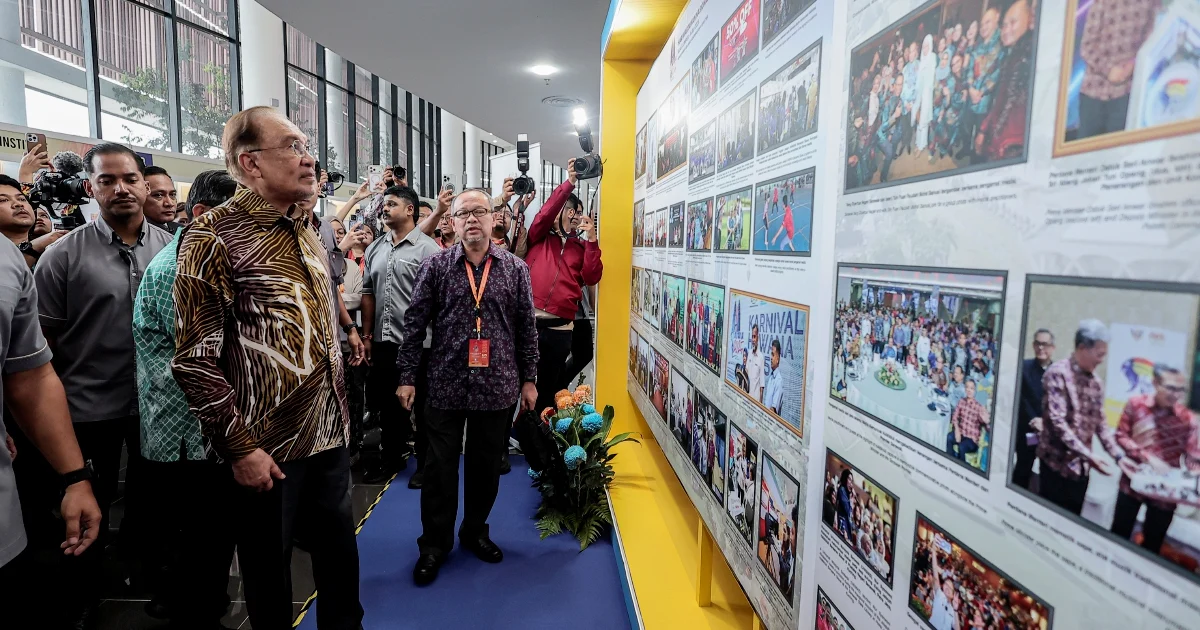
Prime Minister Datuk Seri Anwar Ibrahim has committed RM1 million in government funding to Tabung Kasih@Hawana 2026, a welfare scheme designed to support journalists in Malaysia. The announcement, made in Permatang Pauh, reflects the administration's broader strategy to invest in the media sector at a time when traditional news organisations face mounting financial pressures and the industry undergoes significant structural change.
The allocation underscores a recognition within government circles that journalism remains a pillar of democratic accountability, even as the profession confronts challenges posed by digital disruption and declining advertising revenue. By dedicating resources to journalist welfare, the government is signalling that it views media sustainability as a matter of public interest rather than purely commercial concern. This approach aligns with regional trends whereby several Southeast Asian governments have begun exploring targeted interventions to shore up newsroom stability.
The Tabung Kasih@Hawana 2026 fund appears designed as a targeted safety net for journalists facing economic hardship. While specific eligibility criteria and disbursement mechanisms remain unclear from the announcement, such schemes typically provide financial assistance for medical expenses, emergency relief, or income supplementation. For Malaysian journalists—many of whom have experienced salary reductions, redundancies, or irregular payment over the past decade—such support carries material significance. The timing is notable, arriving as media organisations navigate the transition from print-dominated business models to digital-first operations that have not yet achieved comparable profitability.
The Prime Minister's statement additionally emphasises continued government backing for broader media industry transformation initiatives. This language suggests the administration intends a comprehensive approach rather than ad-hoc interventions. Modernisation of Malaysia's media ecosystem requires investment across multiple fronts: digital infrastructure, newsroom training, technological adoption, and audience development strategies. By framing the RM1 million allocation within this larger context, the government signals that journalist welfare support forms part of a coherent industrial policy.
The investment carries implications for how Malaysian media outlets compete regionally and globally. Southeast Asian newsrooms increasingly operate across borders, competing for audience attention and advertising spend with outlets from Singapore, Thailand, and beyond. A healthier, better-supported Malaysian journalist workforce could strengthen the competitiveness of domestic media organisations. Conversely, continued attrition of experienced journalists to unemployment or career abandonment represents a loss of institutional knowledge and investigative capacity.
From a macroeconomic perspective, journalist welfare programmes also merit consideration as workforce development investment. The media sector, while not large in employment terms, produces outputs—information, analysis, accountability—that affect decision-making across the broader economy. A precarious, underpaid journalism workforce risks both the quality and independence of reporting that businesses, investors, and policymakers rely upon. Government support for journalist livelihoods therefore generates positive externalities beyond the immediate beneficiaries.
The announcement also reflects evolving government-media relations in Malaysia. Rather than confrontational approaches that characterise some periods of Malaysian politics, the current administration appears to favour constructive engagement with the media ecosystem. Directing funds toward journalist welfare represents a form of stake-holding: demonstrating that government takes media sector challenges seriously, while potentially building goodwill with journalists and editorial organisations. This softer approach differs markedly from previous eras characterised by regulatory heavy-handedness or hostile rhetoric.
However, observers should note that RM1 million, while meaningful, addresses only a fraction of the structural challenges confronting Malaysian journalism. Industry observers estimate that newsrooms across the country have shed hundreds of positions over the past five years. A single fund, however well-intentioned, cannot substitute for fundamental business model innovation or broader economic stabilisation in the media sector. The allocation therefore reads as an important symbolic commitment that requires supplementation through longer-term structural support.
The Hawana 2026 timeframe suggests this initiative forms part of medium-term planning rather than emergency intervention. By explicitly naming a future year, the government indicates it anticipates ongoing need for journalist welfare support. This longer horizon permits more sustainable programme design than one-off allocations. It also suggests government strategists anticipate continued turbulence in the media employment landscape over the next several years, reflecting realistic assessment of industry trajectory across developed and developing economies globally.
For Malaysian journalists themselves, the announcement carries both encouraging and sobering implications. Encouragement derives from visible government recognition that their profession faces genuine hardship deserving public support. Sobering undertones emerge from the acknowledgment that such welfare measures have become necessary—a reflection of deteriorating employment conditions. Journalists have historically viewed welfare funds as safety nets for exceptional circumstances rather than routine income support. The formalisation of such schemes signals normalised precarity in the profession.
Regional comparisons offer useful context. Singapore's media landscape, while constrained by regulatory factors, has benefited from government investment in news agency development and digital media training. Indonesian journalists have organised mutual aid schemes amid volatile employment conditions. The Malaysian government's direct allocation to journalist welfare represents an intermediate approach—public sector engagement without the heavy-handed industry control that characterises some regional media policies.
Looking forward, the success of this initiative will depend heavily on implementation details not disclosed in the initial announcement. Clear eligibility criteria, transparent fund management, and accessibility to freelancers as well as staff journalists will determine whether Tabung Kasih@Hawana 2026 effectively addresses journalist hardship or becomes a symbolic gesture with limited practical impact. The government's follow-up communication and fund administration will reveal whether this represents genuine commitment to media sector sustainability or primarily a public relations exercise.

