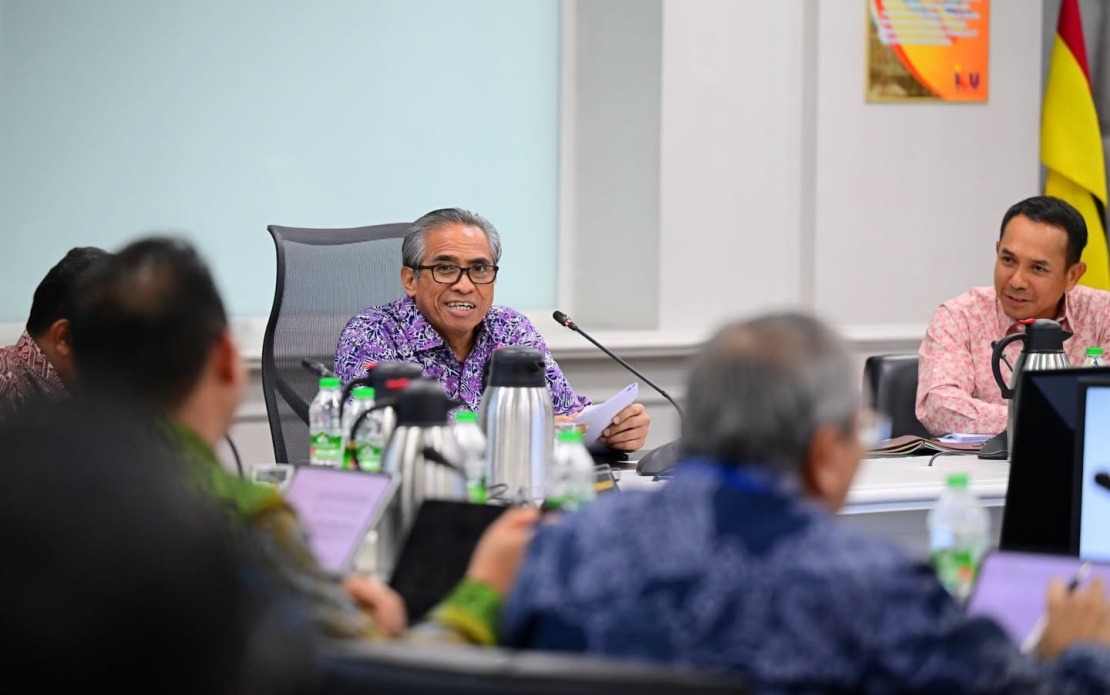
Malaysia's administrative machinery has been tasked with shifting gears on a major portfolio of grassroots infrastructure initiatives designed to deliver tangible benefits to citizens within months rather than years. Tan Sri Shamsul Azri Abu Bakar, the Chief Secretary to the Government, issued sweeping directives on June 25 at a National Development Action Committee meeting he chaired, instructing all secretaries-general across government ministries to concentrate their operational focus on expediting more than 40,000 small-scale development projects scattered throughout the country.
The strategic pivot reflects a recognition within the highest echelons of government administration that transformative change need not always take the form of sprawling mega-projects or lengthy infrastructure rollouts. Instead, the directive emphasises what implementation specialists call "low-hanging fruit"—initiatives that are feasible, locally resonant, and capable of being completed rapidly without requiring extended planning cycles or protracted funding negotiations. Shamsul Azri underscored this philosophy in his public statement, noting that the vast majority of these initiatives resonate deeply with ordinary Malaysians whose daily lives are shaped by the quality of local infrastructure and public amenities.
The scope of projects identified for acceleration spans the bread-and-butter concerns that dominate public discourse across Malaysia's diverse communities. Among the priority categories are road maintenance and pothole repairs in municipalities and rural areas, drainage system rehabilitation to address flooding and water management issues, renovation and restoration of government residential quarters, repair and refurbishment of classroom facilities in schools, enhancement of primary healthcare infrastructure, and revitalisation of public food courts and market spaces that serve as economic and social hubs. Each category addresses chronic complaints that surface regularly in town halls and community feedback sessions, suggesting that the government has grounded its selection criteria in documented public grievances rather than bureaucratic convenience.
What distinguishes this mobilisation from previous development initiatives is the explicit timeline constraint imposed on implementation agencies. Government officials have been informed that the target completion window for the overwhelming majority of these projects spans three to six months, a dramatic compression compared to typical infrastructure timelines. This accelerated schedule reflects both an operational imperative to demonstrate governmental responsiveness and a recognition that medium-term project completion windows generate far greater public satisfaction than multi-year development cycles that consume resources while remaining perpetually "under construction." The timeline also creates measurable accountability markers against which ministry performance can be assessed.
The operational mechanisms supporting this acceleration strategy include mandatory site visits by senior ministry officials, requiring secretaries-general and their teams to move beyond desk-bound administration and witness implementation challenges in real-world conditions. This on-the-ground presence is intended to create information asymmetries that favour rapid problem-solving, enabling officials to identify bottlenecks and implementation barriers that might otherwise languish in bureaucratic channels. Complementing these visits is a directive for continuous progress monitoring, suggesting that weekly or fortnightly status reviews will replace the monthly or quarterly check-in cycles that historically plague Malaysian development projects. The government has also tasked officials with proactive issue resolution, effectively decentralising decision-making authority to enable field-level practitioners to solve problems without awaiting head office clearance.
For Malaysian citizens, the significance of this initiative extends beyond its tangible infrastructure components. The government's choice to publicly communicate development priorities through social media platforms, with Shamsul Azri announcing the directive via Facebook, signals an attempt to operate with greater transparency regarding the developmental agenda. This approach stands in contrast to the more opaque project selection processes that have historically characterised Malaysian governance, where infrastructure decisions often appeared disconnected from stated public priorities. By anchoring its push around self-evidently local concerns—neighbourhood roads, school facilities, market improvements—the government creates fewer opportunities for allegations that development resources are being channelled to politically favoured constituencies or prestigious showpiece projects.
The regional context for this initiative deserves consideration, particularly as Southeast Asian governments increasingly compete for citizen satisfaction amid economic uncertainties and pandemic-related fatigue. Thailand, Indonesia, and the Philippines have pursued similar strategies of emphasising community-level development to rebuild public confidence, and Malaysia's pivot in this direction suggests recognition of that regional competitive dynamic. Rapid, visible improvements to public amenities and local infrastructure represent a form of developmental messaging that is easily comprehensible to ordinary voters and difficult for opposition politicians to dismiss as inconsequential.
The implementation challenges, however, remain formidable. Over 40,000 projects distributed across a nation of roughly 33 million people represents a logistical undertaking of significant complexity, requiring coordination across multiple ministries, state governments, and local authorities. Achieving even 80 percent completion within the prescribed timeframe would demand sustained focus and resource allocation that competing priorities might jeopardise. Weather disruptions, supply chain interruptions, and labour availability constraints—all perennial issues in Malaysian development contexts—could impact delivery timelines. Furthermore, the quality of project execution matters as much as speed; hastily completed repairs that require redoing within months would undermine the credibility benefits the government seeks to gain.
For ordinary Malaysians, the practical implications are potentially significant if the government executes effectively. Improved road conditions reduce commute times and vehicle maintenance costs. Enhanced drainage systems mitigate flooding impacts that disproportionately affect lower-income households. School classroom repairs improve learning environments for children already dealing with educational disruptions. Market improvements support the livelihoods of traders and vendors dependent on steady customer flows. Healthcare facility upgrades, even at modest scales, can improve service delivery for vulnerable populations reliant on public facilities. Collectively, these incremental improvements compound into meaningful quality-of-life enhancements that affect day-to-day citizen experiences more directly than large-scale infrastructure developments that might take years to materialise.
The directive also carries implications for bureaucratic culture within Malaysian government ministries. Requiring senior officials to conduct regular site visits and resolve issues promptly represents a departure from hierarchical, desk-bound administrative models that have long characterised Malaysian civil service operations. This shift toward field-centric management and rapid decision-making could establish precedents for how government agencies operate beyond this particular initiative. If successful, the model might reshape expectations about ministerial responsiveness and create constituencies accustomed to faster project delivery cycles.
Moving forward, the success of this initiative will depend substantially on whether government agencies receive commensurate resource allocation to support the acceleration agenda. Administrative directives without corresponding budget provision or personnel increases often produce frustration rather than results. The government's commitment to this directive will be measurable through quarterly progress reports and public updates on project completion rates. For Malaysian observers tracking government performance, the next three to six months will prove whether the administrative machinery can translate high-level strategic decisions into tangible community improvements.

