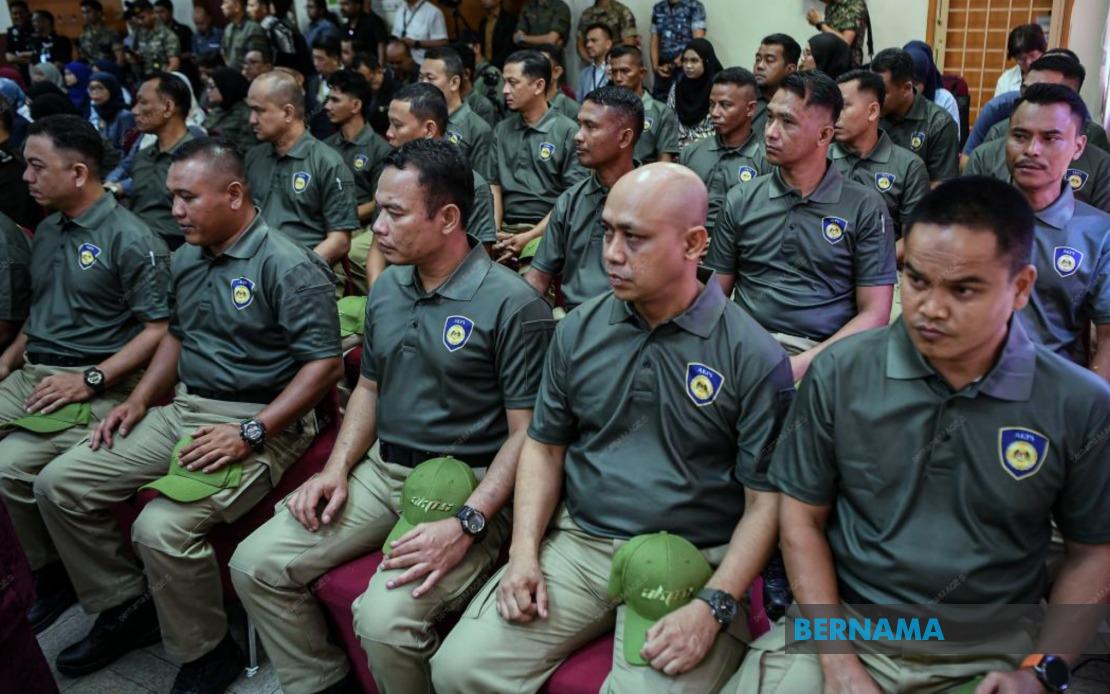
The government moved swiftly on June 25 to reassure thousands of personnel at the Border Control and Protection Agency (AKPS) that their livelihoods and professional standing will not suffer during a significant administrative restructuring taking effect on July 1. Deputy Home Minister Datuk Seri Dr Shamsul Anuar Nasarah issued the assurance in Parliament, addressing widespread concerns among enforcement officers about how the transition to Public Service Department oversight would affect their career trajectories and accumulated entitlements.
The AKPS itself represents a consolidation effort, having been established through the merger of several border and enforcement agencies into a single coordinated body. This unified structure now manages the movement of people and goods across Malaysia's 122 entry points, a critical responsibility for national security and border management. The scale of this coordination task underscores why personnel stability and morale matter significantly to operational effectiveness at ports, airports, and land crossings throughout the country.
Under the new arrangement, officers who elect to remain within their original service classification will face no disadvantage whatsoever regarding advancement opportunities, length of service calculations, retirement provisions or general welfare entitlements. This guarantee addresses a primary anxiety among civil servants undergoing organizational change—the fear that institutional restructuring could erase years of accumulated service credit or impose ceilings on future promotion. By ringfencing these protections, the government sought to neutralize resistance and maintain institutional confidence during the transition period.
Before the new scheme took effect, AKPS positions were filled through a secondment arrangement, with officers temporarily transferred from their parent agencies to serve in border control roles. The new system effectively formalized many of these arrangements. Officers who decline to accept permanent appointment transfer under the new scheme will remain attached to AKPS on a provisional basis, pending placement decisions made by the Public Service Department. Alternatively, they may be returned to their original departments, with specific assignments determined by their parent agency heads according to available positions and organizational requirements.
Statistical data presented in Parliament revealed the current staffing situation across the agency. As of mid-June, AKPS had successfully filled 6,824 of its 8,403 allocated positions, leaving a notable gap of 1,579 unfilled vacancies. This shortfall indicates ongoing recruitment challenges and highlights the practical complexity of managing such a large-scale institutional consolidation. The government indicated that these remaining positions are being filled progressively through coordinated efforts among AKPS leadership, the Home Ministry, the Public Service Department, and the constituent agencies that supply seconded personnel.
To make AKPS positions more attractive and to ensure consistent service delivery at border checkpoints, the government introduced financial incentives for officers accepting permanent transfer. These include an additional annual salary increment, referred to locally as KGT, and a service incentive payment of RM200, designed to offset any perceived disadvantages of joining a newer agency structure. For Malaysia's entry point operations to function smoothly—critical for tourism, trade, and national security—maintaining adequate staffing levels with motivated personnel is essential.
The assurance came in response to a parliamentary question from Rushdan Rusmi, a Perikatan Nasional representative from Padang Besar, who raised concerns about institutional stability among enforcement bodies and the welfare implications for the thousands of civil servants affected by AKPS's establishment. This exchange highlighted how border agencies hold special significance in constituencies with land crossing responsibilities, where local political representatives must account for their constituents' employment security.
The restructuring reflects broader trends in Malaysian governance, where consolidation of overlapping enforcement functions aims to improve coordination and eliminate institutional redundancy. By bringing customs, immigration, quarantine, and other border functions under a single AKPS umbrella, policymakers intended to streamline decision-making and reduce gaps in coverage. However, merging separate agencies inevitably creates uncertainty among affected workers about their professional status and prospects within the new hierarchy.
For Malaysian civil servants watching this transition, the government's explicit protections set an important precedent. Public sector restructuring happens periodically as administrations seek efficiency gains, and how the AKPS transition unfolds will influence employee confidence in future consolidation initiatives. If the government's guarantees prove robust and career continuity is genuinely maintained, it eases acceptance of organizational change. Conversely, any perception that promises were breached would breed cynicism about official assurances and potentially discourage talented individuals from accepting roles in reorganized agencies.
The July 1 implementation date establishes a definitive timeline, though administrative transitions rarely proceed without complications. The 1,579 unfilled positions represent real gaps in border management capacity that must be addressed quickly. Whether accelerated recruitment can close this gap before the busy tourism and trading seasons is a practical question that will test the government's coordination among implementing agencies. The smooth functioning of Malaysia's entry points—essential infrastructure for tourism, trade competitiveness, and regional connectivity—depends on having sufficient capable personnel in place.
Regionally, Malaysia's border management challenges parallels those facing other Southeast Asian nations managing complex entry points and balancing security with facilitation. The AKPS model of consolidated border control agencies represents one approach; other countries employ similar structures with varying degrees of success. How Malaysia executes this transition while maintaining institutional morale offers lessons for regional counterparts considering comparable reorganizations.
Looking forward, the government faces sustained pressure to demonstrate that the restructuring delivers genuine operational improvements in border management. Officers and their unions will monitor whether promised benefits materialize and whether career advancement genuinely proceeds unaffected. The stakes extend beyond individual employee welfare; they encompass Malaysia's capacity to manage its borders effectively in an increasingly complex geopolitical and epidemiological environment where border security and facilitation require both adequate staffing and sustained institutional professionalism.

