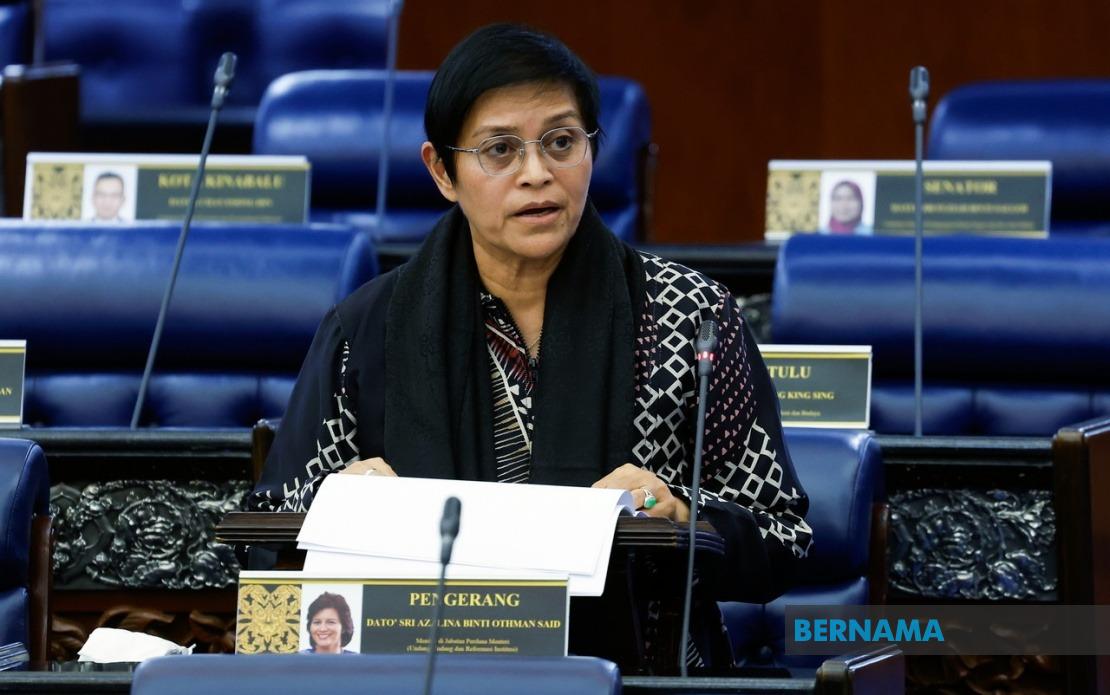
The Malaysian government has committed to ensuring that any investigations into alleged 'corporate mafia' activities proceed with full independence and transparency, with Minister in the Prime Minister's Department (Law and Institutional Reform) Datuk Seri Azalina Othman Said emphasizing that such corruption allegations strike at the heart of institutional integrity and public trust. Her statement, delivered in Parliament on July 17, underscores the seriousness with which the administration views matters that could compromise the credibility of public institutions and the confidence citizens place in them.
Azalina's remarks came in response to questioning from RSN Rayer, the Member of Parliament for Jelutong from the opposition Pakatan Harapan coalition, who sought clarification on the current status of investigations into the alleged 'corporate mafia' case and proposals to establish a dedicated Royal Commission of Inquiry to examine the matter comprehensively. The exchange highlights growing parliamentary scrutiny over governance issues and institutional accountability, reflecting broader concerns about corporate capture of government agencies and decision-making processes that have emerged as significant political issues in recent years across Malaysia and the broader Southeast Asian region.
The minister stressed that any subsequent action arising from these investigations must be anchored firmly in empirical findings and adherence to legal frameworks and procedural norms. She articulated a commitment to ensuring that justice prevails and that the rule of law remains the guiding principle throughout the investigative and enforcement process. This emphasis on procedure and evidence-based decision-making reflects international best practices in combating institutional corruption and corporate malfeasance, areas in which Malaysia has faced repeated scrutiny from transparency watchdogs and anti-corruption bodies.
Azalina outlined the formal constitutional and legal architecture governing the establishment of a Royal Commission of Inquiry in Malaysia, which operates under the Commissions of Enquiry Act 1950, legislation dating back to the colonial era but still governing how such extraordinary investigative bodies are constituted. This legal framework remains relevant to contemporary governance challenges, though it has been subject to criticism regarding its adequacy in addressing complex, multi-stakeholder corruption scenarios involving corporate entities and government officials acting in concert.
Under existing standard operating procedures, the pathway to establishing such a commission begins with the responsible ministry preparing a detailed Cabinet memorandum articulating why the matter warrants such elevated scrutiny and public resources. This memorandum must demonstrate that the issue involves questions of serious public interest that extend beyond the capacity of routine investigative agencies. Once Cabinet approval is secured, the Prime Minister must petition the Yang di-Pertuan Agong, Malaysia's constitutional monarch, for formal royal consent, a requirement that adds both constitutional dignity and procedural weight to the decision.
Following royal assent, the establishment of the Royal Commission involves several additional steps: defining its precise terms of reference, determining its membership composition and expertise, and establishing the timeframe within which it must complete its work. These elements are subsequently formalized through publication in the Federal Government Gazette, the official record through which government decisions become legally binding and public knowledge. The process, while thorough, can extend over considerable periods, a factor that critics have noted may impede timely investigation of urgent governance failures.
The minister indicated that the government remains receptive to considering the establishment of a Royal Commission or alternative investigative mechanisms if such measures are deemed necessary to serve the public interest. This openness reflects recognition that conventional investigative pathways through the Malaysian Anti-Corruption Commission and police agencies may prove insufficient for addressing deeply systemic issues involving multiple institutional actors. The willingness to consider such mechanisms suggests government acknowledgment that 'corporate mafia' allegations, if substantiated, may require investigation structures with broader powers, greater independence, and enhanced public visibility than standard procedures provide.
Crucially, Azalina made clear that any decision regarding the establishment of a Royal Commission will proceed strictly in accordance with applicable law and established procedural requirements, emphasizing that decisions will be informed by concrete findings and developments emerging from ongoing investigations by competent authorities. This cautious formulation suggests the government views the Royal Commission option as contingent rather than predetermined, with its consideration dependent on what investigative agencies uncover and whether their findings indicate the need for broader inquiry.
The parliamentary exchange reflects persistent concerns about the phenomenon of 'corporate mafia' arrangements, wherein powerful business interests allegedly coordinate with government officials to improperly influence procurement, licensing, regulatory, and policy decisions in their favor. Such arrangements, if they exist, represent a fundamental challenge to transparent, merit-based governance and undermine competitive fairness. Malaysia, like other Southeast Asian nations, has grappled with recurring allegations of such arrangements, particularly in sectors involving substantial government spending such as infrastructure, defense procurement, and resource extraction.
The minister's measured responses avoid committing definitively to the Royal Commission path while preserving the option, reflecting likely political calculations about the scope and sensitivity of potential findings. Establishing such a commission would signal serious government intent to address institutional corruption but would also create the risk of exposure of senior officials or well-connected business figures, potentially triggering significant political consequences. The government's position thus reflects a balance between responding to parliamentary and public pressure for accountability while maintaining political control over the pace and scope of institutional investigations.
For Malaysian citizens and regional observers concerned with governance quality, the government's commitment to independent and transparent investigations represents a minimum acceptable standard, though skepticism persists about whether such commitments will translate into meaningful action. The history of corruption investigations in Malaysia demonstrates that institutional capacity, political will, and freedom from interference all affect investigative outcomes. The parliamentary record of this exchange may serve as a benchmark against which future government action can be measured.
The broader context includes Malaysia's efforts to rebuild institutional credibility following the 1Malaysia Development Berhad scandal and associated corruption convictions of senior figures, circumstances that elevated anti-corruption and institutional reform to prominence in the political discourse. Successive governments have committed to strengthening institutions and combating corporate capture, though implementation has proceeded unevenly. The current government's stated openness to establishing investigation mechanisms reflects these enduring political pressures and Malaysia's positioning within international governance assessment frameworks that weigh institutional integrity as a critical factor in economic competitiveness and investor confidence.
The resolution of the 'corporate mafia' allegations, whether through conventional investigations or enhanced mechanisms such as a Royal Commission, will likely influence Malaysia's trajectory on institutional reform and governance quality. Regional peers and international observers will monitor how thoroughly such allegations are pursued and whether consequential action results from findings. The minister's parliamentary statement, while non-committal on specific mechanisms, at least establishes a formal government record acknowledging the seriousness of such concerns and committing to procedures guided by evidence and law.

