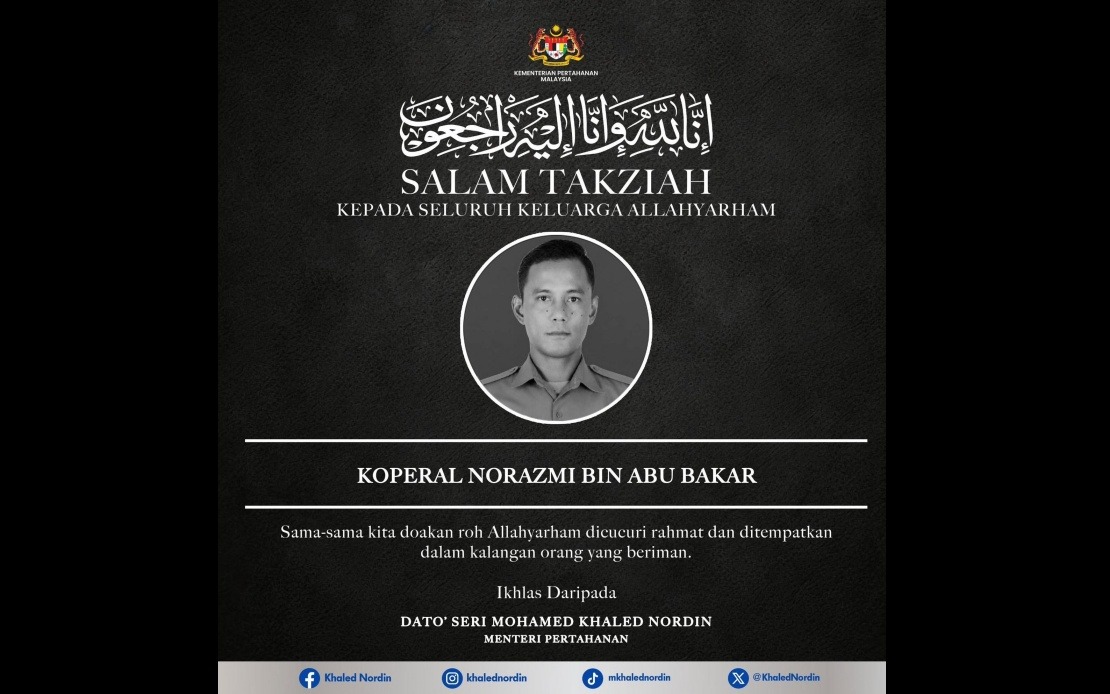
The Malaysian government and Defence Ministry have extended their condolences to the families of two military personnel who lost their lives in a tragic training incident in Kedah. Corporal Norazmi Abu Bakar and Private Siti Khadijah Sungip were killed during a grenade-throwing exercise at Hobart Camp firing range in Gurun, with the blast occurring at approximately 10.57 am. Both servicemen sustained critical injuries and were rushed to Sultan Abdul Halim Hospital in Sungai Petani, but succumbed to their wounds en route, marking a sobering reminder of the inherent risks faced by military personnel during routine training operations.
Defence Minister Datuk Seri Mohamed Khaled Nordin released a statement expressing deep sorrow over the incident, emphasising that the ministry and government stand alongside the bereaved families during this difficult period. In his social media post, the Defence Minister called for prayers for the deceased, seeking divine mercy upon their souls and requesting forgiveness for any transgressions. The ministerial statement underscored the broader commitment to supporting military families who face extraordinary circumstances as part of their service to the nation.
Corporal Norazmi Abu Bakar served with the 6th Battalion of the Royal Malay Regiment, one of Malaysia's most prestigious infantry units with a distinguished operational history spanning decades. Private Siti Khadijah Sungip was attached to the 1st Squadron of the Royal Army Engineers Regiment, a critical support unit responsible for combat engineering tasks and infrastructure development within military operations. The deaths represent a significant loss to both units and the wider Malaysian Armed Forces establishment.
The incident has prompted Army Chief General Tan Sri Azhan Md Othman to order a comprehensive investigation into the circumstances surrounding the explosion. Such investigations are standard protocol following fatal training accidents, aimed at identifying any procedural lapses, equipment failures, or environmental factors that may have contributed to the tragedy. The findings will be crucial in determining whether existing safety protocols require revision or whether additional safeguards should be implemented during similar training exercises.
Grenade-throwing training is a fundamental component of infantry and combat engineer preparation, designed to familiarise personnel with explosive devices and develop practical skills essential for field operations. These exercises are conducted under strict supervision with established safety parameters, yet the inherent nature of working with live ordnance carries inherent risks that cannot be entirely eliminated. The incident raises important questions about the adequacy of current safety measures and whether additional precautions could further reduce accident rates during such exercises.
This tragedy occurs against a backdrop of Malaysia's military operations spanning multiple fronts, from counter-insurgency activities in Sabah to maritime security operations in the South China Sea and the Strait of Malacca. Training exercises remain vital for maintaining the operational readiness of personnel who may be deployed to challenging and potentially hostile environments. The balance between realistic, demanding training and personnel safety represents an ongoing challenge for military planners and commanders.
The deaths of the two servicemen will likely prompt broader discussions within defence circles regarding training protocols and safety innovations. Regional militaries and defence establishments internationally continue to develop enhanced safety procedures, including improved supervision methodologies, equipment upgrades, and revised exercise choreography designed to minimise accident risks while maintaining training effectiveness and personnel competency development.
For Malaysia's military families, incidents such as this underscore the often-overlooked dangers that service personnel face beyond combat operations. While operational deployments receive significant public attention and media coverage, training-related fatalities represent a quieter tragedy that affects families, unit cohesion, and institutional morale. The government's formal expression of condolences serves both to honour the fallen and to acknowledge the sacrifices made by military families in support of national security.
The Malaysian Armed Forces maintain a professional and disciplined approach to operations and training, supported by established chains of command and institutional accountability mechanisms. The commitment to investigating this incident thoroughly reflects institutional priorities regarding personnel safety and continuous improvement of operational procedures. The findings will be significant not only for the units directly involved but potentially for armed forces institutions across Southeast Asia where similar training regimens are conducted regularly.
As investigations proceed, the focus will remain on supporting the affected families and ensuring that lessons learned are thoroughly documented and implemented. The tragic loss of Corporal Norazmi Abu Bakar and Private Siti Khadijah Sungip serves as a solemn reminder of the dedication and sacrifice expected of military personnel, and the commitment required from institutional leadership to continually enhance safety measures and operational protocols.