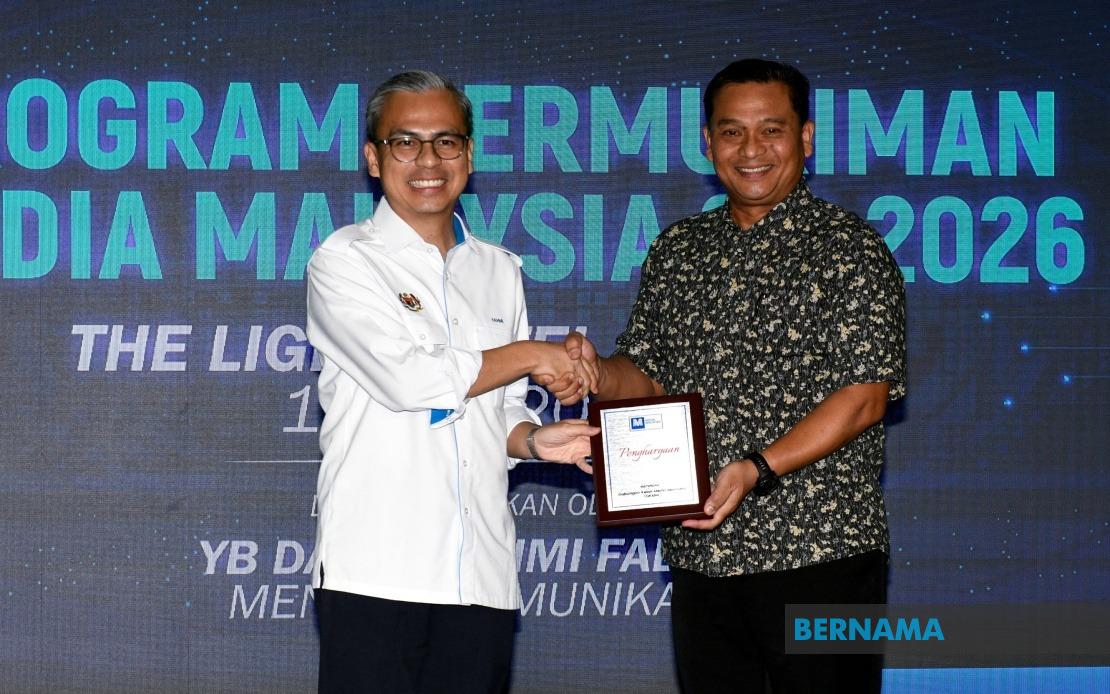
The Ministry of Communications is directing funds to support journalist welfare across Malaysia, with each state media club affiliated to the Malaysian Media Clubs Association receiving RM10,000 and the association itself securing RM30,000 for the financial year. Communications Minister Datuk Fahmi Fadzil made the announcement at the Malaysia Media Retreat Programme 2.0 in Butterworth, signalling the government's commitment to buttressing the journalism sector during a period of significant technological and economic transition.
Fahmi emphasised that these allocations should be deployed strategically to enhance the professional development and welfare provisions available to media workers nationwide. The minister framed the funding as recognition of the critical function that journalists perform in gathering and verifying information, particularly as the country navigates rapid digital transformation and evolving media consumption patterns. By channelling support through GKMM, the government has chosen to work through an established institutional framework rather than implementing direct bilateral assistance schemes.
The Malaysian Media Clubs Association serves as a representative body that coordinates interests across multiple state-level organisations. The dual funding structure—with larger sums distributed among member clubs while the central body receives a separate allocation—reflects a recognition that localised welfare initiatives and national coordination both require financial resources. The RM30,000 to GKMM is intended for sector-wide programmes, campaigns, and activities that would benefit journalists across different states and media organisations.
Fahmi's remarks contained a significant statement regarding technological disruption in the newsroom. He asserted that artificial intelligence cannot replace the fundamental journalistic function of witnessing events and gathering information from original sources. This positioning directly addresses industry anxieties about automation and the future employment landscape for news professionals. By explicitly stating that journalist jobs represent a policy priority for his ministry, Fahmi attempted to provide reassurance to a sector that has experienced substantial workforce reductions over the past decade due to digital disruption and advertising revenue migration.
The minister also acknowledged GKMM's functional limitations while outlining its utility within government frameworks. Although the association does not hold formal trade union status in Malaysia's industrial relations system, Fahmi indicated it performs an important advocacy function by aggregating practitioner concerns and transmitting them through official channels. This configuration allows the government to receive structured input from the media industry without conferring union powers such as collective bargaining authority or strike protection.
Fahmi highlighted the government's collaborative approach during the development of the Malaysian Media Council Act, which underwent extensive consultation with industry stakeholders. This legislative process ostensibly incorporated suggestions and viewpoints from media organisations, suggesting a model of policymaking that privileges dialogue with the sector rather than unilateral regulation. The transparent acknowledgement of this consultative process may signal the government's willingness to continue such engagement on future media policy matters.
The event in Butterworth brought together senior communications ministry officials, including secretary-general Datuk Abdul Halim Hamzah and Malaysian National News Agency leadership. The presence of Bernama's chief executive officer Datin Paduka Nur-ul Afida Kamaludin and editor-in-chief Arul Rajoo Durar Raj underscored the government's stake in maintaining productive relationships with the national news agency and broader media ecosystem.
For Malaysian readers, these allocations carry implications beyond immediate welfare support. The funding reflects government recognition that journalism constitutes a public good requiring institutional support, even as commercial models face pressure from digital economics. The timing of such announcements—at industry gatherings and through ministerial addresses—serves to reinforce official commitment to media sustainability during a period when newsroom resources remain constrained across the region.
The RM10,000 per state club, when distributed across 13 federal territories and states, represents meaningful but modest financial support for local media communities. Individual clubs may use funds for member assistance programmes, professional development workshops, mental health initiatives, or social gatherings that strengthen professional networks. The RM30,000 to GKMM could support national-level activities such as investigative journalism training, conferences, or advocacy campaigns addressing industry-wide concerns.
Malaysia's media landscape has undergone considerable transformation, with traditional outlets contending with reduced advertising revenues and changing consumption habits. Government funding directed toward journalist welfare represents one policy mechanism for stabilising employment in the sector, though analysts would likely note that such grants constitute only one component of a comprehensive approach to media sustainability. Other factors—regulatory frameworks, economic incentives for digital news production, and commercial viability of journalism—equally shape employment prospects.
Fahmi's emphasis on preserving journalism employment reflects broader regional conversations about media health and societal information infrastructure. Southeast Asian governments increasingly recognise that functional journalism underpins democratic institutions, corporate accountability, and informed public discourse, even when specific outlets maintain critical editorial positions toward official policy. The Malaysian government's investment in journalist welfare can be understood as an investment in the professional sustainability of the media ecosystem itself.
The announcement also carries symbolic weight regarding government-media relations in Malaysia. Direct financial support signals institutional engagement rather than adversarial positioning, creating frameworks for ongoing dialogue between authorities and news practitioners. Whether such funding enhances editorial independence or creates subtle dependencies remains a complex empirical question that media scholars and industry observers continue to debate across Southeast Asia.

