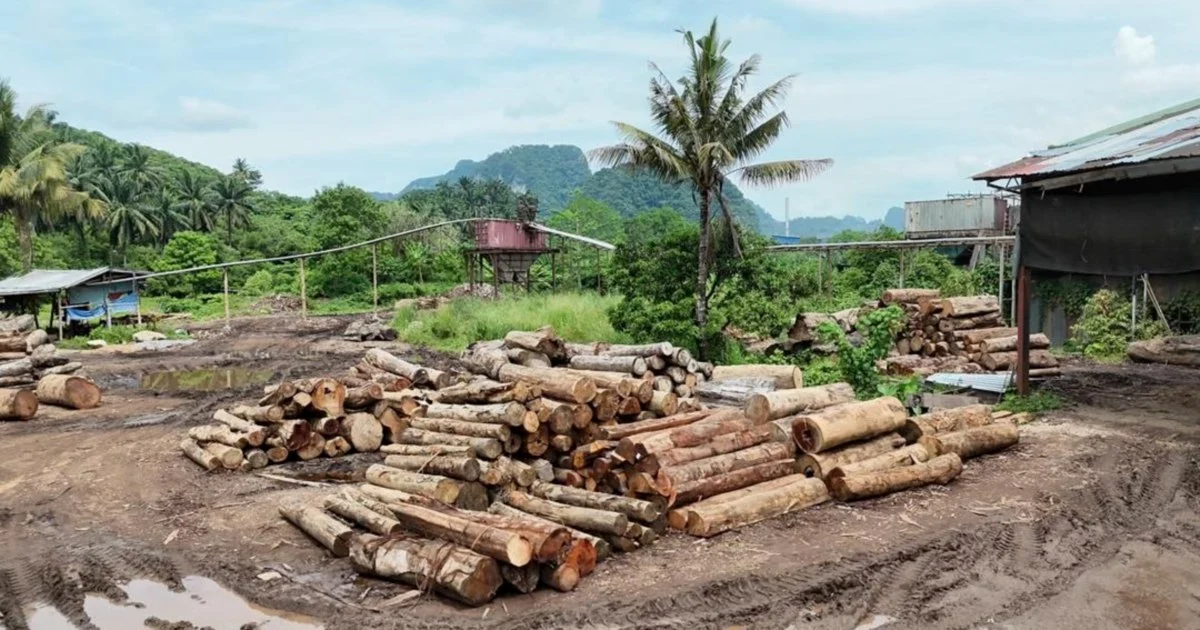
The General Operations Force (GOF) has struck a substantial blow against illegal timber trafficking in Malaysia's northeast, detaining eleven individuals and confiscating approximately RM2.43 million worth of forest products and related equipment during coordinated enforcement operations spanning Kelantan and Terengganu. The sweep, which unfolded across both states, marks the latest phase in intensifying crackdowns against organised smuggling networks that have plagued the region's sensitive forest reserves and borderland areas.
Among those taken into custody were four Indonesian nationals, underlining the transnational dimension of Malaysia's timber trafficking challenge. The involvement of foreign operatives indicates sophisticated cross-border coordination, a hallmark of modern resource smuggling enterprises that exploit porous frontier zones and exploit regulatory gaps between neighbouring countries. The remaining seven detainees are Malaysian citizens, suggesting the operation functioned as a hybrid criminal venture with both international and domestic participants working in concert to exploit the region's timber wealth.
The recovered contraband encompassed not merely felled logs or rough timber, but also sophisticated machinery integral to processing and transporting stolen forest materials. This seizure represents both the physical evidence of illegal harvesting operations and the operational infrastructure these syndicates depend upon. The machinery recovered points to an enterprise operating at scale, equipped to conduct processing activities rather than simply moving raw materials opportunistically.
Kelantan and Terengganu remain particularly vulnerable to timber smuggling due to their abundant forest resources and proximity to the Thai and Indonesian borders. The region's geography creates natural corridors for illicit trade, where rugged terrain and established informal trading networks facilitate the movement of contraband across international boundaries. These cross-border routes have historically served smuggling operations of various commodities, making timber trafficking merely one element within broader transnational organised crime networks.
Government enforcement agencies have intensified operations against illegal logging and timber trafficking as these activities carry serious environmental and economic consequences. Beyond the immediate loss of state revenue and forest cover, unregulated timber extraction destabilises ecosystems, threatens biodiversity, and undermines legitimate timber industry operators who comply with licensing and sustainability requirements. The seizure of RM2.43 million in assets demonstrates the substantial financial stakes involved, suggesting these are not opportunistic operators but rather established criminal enterprises.
The GOF's operational capacity to conduct simultaneous raids across two states reflects improved coordination and intelligence-sharing mechanisms among Malaysian law enforcement agencies. Such synergy is essential when combating organised crime networks that span multiple jurisdictions and exploit administrative boundaries. The timing and scale of today's operations indicate that authorities had compiled sufficient intelligence to mount comprehensive enforcement action striking multiple locations within a narrow timeframe, preventing suspects from dispersing contraband or destroying evidence.
Indonesian involvement in the trafficking ring aligns with regional patterns where criminal enterprises recruit operatives from neighbouring countries to manage specific functions within smuggling pipelines. Cross-border recruitment allows syndicates to compartmentalise operations, insulate leadership from direct culpability, and complicate prosecution by introducing jurisdictional complexities. The apprehension of four Indonesian nationals will likely necessitate diplomatic coordination regarding their detention, interrogation, and potential extradition or bilateral legal proceedings.
The enforcement operation reflects broader regional security concerns regarding natural resource crimes. Southeast Asian governments increasingly acknowledge that environmental crimes and trafficking in forest products constitute serious threats comparable to narcotics or weapons smuggling. The substantial asset values involved, the sophisticated operational infrastructure, and the international dimensions all classify timber trafficking within organised crime frameworks rather than treating it as a minor regulatory violation.
For Malaysian readers, these operations carry implications extending beyond immediate law enforcement statistics. Illegal timber extraction represents a direct economic loss to the state, foregone tax revenue that might fund public services, and degradation of natural capital that future generations will inherit diminished. Additionally, uncontrolled trafficking undermines the competitive position of legitimate Malaysian timber exporters who operate under stringent environmental and sustainability certifications, imposing higher compliance costs that unlicensed smugglers avoid entirely.
The GOF's ongoing vigilance against timber smuggling networks remains critical as international demand for Southeast Asian hardwoods continues sustaining criminal procurement operations. As legitimate timber supply tightens due to conservation efforts, the economic incentive for illicit harvesting intensifies proportionally. Regional cooperation among Malaysian, Indonesian, and Thai authorities becomes increasingly vital to disrupting trafficking pipelines that exploit the porous boundaries separating their jurisdictions and overwhelm individual national enforcement capabilities.
Moving forward, the individuals detained will face investigation and potential prosecution under Malaysia's forestry and environmental protection legislation. The recovered machinery and timber constitute exhibits that prosecution teams will utilise to establish operational scope and document the conspiracy's extent. Beyond immediate judicial proceedings, law enforcement agencies must analyse the operational patterns revealed through today's bust to identify remaining network members, funding sources, and downstream recipients of smuggled timber who purchase contraband products in domestic or international markets.