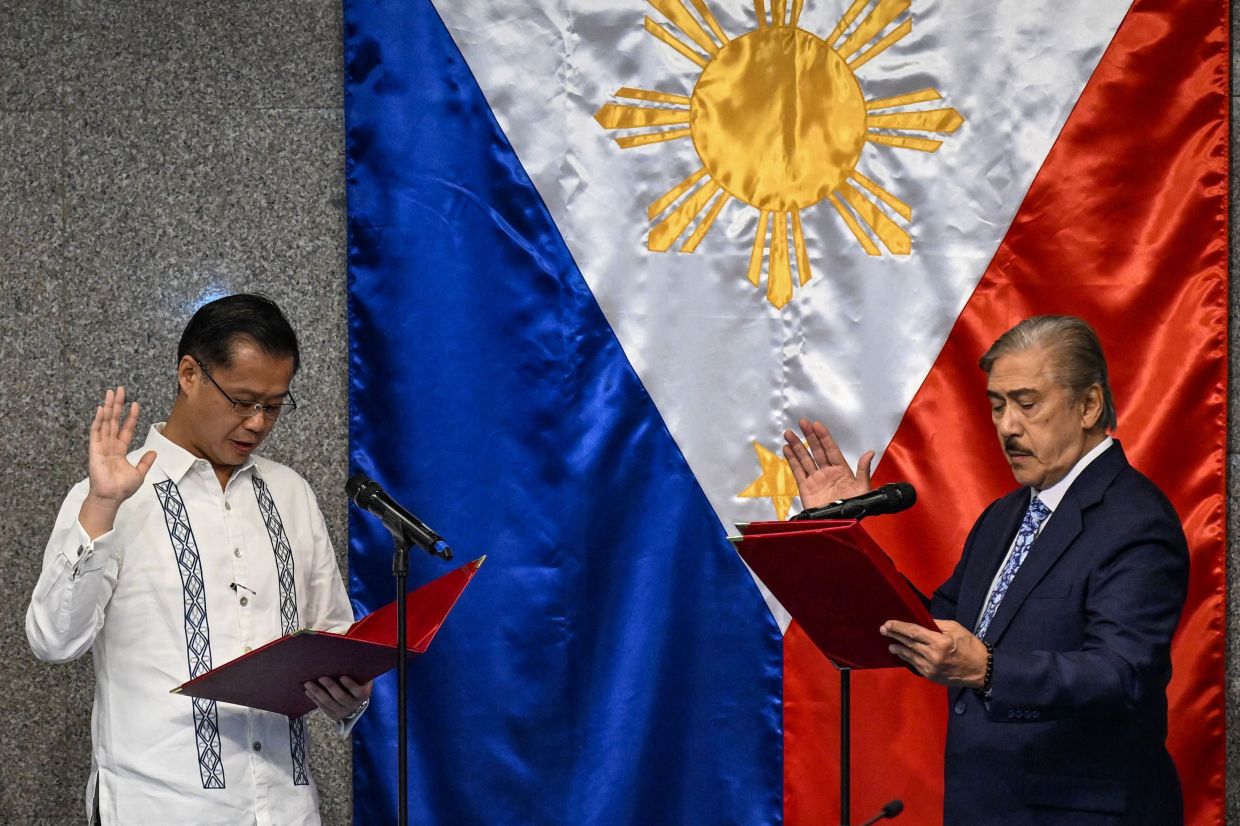
The Philippine Senate has a new leader following a special session that reflected the fluid nature of legislative politics in the archipelago. Senator Sherwin Gatchalian was formally elected Senate president on June 17, with 13 senators voting to install him as head of the 24-member chamber. The minimum threshold of 13 votes was met precisely, marking a decisive but narrow mandate for the former Valenzuela City mayor who has held various positions including House Representative before his Senate election.
The path to Gatchalian's election underscores the unpredictable dynamics within the Philippine upper chamber, where allegiances can shift rapidly based on political calculations and personal relationships. Just two weeks earlier, on June 3, a different configuration of 12 senators had voted to make Gatchalian Senate president pro tempore while simultaneously declaring that Alan Peter Cayetano, who had assumed the Senate presidency on May 11, had vacated the position. That maneuver appeared decisive at the time, yet it failed to conclusively settle the leadership question.
Cayetano initially resisted the June 3 decision, asserting that he retained the Senate presidency and arguing that removing or electing Senate officers required an absolute majority of 13 votes. His interpretation of the chamber's rules created legal and political ambiguity, effectively freezing the leadership question in a state of contested legitimacy. The dispute reflected not merely a disagreement over procedure but a fundamental clash over what constitutes valid authority within the Senate itself, with Cayetano refusing to acknowledge the legitimacy of the 12-senator vote.
The turning point came when Senator Joel Villanueva, who had previously aligned with Cayetano, dramatically switched his support to Gatchalian's faction. This single senator's shift proved mathematically decisive, as it provided Gatchalian's supporters with the 13 votes necessary to meet the constitutional threshold. Villanueva's decision appears to have been triggered by direct conversation with Cayetano, during which the incumbent Senate president apparently concluded that the arithmetic had shifted irreversibly against his position.
On Tuesday, before the formal election, Cayetano publicly acknowledged the changed landscape and hinted that he might relinquish the Senate presidency. His willingness to step down without a prolonged confrontation, while politically significant, also reflected a calculation that further resistance would prove futile and potentially damaging to his standing within the chamber. The relatively swift resolution contrasts sharply with leadership disputes in other legislative bodies, where entrenched factions sometimes engage in protracted battles.
The institutional context matters considerably for understanding this political realignment. The Senate currently operates with only 22 sitting members, down from its nominal 24-member strength. This reduced complement has heightened the importance of individual votes and made coalitions more volatile. Senator Jinggoy Estrada's surrender to police earlier in June created one vacancy, and subsequently the Sandiganbayan, the Philippines' anti-graft court, ordered his suspension from office for 90 days due to charges in his corruption case. Senator Ronald Dela Rosa constitutes another absence, as he remains a fugitive wanted by the International Criminal Court with his location unknown.
These absences fundamentally alter the Senate's operational reality in ways that reverberate through leadership contests. With 22 members present, securing 13 votes for any position requires approximately 59 percent of the available Senate strength. The effective supermajority requirement means that Senate leaders enjoy narrower bases of support than their nominal position might suggest, and coalitions remain vulnerable to defections. Gatchalian's victory, while mathematically clear, rests on a coalition that could theoretically fracture if conditions change.
For Malaysian and broader Southeast Asian observers, the Philippine Senate's leadership transition illustrates patterns common across the region's legislative bodies. Coalition politics in pluralistic systems often produce fluid allegiances where party affiliation matters less than personal networks, district interests, and calculations about future influence. The willingness of individual senators to switch positions without dramatic public rupture suggests political cultures that, despite their competitive intensity, maintain certain conventions about the acceptable bounds of conflict.
Gatchalian's background as a provincial chief executive and House member suggests someone with constituency management experience and legislative familiarity. His election as Senate president positions him to shape the chamber's agenda and legislative priorities for the remainder of the session. Early signals about his leadership style and policy preferences will likely emerge through committee assignments, scheduling decisions, and his relationship with the executive branch.
The resolution of this dispute also raises questions about the Senate's institutional rules and their interpretation. The disagreement between Cayetano and Gatchalian supporters about whether 12 or 13 votes were necessary highlighted ambiguities that may require clarification through formal amendment or established precedent. Clearer rules about Senate officer elections could prevent similar disputes, though Philippine legislative tradition sometimes tolerates procedural flexibility.
The broader significance lies in demonstrating how quickly legislative coalitions can realign when key figures shift allegiance. Villanueva's move transformed what appeared to be a 12-12 standoff into a decisive 13-vote mandate. This pattern suggests that Senate legislation, particularly bills requiring supermajority support, may experience sudden acceleration or blockage depending on coalition composition. Gatchalian inherits not only the Senate presidency but also responsibility for managing these volatile dynamics while advancing his leadership agenda.