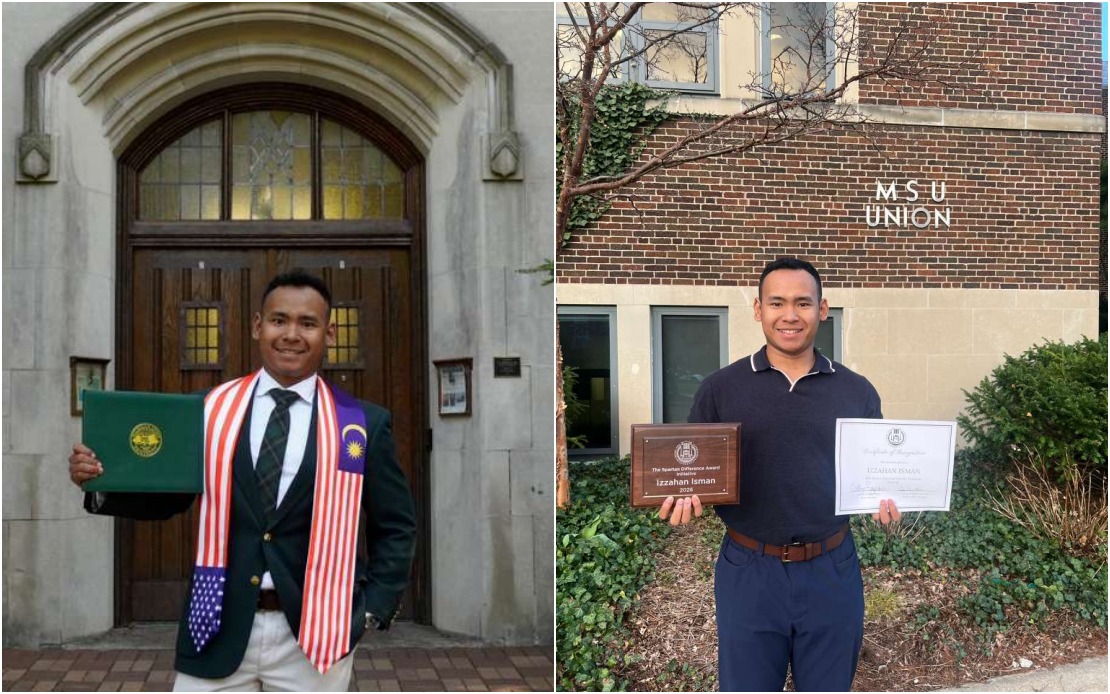
Muhammad Izzahan Isman's path to academic excellence at Michigan State University in the United States underscores an often-overlooked connection between Islamic scholarship and contemporary professional achievement. The 22-year-old MARA scholar, who has just completed his Bachelor of Arts in Economics through the Majlis Amanah Rakyat Young Talent Development Programme, attributes much of his university success and workplace innovations to the rigorous mental training he received through tahfiz education during his formative years. His journey offers compelling evidence that the discipline embedded in Quranic memorisation translates into tangible cognitive advantages in secular academic environments.
The cognitive demands of tahfiz education operate on principles that neuroscientists increasingly recognise as fundamental to learning. Quranic memorisation requires practitioners to engage simultaneously in retention and comprehension—a dual cognitive load that strengthens neural pathways responsible for both memory and analytical thinking. For Izzahan, this training proved transferable across disciplines. He explained that the mental flexibility developed through memorising and understanding verses of the Quran created a foundation that enabled him to absorb complex economic theories and statistical methodologies with comparative ease. This cognitive adaptability became particularly valuable when navigating the transition from Malaysian secondary education to the rigorous American university system, where independent thinking and intellectual synthesis are paramount.
During his undergraduate years, Izzahan maintained an impressive cumulative grade point average of 3.72, a figure that places him well within the academic elite at Michigan State University. Beyond the numerical achievement, he accumulated multiple formal recognitions that validated his contributions across different domains. His selection for the Reserve Officers' Training Corps Academic Ribbon acknowledged his ability to sustain a GPA above 3.5 while managing additional leadership responsibilities—a feat requiring the kind of disciplined time management that tahfiz students cultivate through their daily routines.
What distinguishes Izzahan's narrative from typical scholarship success stories is his capacity to translate academic excellence into practical workplace solutions. While employed as a management assistant during his university years, he identified a recurring operational inefficiency: the institution regularly lost experienced student employees upon graduation, forcing supervisors into perpetual cycles of staff retraining. Rather than accepting this as inevitable attrition, Izzahan developed a comprehensive training manual that fundamentally restructured the onboarding process. This initiative reduced training duration, improved operational efficiency, and created institutional memory that persisted beyond individual tenure. His intervention earned two university-level recognitions: the Spartan Difference Award and the Green Cranium Award, accolades that indicate senior leadership noticed not merely his individual capability but his willingness to solve systemic problems.
A graduate of Sekolah Berasrama Penuh Integrasi (SBPI) Rawang, Izzahan attended one of Malaysia's integrated residential schools that combine Islamic and academic curricula. These institutions are designed to produce graduates who synthesise religious knowledge with conventional subjects, yet the extent to which tahfiz training specifically benefits performance in economics, statistics, and other technical fields remains underexplored in Malaysian educational discourse. Izzahan's success suggests that the memorisation and recall capabilities honed through Quranic study provide advantages that extend into quantitative and analytical domains, potentially offering Malaysian policymakers insights into curriculum design and pedagogical approaches.
Adjusting to life in a foreign country presents psychological and social challenges that extend beyond academic coursework. Izzahan acknowledged that maintaining personal equilibrium required more than academic discipline—it demanded conscious cultivation of self-awareness and purposefulness. He described regularly reminding himself of long-term objectives and the future he aspired to construct, using this perspective as a compass to guide daily choices. This reflective approach mirrors the introspective dimensions of Islamic practice, particularly the annual self-assessment and goal-setting that accompany religious observance. By maintaining clarity about his trajectory and values, he successfully navigated the social pressures and lifestyle choices that frequently derail international students.
The broader significance of Izzahan's achievement extends beyond individual accomplishment to raise questions about Malaysia's human capital development strategy. MARA's Young Talent Development Programme represents a significant investment in Malaysian excellence, yet the intersection between Islamic education and secular academic achievement remains understudied. If tahfiz training demonstrably enhances cognitive capabilities applicable to economics, engineering, and other technical fields, this finding could inform how Malaysia structures its talent pipeline and justifies continued investment in integrated educational models.
Looking forward, Izzahan has articulated ambitions to contribute to Malaysia's financial sector and support the nation's efforts to establish itself as a leading regional financial hub. His stated intention to pursue further expertise development in finance suggests he views his undergraduate degree not as a terminal qualification but as a foundation for specialised advancement. This progression aligns with Malaysia's economic diversification strategies, particularly efforts to strengthen domestic financial services capabilities and reduce dependence on foreign expertise in key sectors.
Izzahan's social media prominence following his achievements has generated considerable public interest, reflecting broader Malaysian societal interest in success narratives that bridge religious identity and contemporary professional accomplishment. In a regional context where debates about religious education's compatibility with secular career success remain contentious, his story provides concrete evidence that these pursuits need not exist in opposition. Instead, the discipline, memory enhancement, and personal resilience cultivated through tahfiz education can become accelerants for achievement in globally competitive academic and professional environments.
The implications of his journey merit consideration by Malaysian educators, policymakers, and parents evaluating educational pathways for their children. As regional competition for talent intensifies and Malaysia seeks to position itself as a knowledge economy, examples like Izzahan's underscore that integrated approaches to education—combining Islamic scholarship with rigorous academic training—may produce graduates uniquely equipped for complex professional challenges. His 3.72 CGPA, multiple awards, and innovative workplace contributions collectively suggest that the question is not whether Islamic education and secular success coexist, but rather how Malaysia can optimise structures ensuring more graduates realise this potential.