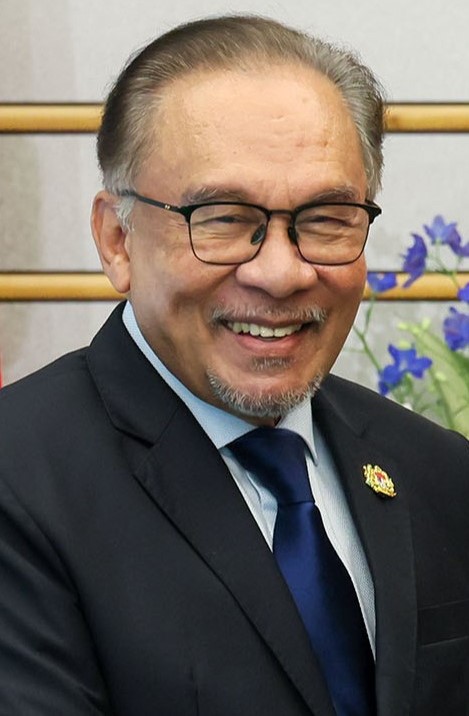
Dr Shukri Abdullah, Kedah's recipient of the Tokoh Maal Hijrah award, has credited a two-week detention under the Internal Security Act during his university years as the pivotal moment that redirected his entire life trajectory. Now 76, the prominent motivational speaker and former academic reflects on how this traumatic experience ultimately catalysed a remarkable personal metamorphosis that would see him become one of Malaysia's most recognised voices on personal development and educational excellence.
The turning point came in 1974 when Dr Shukri, then a student leader at Universiti Sains Malaysia, was detained following his participation in the Baling Demonstrations. The arrest carried immediate consequences—his scholarship was revoked, leaving him in a precarious position financially and academically. Rather than accept this setback as insurmountable, however, he describes the experience as a wake-up call that fundamentally altered his perspective on life's possibilities. In an interview following the Kedah State-Level Maal Hijrah Celebration at Wisma Darul Aman, where he received a certificate of appreciation and RM15,000 in cash from Tengku Sarafudin Badlishah Sultan Sallehuddin, Dr Shukri emphasised that the detention instilled in him an acute awareness of education's transformative potential.
What makes Dr Shukri's account particularly compelling is his candid admission that he was not a naturally gifted student. During his secondary schooling years, his academic performance was decidedly average, a reality that initially prevented him from gaining university admission on his first application. Rather than pursue alternative paths, he made the pragmatic decision to work as a journalist with Utusan Melayu in 1980, maintaining his ambition to eventually return to formal education. This strategic pause proved instrumental; when he reapplied to USM the following year, he was accepted, bringing with him not only enhanced maturity but also the hunger born from having tasted professional life.
The contrast between his secondary school performance and his subsequent university achievement underscores a critical insight about human potential and timing. Upon returning to USM, Dr Shukri channelled the discipline and self-awareness forged through his ISA experience into his studies with singular focus. His efforts proved spectacularly successful—he emerged as the university's overall best student and received the honour of delivering the valedictory address as the institution's top graduate. This elevation from middling high school student to university's most distinguished scholar demonstrates the profound impact that motivation, life experience, and determined self-improvement can exercise on academic outcomes.
Following his undergraduate success at USM, Dr Shukri pursued postgraduate studies in the United Kingdom, where he completed a PhD from the University of Essex in just over two years. This accelerated completion of doctoral studies reflects not merely intellectual capability but also the extraordinary work ethic and purposefulness that had come to define his approach to learning. Upon returning to Malaysia, he initially took up a position as a lecturer at USM, but eventually recognised that his true calling lay not in traditional academic circles but in reaching broader audiences through motivational and developmental work.
For more than three decades, Dr Shukri has dedicated himself to guiding students and parents through comprehensive motivational programmes, establishing himself as a respected figure in the personal development sector. His message has remained consistent throughout this long career: transformation is possible for anyone willing to cultivate awareness and commitment to improvement. He emphasises that excellence is not the exclusive domain of the naturally talented but rather emerges from the deliberate cultivation of discipline, self-awareness, and resolute determination to change one's circumstances.
Dr Shukri's advocacy extends beyond individual motivational speaking into broader social concerns. He has consistently urged young people to establish clear life objectives early, arguing that purposeful goal-setting serves as an inoculation against involvement in unproductive or destructive activities. Equally important in his philosophy is the role of parents in guiding their children's development from childhood onwards, a theme that resonates strongly in Malaysian society where family structures remain central to social organisation.
The personal dimension of his message gains additional weight from his own family experience. As the father of ten children and grandfather to twenty-two grandchildren, Dr Shukri brings lived understanding of the parenting challenges he addresses in his programmes. His extended family provides both practical evidence of his philosophy's application and authentic credibility when discussing intergenerational relationships and values transmission.
The recognition accorded to Dr Shukri through the Tokoh Maal Hijrah award reflects broader societal appreciation for individuals who have leveraged personal adversity into positive social contribution. In the Malaysian context, where ISA detention remains a historically significant and contentious issue, his narrative offers a particular perspective—one in which a negative state intervention ultimately produced positive personal transformation. This framing neither denies the problematic nature of detention without trial nor minimises the initial injustice; rather, it demonstrates resilience and agency in response to institutional power.
For contemporary Malaysian audiences, particularly young people navigating uncertain economic and social landscapes, Dr Shukri's trajectory offers several practical lessons. First, that academic performance at any given moment does not determine ultimate potential or achievement. Second, that strategic timing and patience, exemplified by his journalism interlude, can enhance readiness for opportunity. Third, that education remains a powerful vehicle for social mobility and personal transformation. These insights hold particular relevance in Southeast Asia, where rapid economic and technological change constantly reshapes career prospects and success pathways.
Dr Shukri's continued active involvement in sharing his experiences underscores a commitment to social contribution that extends across decades. Rather than retiring into comfortable private life following academic and professional success, he has chosen to invest his accumulated wisdom and experience into guiding others. This choice reflects the ethical dimension of his philosophy—that personal transformation carries within it an obligation to facilitate others' development.