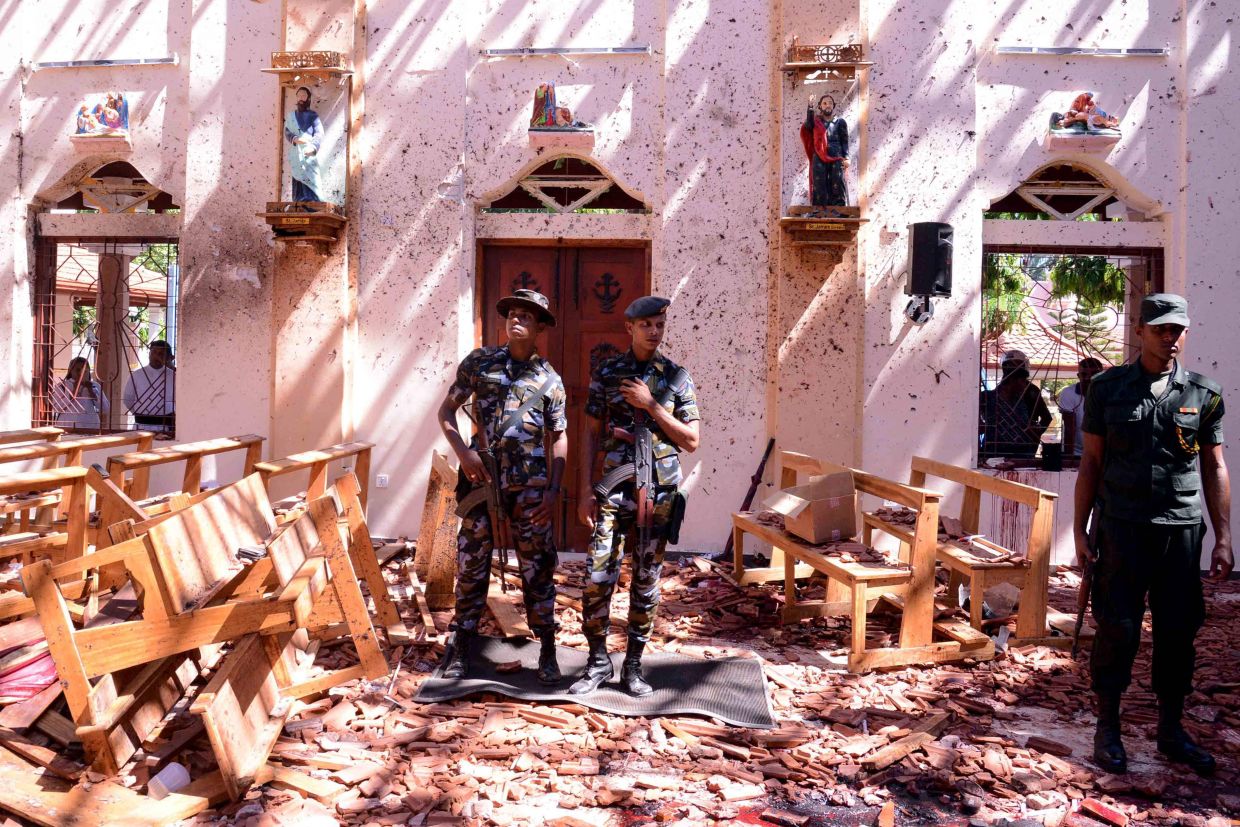
When Suresh Sallay addressed the Pentagon and the United Nations on the dangers of extremism and social media's role in radicalising populations, he spoke from the authority of a decorated military officer and counterterrorism specialist. Yet this same retired major general and former spy chief now sits in a Sri Lankan detention facility, accused by the government he once served of masterminding the nation's deadliest peacetime atrocity — the Easter bombings of April 21, 2019, which claimed 279 lives and wounded more than 500.
The trajectory of Sallay's fall from a respected defence establishment figure to a prisoner charged under anti-terrorism provisions offers more than a cautionary tale about individual downfall. It illuminates a profound shift in how Sri Lanka's political leadership has reframed the narrative surrounding one of South Asia's most shocking attacks. Since his arrest in February, Sallay has denied all wrongdoing and remains uncharged pending his next court hearing, yet the very fact that such accusations could be levelled against him by a sitting government minister reveals deep fractures in the official account that dominated international discourse for years.
The initial narrative was straightforward: suicide bombers inspired by the Islamic State group coordinated simultaneous strikes against three luxury hotels and three churches across the island in the early hours of Easter Sunday. The attacks claimed the lives of citizens from multiple nations — Australian, British, Chinese, Danish, Dutch, Japanese and American tourists and expatriates among the 45 foreign victims. The sophistication and coordination of the assault suggested an organised militant network with external backing and intelligence resources. Yet this explanation has undergone a remarkable transformation as successive investigations have peeled back layers to reveal a more disturbing possibility: that elements within the state apparatus itself may have played a role in the tragedy.
The shift in official accusations gathered momentum in June when Public Security Minister Ananda Wijepala told parliament that Sallay was the "mastermind" who "conspired with and strategically directed Islamic extremists until they carried out the attacks." This was not merely a renewed allegation but a fundamental reframing of responsibility. According to Wijepala's testimony, Sallay met with Muslim men just three weeks before the bombing to obtain specific information about target locations — a detail that transforms the narrative from intelligence failure to alleged orchestration. Government investigations have since documented troubling links between the bombers and at least two state intelligence agencies, suggesting a network that extended deep into the security establishment itself.
The broader context underlying these allegations points to a conspiracy far more sinister than simple negligence or extremist infiltration. According to investigators presenting evidence before the courts, the alleged plot involved cultivating an Islamist threat that could be used to justify a strongman political solution. By positioning a security crisis that demanded extraordinary measures, the theory goes, the network aimed to create conditions favourable to the Rajapaksa political dynasty — allowing Gotabaya Rajapaksa to campaign successfully for the presidency on a security-focused platform drawing parallels to his wartime role as Defence Secretary. A 2023 Channel 4 investigation cited a whistleblower alleging that the attack was permitted to proceed precisely to generate the security emergency that would propel Rajapaksa to power.
This interpretation carries particular weight given Sri Lanka's historical precedent. During the three-decade civil war against Tamil militants, which concluded in 2009, successive Rajapaksa administrations have openly acknowledged funding jihadist groups ostensibly to gather intelligence on rebel movements. The state funded and cultivated Islamist networks not out of ideological alignment but as instruments of statecraft and counterintelligence. While Rajapaksa governments have consistently maintained that these extremist contacts subsequently betrayed their handlers and launched independent attacks, the existence of such relationships created infrastructural capacity for exactly the kind of orchestrated violence that critics now allege occurred.
Sallay's own background complicates any simple narrative about his guilt or innocence. As a Muslim married to a Buddhist woman, with a Catholic mother who has petitioned the Vatican for his release, he represents the religious pluralism that characterises much of Sri Lankan society, where Buddhist majorities coexist with significant Hindu, Muslim and Christian populations. His career trajectory was impeccable: military assignments to France and Malaysia, study at India's prestigious National Defence College and universities in Britain, culminating in a position as the first serving military officer appointed to lead the State Intelligence Service after Rajapaksa's 2019 election victory. His intellectual credentials were unquestionable, marked by addresses to international security forums discussing the threat landscape facing modern democracies.
Yet Sallay's tenure at the intelligence services also included actions now viewed through a darker lens. In 2020, he ordered the arrest of human rights lawyer Hejaaz Hizbullah, accusing him of involvement in orchestrating the Easter attacks. Hizbullah was detained for 22 months before authorities released him, unable to substantiate any charges. This episode suggests that even then, the security apparatus was constructing narratives about Easter bombing responsibility that may have served political purposes divorced from investigative reality. Whether Sallay himself believed the allegations he pressed against Hizbullah, or whether he was implementing directives from higher levels of the political hierarchy, remains unclear — but the pattern of accusations without evidence raises uncomfortable questions about how state institutions were weaponised.
For Malaysian observers and broader Southeast Asian audiences, the Sri Lankan case presents urgent lessons about institutional vulnerability. When security agencies and state intelligence services become instruments of political factions rather than guardians of national security, the consequences extend far beyond individual injustice. The possibility that a major terrorist attack killing nearly 300 people could have been enabled or orchestrated by state elements for political gain fundamentally undermines public confidence in both security institutions and democratic governance. It demonstrates how civil society protections can be eroded when anti-terrorism legislation is deployed against political enemies and security critics rather than genuine threats.
The investigation into Sallay also exposes the dangers of allowing security establishments to operate with minimal oversight. If a respected counterterrorism professional with international credentials could be implicated in enabling mass casualty attacks, what safeguards exist to prevent abuse of power by less scrupulous operators? Malaysia and other regional democracies must confront whether their own anti-terrorism frameworks contain sufficient checks on executive and security agency discretion. The principle of innocent until proven guilty is being tested in Sallay's case, but the very fact that such accusations could be brought suggests systemic problems that transcend individual culpability.
As Sallay's next court hearing approaches, the broader implications of the Easter bombing investigation continue to unfold. Whether he is ultimately convicted, released or remains in indefinite detention awaiting charges, the damage to Sri Lanka's democratic institutions and international credibility has already materialised. The transformation from terrorism expert advising global institutions to accused co-conspirator in mass murder represents not merely a personal tragedy but a cautionary narrative about how political instability and security sector capture can corrupt even apparently well-established states. The Easter bombings remain among Asia's most devastating attacks, but the question of who truly orchestrated the violence — and why — has evolved from a settled matter of radical Islamist extremism into an ongoing investigation that implicates the very authorities tasked with protecting citizens from terrorism.

