Across the sprawling exhibition halls of Paris Vivatech, one of Europe's premier innovation festivals, a fascinating array of technological advances is capturing the attention of investors, entrepreneurs, and industry observers. Among the most compelling showcases are developments that promise to reshape medical practice, enhance drone capabilities, combat emerging digital fraud threats, and revolutionise how athletes monitor their physical performance. These innovations, though originating from various corners of the globe, carry substantial implications for how Southeast Asian markets and healthcare systems may evolve over the coming years.
Berlin-based Blueprint Biomed is tackling one of medicine's persistent challenges: the limitations of bone grafting procedures that millions of patients undergo annually to facilitate bone healing. Traditional bone grafts, typically harvested from patients' own bodies, frequently suffer from complications or require additional surgical interventions when they fail. The company's approach is elegantly straightforward yet technologically sophisticated. Its artificial scaffolds are manufactured using three-dimensional printing technology, constructed from a biodegradable polymer called polycaprolactone, upon which collagen structures are layered. This composite structure gradually dissolves within the patient's body over time, with collagen breaking down in approximately three months and the polyester component taking roughly two years to be completely resorbed. By eliminating the need for autologous grafting, Blueprint Biomed removes both the additional surgical burden of harvest procedures and the substantial risks associated with graft failure. The company is actively seeking US$2.5mil in funding to accelerate its progress toward human clinical trials, with an ambitious target of bringing products to patients by 2028.
For Southeast Asian healthcare systems seeking to enhance surgical capabilities and reduce procedure-related complications, such innovations represent significant opportunities. Many countries in the region face capacity constraints in specialist surgical centres, and technologies that simplify procedures while improving outcomes could substantially benefit patient populations requiring bone reconstruction following trauma, infection, or tumour removal. Additionally, the biodegradable nature of these scaffolds eliminates long-term foreign body complications, addressing a concern particularly relevant in developing healthcare contexts where extended follow-up care may be logistically challenging.
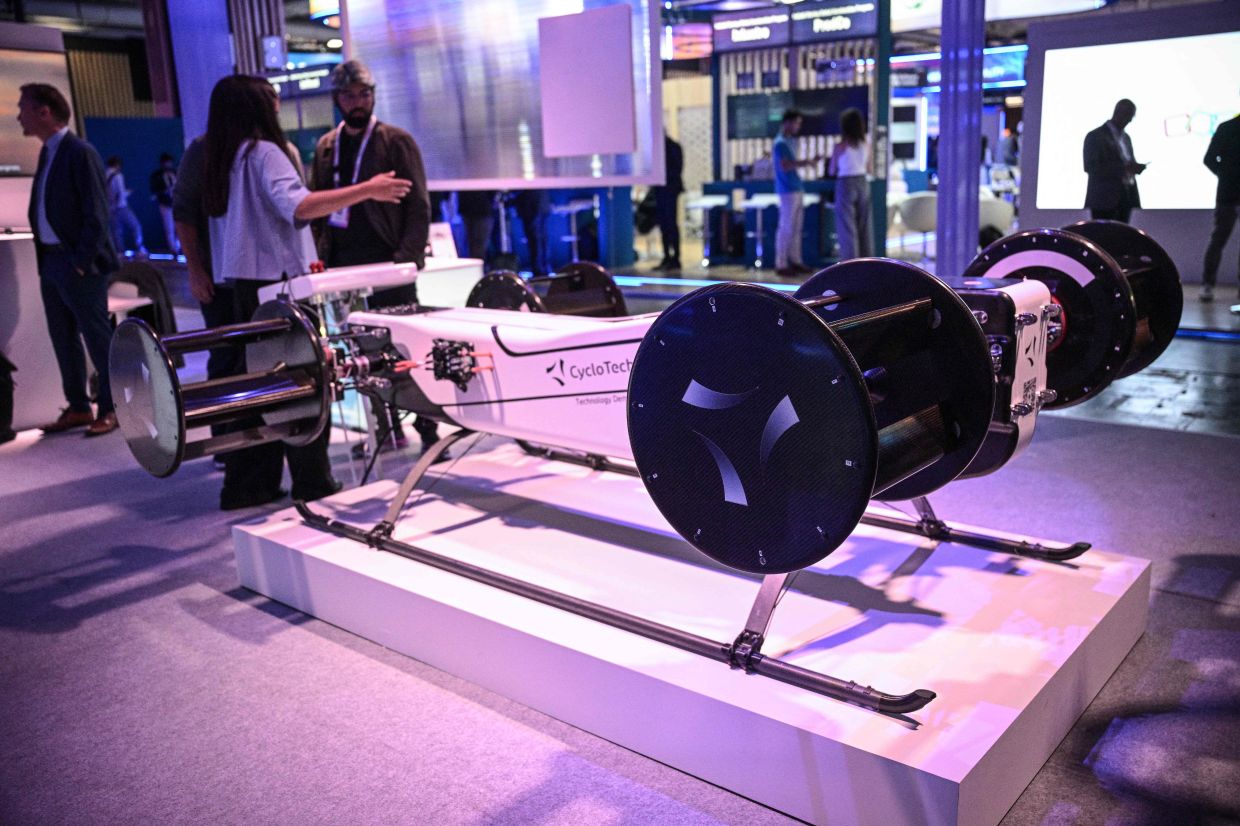
The Austrian startup CycloTech has reimagined how unmanned aerial vehicles function through an unconventional motor design that fundamentally alters what these machines can accomplish. Their cylindrical motors, featuring wing-shaped blade elements arranged around the circumference, enable unprecedented aerial manoeuvrability. Unlike conventional quadcopter drones, CycloTech's aircraft can execute the hovering capabilities of helicopters, transition to fixed-wing forward flight, perform mid-air braking, and even reverse direction with remarkable precision. These capabilities open possibilities across multiple sectors, from last-mile logistics in congested urban environments to potential applications in transporting people through city airspace. The company, which has already secured €40mil in earlier funding rounds, is now expanding its search for additional capital and strategic partners willing to integrate its motors into existing aircraft platforms. This modular approach to motor innovation suggests that CycloTech's technology could eventually influence the entire architecture of unmanned aviation development across multiple industries.
In Southeast Asia, where densely populated urban centres present significant logistics challenges, such drone technologies could revolutionise delivery networks and emergency response systems. Countries grappling with last-mile delivery inefficiencies in metropolitan areas like Jakarta, Bangkok, and Manila could see substantial gains in operational efficiency. Additionally, given the region's vulnerability to natural disasters, enhanced drone capabilities for search and rescue operations and emergency supply distribution represent compelling applications worth monitoring.
French voice authentication company Whispeak has shifted its strategic focus to address a threat that barely existed when the company was founded: the rise of artificial deepfakes capable of mimicking human voices with convincing authenticity. Using advanced artificial intelligence tools, Whispeak has developed detection technology that it claims represents the global standard for identifying fraudulent audio recordings. The company's system requires analysis of fewer than ten seconds of audio to construct a personal acoustic profile, enabling it to flag suspicious calls when deepfake voices attempt to impersonate known contacts or trusted service providers. Testing across multiple international competitions has validated the technology's effectiveness, with error rates averaging below one percent under current conditions. Whispeak is already collaborating with French telecommunications operator Bouygues to deploy this detection capability across customer call networks, automatically warning users when suspicious deepfake voices are detected.
Yet the company acknowledges an uncomfortable reality: the technological arms race between fraud detection and deepfake creation will never truly conclude. As artificial intelligence tools become more sophisticated and easier to access, attackers continuously improve their ability to create increasingly convincing audio forgeries. For Southeast Asian financial institutions and telecommunications providers, this challenge carries particular urgency, given the region's rapidly growing digital banking adoption and the corresponding increase in fraud attempts. Implementing robust detection mechanisms now could position the region's financial sector ahead of threats that other markets are only beginning to experience comprehensively.
Hong Kong startup PointFit has introduced a biometric monitoring approach that moves beyond conventional heart rate measurements to provide athletes with genuinely actionable health insights. The company's adhesive patch, equipped with a miniature sensor, analyses biomarker levels—including glucose and cortisol—present in users' perspiration rather than requiring blood samples or invasive monitoring equipment. The system employs artificial intelligence to construct a customised "personal sweat index" for each user, automatically adjusting expected baseline values according to demographic variables and environmental conditions like ambient temperature. Founder Kenny Oktavius, who initiated the technology's development while still a university student in 2019, emphasises that heart rate data alone provides an incomplete picture of athletic performance and physiological stress. Professional athletes, despite already wearing expensive sophisticated sensors, continue experiencing unexpected physiological crises—a reality highlighting the limitations of conventional monitoring approaches. PointFit's perspective is that genuine insight into bodily status requires analysis of the same biomarkers physicians examine when patients present at hospitals.
The company has established partnerships with Red Bull's Athlete Performance Centre and Puma's Nitro Labs innovation division, validating the technology through elite-level sports applications. However, Oktavius envisions eventual expansion into consumer retail markets, potentially through partnerships with mass-market sports retailers like Decathlon or established eyewear conglomerates such as EssilorLuxottica. For Southeast Asia's rapidly expanding fitness and wellness market, such accessible health monitoring technology represents an intriguing intersection of consumer interest and preventive healthcare capability. The region's growing middle class shows increasing appetite for fitness tracking and personalised health optimisation, potentially creating substantial commercial opportunities for companies offering genuinely distinctive insights beyond conventional activity monitors.
These innovations collectively illustrate the diversifying landscape of technological advancement globally, with solutions addressing fundamental challenges across healthcare, logistics, cybersecurity, and personal health optimisation. What distinguishes these particular developments is their focus on solving genuine problems rather than generating excitement for excitement's sake. Blueprint Biomed addresses a specific surgical limitation affecting millions. CycloTech creates tangible new capabilities for autonomous aircraft. Whispeak tackles an emerging threat that threatens the basic security of digital communication. PointFit reimagines how athletes can meaningfully assess their physiological state. For Southeast Asian investors, policymakers, and business leaders observing these developments, the strategic implication is clear: investing in genuine problem-solving innovation, rather than chasing technological trends, creates sustainable competitive advantage. The region's vibrant startup ecosystems would benefit from increased focus on identifying specific market pain points and developing targeted solutions with the rigour demonstrated by these Vivatech participants.

