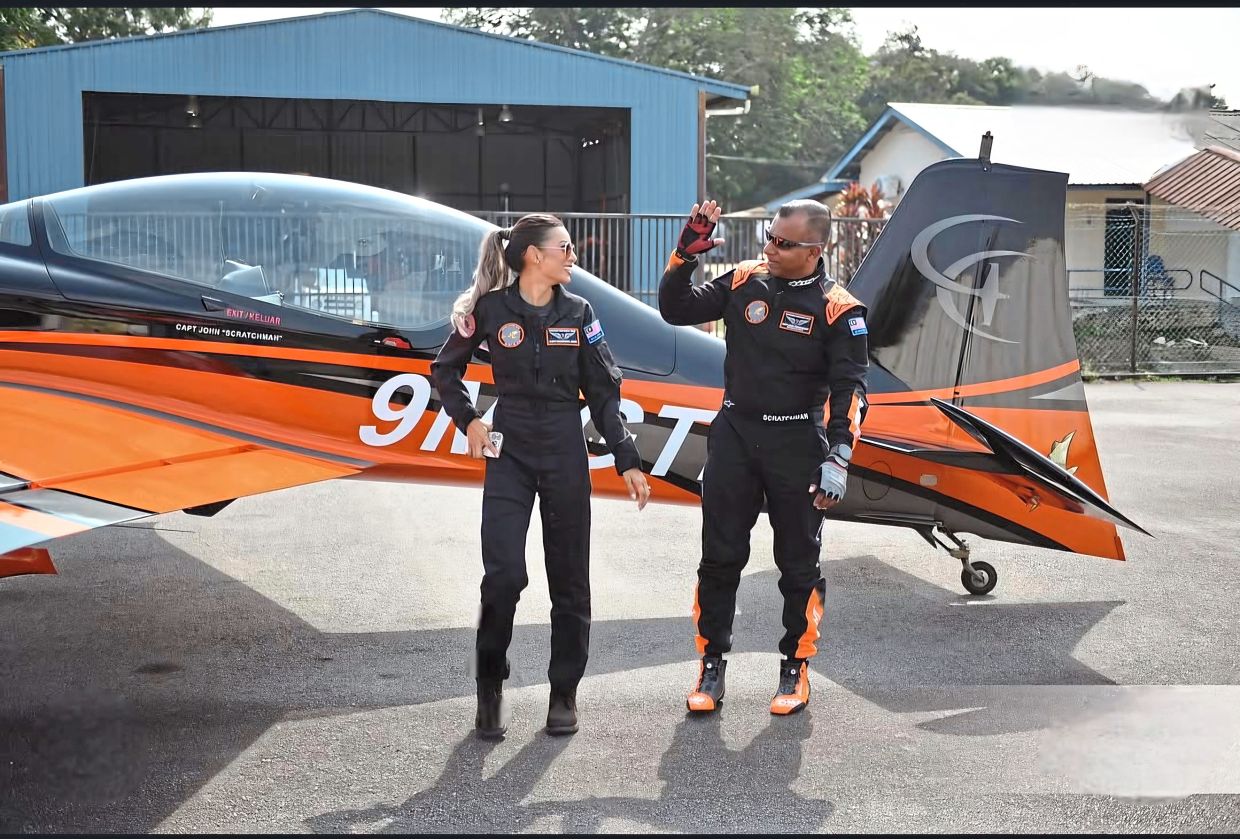
The cockpit has long been a male-dominated space in Southeast Asia, yet Samantha Laura John, 26, has charted her own course through it. The daughter of retired Royal Malaysian Air Force fighter pilot Lieutenant-Colonel (R) John Sham Alagarsamy, 54, completed her flight training in Ipoh in 2025 and now holds a commercial pilot's licence. Her achievement represents more than a personal milestone – it exemplifies how parental influence and exposure to disciplined environments can shape career trajectories, even as the aviation industry undergoes gradual transformation in the region.
Growing up as an air force child meant witnessing her father's commitment to national service firsthand. Samantha recalls observing her father depart for what she understood as "missions" – intensive training sorties designed to maintain combat readiness and enhance navigation proficiency. Those moments instilled in her a profound respect for military aviation and a recognition of the critical role such pilots play in protecting Malaysian airspace. Rather than viewing her father's career as merely a job, she absorbed the sense of purpose and duty that defined his professional identity. This early exposure proved formative, creating an emotional connection to aviation that extended far beyond casual interest.
When Samantha was a child, female commercial and military pilots remained uncommon in Malaysia and throughout the wider region. Rather than deterring her, the scarcity of women in the field only strengthened her resolve. Her father had always encouraged ambition without imposing expectations. As John explains his parenting philosophy, he emphasised the importance of dreaming boldly: encouraging his children to aim for the stars so they might at least reach the sky. This approach – supportive yet not prescriptive – gave Samantha the psychological freedom to pursue aviation without feeling obligated to do so, making her eventual choice authentically hers.
John himself represents an exceptional figure in Malaysian aviation. He logged 26 years with the RMAF in multiple roles as a fighter pilot, instructor, and examiner before transitioning to civilian flying in 2019. More remarkably, he holds a distinction rarely achieved in Southeast Asia: he is Malaysia's sole civil aviator officially recognised by the Civil Aviation Authority of Malaysia for aerobatics expertise. His performances at major international events, including the Langkawi International Maritime and Aerospace Exhibition (LIMA), where he flies the GB1 GameBird in aerobatic displays, have elevated Malaysian aviation visibility on the global stage. Beyond the skies, John pursues music as a professional deejay operating under the name "Scratchman" – a career that began when he won the Malaysian Open DJ Competition in 1992 during the vinyl and turntablism era. This multifaceted background demonstrates how accomplished individuals often transcend single-domain expertise.
Samantha's path to her pilot's licence was not straightforward, reflecting the reality that passion often requires multiple attempts to clarify itself. After completing her IGCSE qualifications, she enrolled in a two-year cadet pilot programme with an airline based in Sepang, Selangor in 2018. Though the experience proved rewarding, she discovered it did not align with her deeper aspirations. Rather than persisting in an unsuitable role, she eventually recognised that her burning desire to sit in the pilot's seat needed to be pursued directly. This self-awareness and willingness to recalibrate her trajectory demonstrated maturity beyond her years. When she finally commenced formal pilot training in Ipoh and earned her licence in 2025, it represented the culmination of genuine introspection and sustained determination.
Currently, Samantha operates an event management company in Kota Kinabalu alongside her husband, David Chong, 30, and provides vocal coaching on a freelance basis. Though no longer working as a commercial pilot, she maintains her licence and harbours intentions to return to aviation professionally. This interim period allows her to explore multiple dimensions of her capability while keeping the cockpit accessible. Her dual residence in East Malaysia and frequent visits to the Klang Valley, where her mother Lynda Shanti Ganesaguru, 45, and brother Shayne Zacchaeus John, 22, reside, reflects the geographical complexity of modern Malaysian family life. Meanwhile, John, now heading training operations at a flying school in Ipoh, continues shaping the next generation of aviators.
The family's military postings took them across Malaysia's landscape – from Labuan to Kuantan, Alor Setar, and Butterworth in Penang – often before Samantha reached primary school age. Such frequent relocations, while administratively challenging for families, created profound developmental benefits. Life on military air bases exposed her to regimented structures, clear hierarchies, and a pronounced sense of collective purpose. She witnessed firsthand the meticulous preparations pilots undertake before flight, the safety protocols governing operations, and the responsibility inherent in protecting Malaysia's airspace and maritime boundaries. These observations transcended abstract concepts, becoming embodied understanding of duty and discipline.
A pivotal period emerged in 2012 when John was attached to the Australian Defence Force whilst pursuing a master's degree in military and defence studies at the Australian National University. The family relocated to Canberra, and Samantha gained exposure to international defence frameworks and comparative aviation systems. This sojourn broadened her contextual understanding of how different nations structure their air forces and civilian aviation sectors, illuminating the interconnected nature of regional defence cooperation. The experience represented what researchers term a "formative period" – a concentrated interval during which exposure to new environments and intellectual frameworks reshapes perspective and aspiration.
Academic research supports what the John family embodies practically. A study published in Universiti Teknologi Malaysia's social science journal, titled "Parental Influence and Undergraduates' Career Choice Intentions," demonstrates that robust parent-child relationships characterised by open communication and mutual trust significantly influence career decisions. Such relationships facilitate exploration, encourage long-term planning, and provide psychological safety for risk-taking. Samantha's parents never forced aviation upon her; instead, they modelled professional excellence and trusted her to discover her own passions. This approach contrasts with directive parenting that can breed resentment or produce career choices misaligned with individual strengths.
Within Malaysia and across the Asia-Pacific, other pilot families have similarly passed aviation expertise to subsequent generations. Sisters Safia Amira Abu Bakar and Safia Anisa Abu Bakar followed their father Captain Abu Bakar Shafie into flying careers, creating a precedent for intergenerational aviation legacies. Yet each such case remains notable enough to warrant media attention, underscoring how uncommon multi-generational pilot families remain in the region. Samantha's achievement gains significance against this backdrop – she joins a select cohort of women who have not merely obtained pilot's licences but sourced inspiration from familial examples of aviation excellence.
When Samantha describes the sensation of being in the cockpit, she articulates an almost meditative quality. The intensity of focus required – maintaining full awareness of aircraft systems, weather conditions, navigational parameters, and external environment – creates a state of heightened situational consciousness. She characterises it poetically as "working in six dimensions," suggesting that piloting demands a form of cognitive and sensory integration transcending ordinary experience. This description echoes why pilots across cultures describe flying as therapeutic or spiritually significant – it demands total presence, obliterating the mental clutter of everyday concerns.
The respect visible in Samantha's interactions with her father reflects more than filial obligation; it represents genuine admiration for his professional accomplishments and personal integrity. John, who received the Most Gallant Order of Military Service (Kesatria Angkatan Tentera) during his RMAF tenure, exemplifies how values transmit through demonstration rather than instruction. He articulates this understanding explicitly: impact is measured not by what one says but by the positive legacy left with others, particularly children who absorb lessons through observation of behaviour. In this framework, Samantha's pilot's licence becomes secondary to the deeper inheritance – a foundation of discipline, ambition, and purposeful action that will guide her through whatever career paths emerge ahead.

