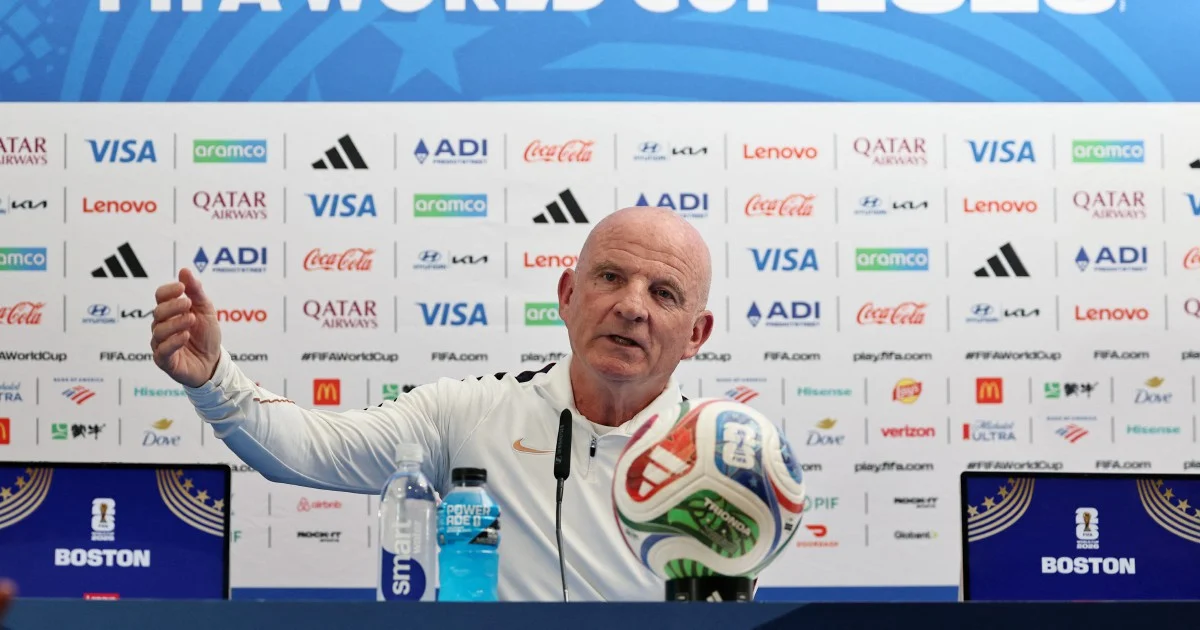
France will pursue group leadership against Norway on Friday, with assistant coach Guy Stephan making clear that winning the bracket carries significant practical implications beyond mere prestige. The French are eyeing the top position to avoid the logistical complications and climate challenges that would accompany a second-place finish in World Cup Group I, according to Stephan, who took the podium in Boston on Thursday deputizing for manager Didier Deschamps, currently in France attending his mother's funeral.
The mathematics favour the defending 2018 champions. Having already accumulated six points from their opening two fixtures, France need merely secure a draw against Norway—who have matched their record with victories in both games—to clinch the group thanks to a superior goal difference. This relatively straightforward arithmetic reflects the strength both teams have demonstrated thus far in the tournament, though it also underscores how competitive the group remains heading into its decisive round.
Stephan's comments revealed the tournament logistics that extend far beyond tactical considerations. Should France finish second, the squad would face the prospect of substantial travel between distant American cities—Dallas, Miami, and Atlanta—during the knockout rounds. By contrast, topping the group permits the team to remain headquartered in the northeastern region, based near Boston, until the quarter-finals stage arrives. For players managing fatigue and recovery across a compressed tournament schedule, such geographic stability carries genuine value.
Temperature represents an additional factor influencing French thinking. The contrast between Boston's relatively moderate climate and the intense heat of southern Florida and Texas would present an unwelcome adjustment for European players accustomed to different conditions. Stephan explicitly referenced this consideration, suggesting that climatic factors weigh meaningfully in the calculation of tournament progression. For a squad built around technical proficiency rather than power-based athleticism, environmental conditions can materially affect performance levels.
The personnel situation, however, presents complications for France's pursuit of top position. William Saliba, a central defender integral to the team's defensive structure, is unavailable for the Norway encounter. Additionally, striker Marcus Thuram is nursing calf discomfort that could limit his effectiveness or availability. These absences, while perhaps manageable against less demanding opposition, introduce variables against a Norway side demonstrating genuine quality and cohesion through their opening successes.
Stephan's temporary assumption of press responsibilities reflects the human dimensions often obscured by sporting competition. Deschamps' departure to attend his mother's funeral emphasizes how international football, despite its massive scale and commercial significance, remains anchored in personal circumstance and family obligation. The assistant coach indicated minimal contact is anticipated on Friday, the day of the funeral service, though he confirmed ongoing communication with his manager throughout the tournament.
Norway's qualification following two victories demonstrates they represent authentic competition rather than convenient opponents. The Scandinavian nation has constructed a team capable of executing at the tournament's highest level, meaning France cannot approach this fixture with complacency. A draw would suffice mathematically for the French, but such a cautious approach could invite Norwegian pressure and create unnecessary tension in what should ideally be a controlled performance.
The broader tournament context matters significantly for French ambitions. As defending world champions seeking to maintain status among global football's elite, France carries expectation and scrutiny that extends beyond group-stage mechanics. Finishing second would not be catastrophic—they remain among the tournament favourites regardless—but would signal vulnerability that potential knockout opponents would study carefully.
From a Southeast Asian perspective, France's advancement carries implications for the broader tournament narrative. The French squad represents European sophistication and technical excellence against which other regional teams benchmark themselves. How they navigate this crucial group phase, and the broader tournament, influences perceptions of European dominance and provides tactical lessons for developing football cultures examining elite preparation methods.
The logistical question itself reflects how modern international tournaments involve complex planning extending far beyond match day. Accommodation, travel schedules, training facility access, and environmental adaptation all influence team preparation and player welfare. France's explicit consideration of these factors demonstrates how sophisticated tournament football has become, with even elite squads requiring careful management of non-sporting variables to maintain optimal performance levels.
Stephan's measured commentary suggested confidence without arrogance regarding the Norway fixture. France have demonstrated sufficient quality to believe in their superiority, yet the assistant coach's emphasis on qualification securing six points indicated respect for the achievement and acknowledgment that tournament football remains unpredictable. The Friday encounter will test whether France can maintain their momentum while adapting to the altered personnel circumstances they face, with the practical rewards of group victory providing additional motivation beyond conventional competitive hunger.

