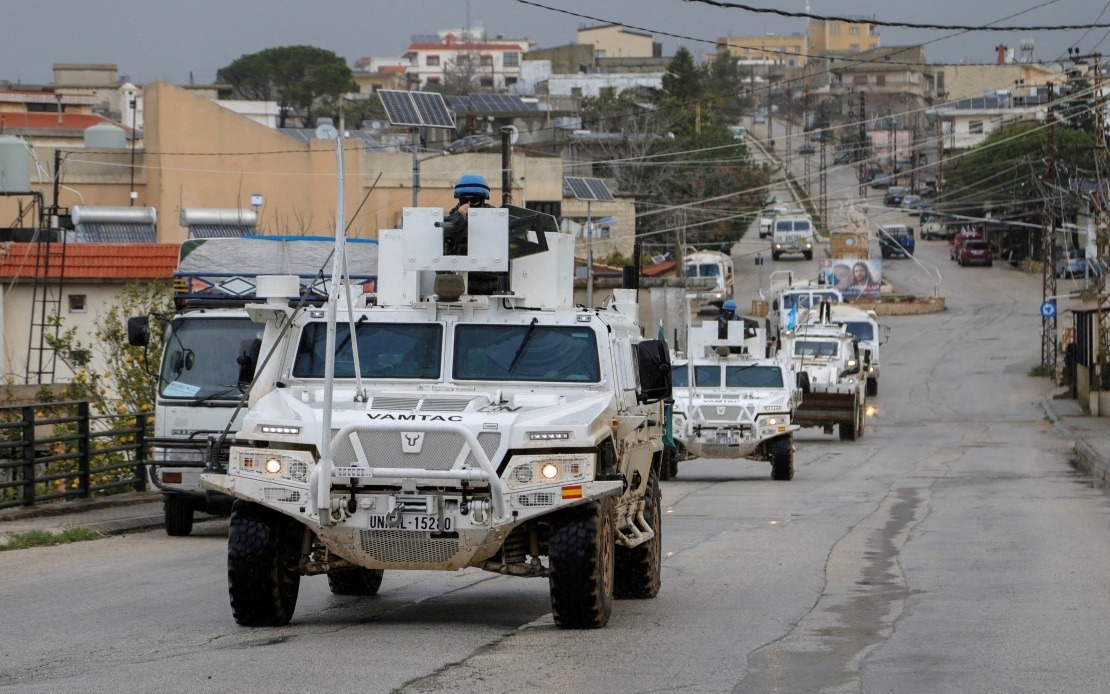
France and Italy have committed to assembling an international coalition aimed at sustaining Lebanon's stability once the United Nations Interim Force in Lebanon concludes its three-decade presence at the close of 2024. French President Emmanuel Macron announced the initiative during discussions with Italian Prime Minister Giorgia Meloni in the Mediterranean resort town of Antibes, signalling a coordinated European response to one of the Middle East's most volatile security situations.
The proposed coalition represents a diplomatic pivot by Western powers seeking to maintain international engagement in Lebanon beyond UNIFIL's mandated departure. According to UN Security Council Resolution 2790, the peacekeeping operation—which has maintained a presence since 1978—must complete full personnel withdrawal within twelve months from December 31st. This timeline creates an urgent imperative for alternative security arrangements, as abrupt disengagement risks leaving a dangerous governance and security vacuum in a nation already fragmented by sectarian tensions and economic collapse.
Macron framed the initiative as essential to bolstering Lebanese sovereignty and strengthening the country's armed forces, which remain institutionally weak despite international training efforts spanning decades. The French leader emphasised that the coalition would operate in close coordination with the European Union and the United Nations, ensuring legitimacy and avoiding unilateral military interventions that could provoke regional backlash. This collaborative approach reflects lessons learned from previous Middle Eastern engagements, where independent action triggered accusations of neo-colonialism and fuelled extremist recruitment narratives.
Meloni's endorsement underscores Italy's commitment to Mediterranean security and its historical role as a major UNIFIL contributor with approximately one thousand troops deployed in southern Lebanon. The Italian Prime Minister characterised the security vacuum as "extremely dangerous," a pointed reference to the likelihood that Hezbollah and other militant groups could expand operations and establish supply corridors unchecked by international monitoring. Her language reflects European anxiety that Lebanon's collapse could destabilise Cyprus, Greece, and broader Mediterranean shipping routes essential to global commerce.
The timing of this announcement carries significance for Southeast Asian observers, as it demonstrates how external powers strategically manage complex regional withdrawals to prevent power vacuums. Malaysia and other ASEAN nations, which increasingly engage multilateral security dialogues with European counterparts, can study this framework for understanding coalition-building mechanics in strategically significant theatres. The French-Italian approach prioritises institutional strengthening of local forces rather than direct military occupation, a methodology potentially applicable to other fragile regions.
Lebanon's structural vulnerabilities make external support particularly critical during transition periods. The country faces simultaneous crises: economic collapse with currency devaluation exceeding ninety percent, political gridlock preventing government formation, and humanitarian deterioration affecting millions. UNIFIL's presence, though limited in enforcement capacity, has provided stabilising psychological assurance and prevented full-scale resumption of Lebanese-Israeli hostilities in the south. Without equivalent international commitment post-December, Israel's security concerns could trigger unilateral military action across the border.
The proposed coalition's success depends on securing commitments from multiple European nations beyond France and Italy, potentially including Spain, Germany, and others with UNIFIL participation history. Financing such operations requires budgetary commitments increasingly difficult for European governments facing competing domestic priorities and economic headwinds. The coalition model also requires establishing clear operational rules of engagement, command structures, and exit strategies—elements notoriously difficult to negotiate in multilateral contexts where national interests diverge.
Hezbollah's regional influence complicates this initiative substantially. The Iranian-backed militant organisation, which maintains a quasi-state presence across southern Lebanon and the Bekaa Valley, benefits from international security vacuums that facilitate weapons smuggling from Syria and Iran. A weakened or absent international presence could embolden Hezbollah to escalate provocations against Israel, potentially triggering broader regional conflict encompassing Syria, Iraq, and the Persian Gulf. The coalition's deterrent value depends partly on perceived willingness to enforce red lines, a threshold that remains ambiguously defined in current proposals.
For Malaysian policymakers and regional analysts, this development illustrates the complexity of managing strategic withdrawals from conflict zones. Southeast Asia's own experience with ASEAN principles—particularly non-interference and respect for sovereignty—sometimes conflicts with security imperatives requiring external stabilisation. The French-Italian coalition approach attempts to balance these tensions by emphasising institutional support rather than direct governance, though sceptics question whether this distinction holds meaningful practical significance when foreign military personnel operate within another nation's borders.
The coalition also reflects evolved European thinking about maintaining influence in strategically vital regions without bearing the full financial and human costs of traditional peacekeeping missions. By distributing responsibility among multiple nations and establishing sunset provisions, France and Italy hope to sustain engagement while signalling eventual Lebanese self-sufficiency. Whether Lebanon's fractured political system can develop the institutional capacity for genuine independence within feasible timeframes remains deeply uncertain, potentially condemning the coalition to indefinite extension.
Regional actors including Saudi Arabia, the United Arab Emirates, and Egypt will closely monitor this initiative, as Lebanon's stability directly affects broader Levantine geopolitics and their own security calculations. The coalition's composition and mandate will signal whether the West prioritises containing Iran's regional influence or pursuing more balanced engagement respecting diverse Lebanese communities' political preferences. This distinction carries implications for how other regional powers—including China and Russia—position themselves within Middle Eastern security architecture, with potential reverberations across Asian security dynamics.
The coalition framework also establishes precedent for how European powers manage strategic interests in volatile regions during periods of institutional transition. Success could demonstrate viable models for other fragile states requiring external support without creating permanent dependencies or breeding anti-Western resentment. Conversely, failure could reinforce perceptions that Western interventionism inevitably proves counterproductive, a narrative already influential across much of the Global South and particularly resonant in Southeast Asia where colonial legacies remain contested.

