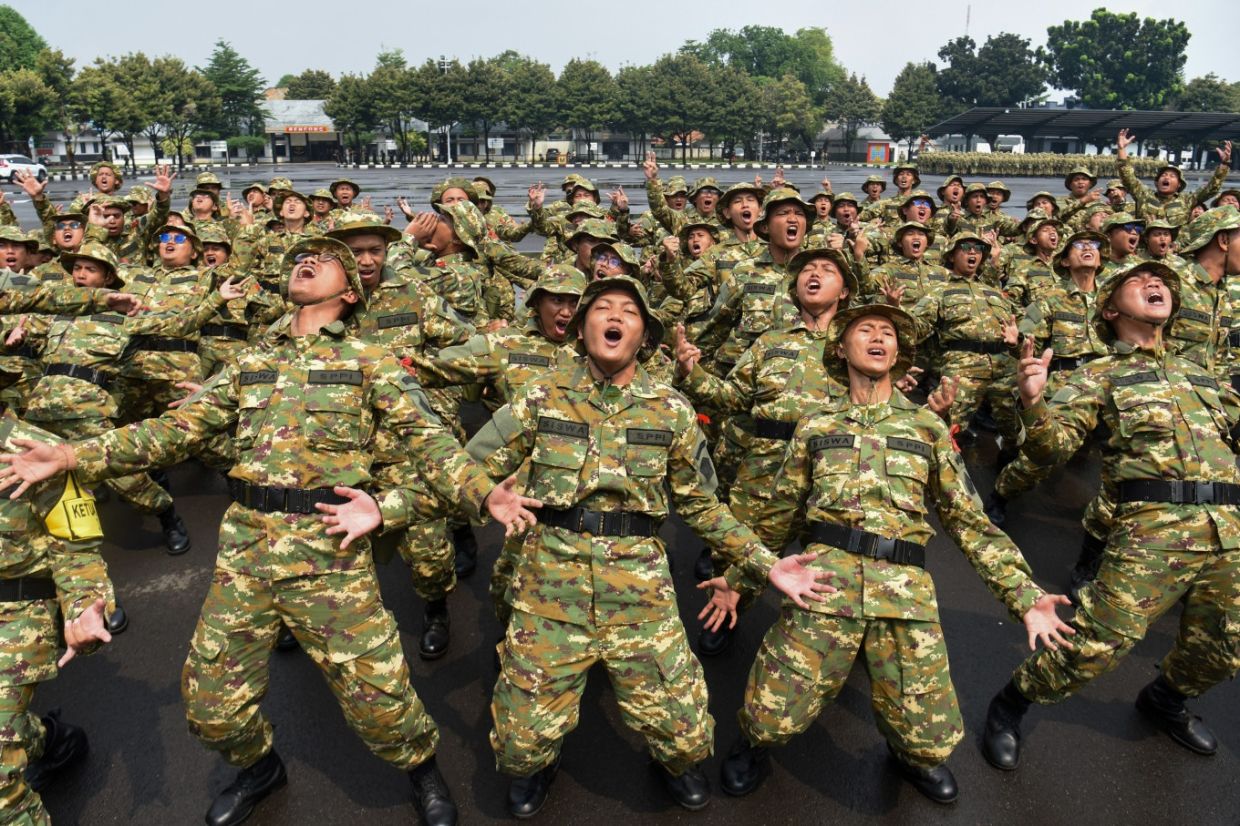
Four people have died during the mandatory military-style training component of President Prabowo Subianto's Red and White Rural Cooperatives initiative, marking a critical juncture in the government's ambitious rural development agenda and raising serious questions about the compatibility of military discipline with civilian cooperative management. The fatalities occurred just days into a 30-day basic military training programme conducted under the Defence Ministry's reserve component, affecting participants drawn from a pool exceeding 35,000 enrolled in the cooperative management scheme.
The most recent death involved Muhammad Rifqi Renaldi Gunawan, who experienced severe breathing difficulties while training at an Air Force facility in Jakarta on Thursday, 25 June, before succumbing to his condition early the following morning despite hospitalisation. This incident followed three earlier deaths: Anisa Muyassaroh, who collapsed from heat stroke during training exercises in Balikpapan, East Kalimantan; Yonanda Muhammad Taufiq, who suffered fatal cardiac arrest following introductory activities in Baturaja, South Sumatra; and Novia Rahmadhani Sihotang, whose death in Jakarta was attributed by the Defence Ministry to health complications associated with tuberculosis.
The accumulation of fatalities has catalysed intense scrutiny from Indonesia's political establishment and civil society organisations, all questioning the underlying philosophy of subjecting civilian cooperative managers to military conditioning. Amnesty International Indonesia issued a particularly forceful statement characterising the military training component as "a fatal mistake that must be stopped immediately," with executive director Usman Hamid demanding the government abandon the approach entirely and replace it with civilian-focused education centred strictly on cooperative management principles and business competencies. This position reflects a fundamental ideological concern about the militarisation of civilian institutional frameworks.
Hamid's critique extended beyond the immediate safety crisis to encompass broader constitutional and governance principles. He argued that mandatory military training for cooperative managers fundamentally contradicts the philosophy underlying cooperative organisations, which traditionally operate on foundations of democratic deliberation, shared decision-making, and collective responsibility rather than hierarchical military command structures. The activist further warned that the programme epitomised what he characterised as creeping militarisation of civilian governance under the current administration, explicitly invoking historical parallels to Indonesia's controversial New Order era when the military exercised extensive authority over civilian institutions through its dual function doctrine.
Parliamentary voices have similarly registered concern, though many legislators have adopted a somewhat more measured stance advocating for programme refinement rather than termination. Commission I of the House of Representatives, which maintains oversight responsibility for defence matters, initiated close monitoring of the training implementation. Deputy chair Dave Laksono from the Golkar Party acknowledged the urgency of improving safety protocols while stopping short of calling for the programme's cessation, arguing instead that better health screening procedures, refined emergency response mechanisms, and more professional execution could preserve the initiative while eliminating preventable deaths.
Specific legislative proposals emerging from parliamentary discussions target the vulnerability assessment phase preceding training participation. Commission I member Imas Aan Ubudiyah of the National Awakening Party emphasised that far more rigorous medical evaluations must precede any individual's admission to the physically demanding programme. She advocated for comprehensive health screening integrated throughout the training process, continuous medical supervision during activities, and systematic assessment of participants' physical capabilities to identify those at elevated risk. These recommendations implicitly acknowledge that at least some of the recorded deaths may have been preventable through proper screening of pre-existing conditions.
The Defence Ministry has initiated what spokesperson Brigadier General Rico Ricardo Sirait characterised as a "comprehensive review" encompassing strengthened health screening procedures, enhanced early detection mechanisms for medical conditions, improved participant monitoring systems, and upgraded emergency response protocols. This acknowledgement represents a tacit admission that current safeguards proved inadequate, though the ministry stopped short of accepting responsibility for negligence. Presidential Chief of Staff Dudung Abdurachman reinforced this position on Friday, stating that investigations had identified no evidence of negligence while emphasising that future training iterations must prioritise participant safety.
Abdurachman's characterisation of the training as "not particularly strenuous" proved controversial, given the heat stroke fatality and other medical emergencies recorded during introductory activities. His assertion that underlying health conditions or unspecified "other factors" explained the deaths suggested the government viewed the programme itself as essentially sound while attributing casualties to individual participant circumstances. This defensive posture contrasts sharply with civil society demands for fundamental programmatic restructuring, leaving unclear the extent to which the promised review will actually modify training methodology or whether adjustments will remain superficial.
The broader context involves an enormous rural development initiative designed to establish 80,000 cooperative units and construct 5,000 fishing villages by 2029, representing a cornerstone of the government's economic and social policy agenda. The current training approach envisions a 30-day military component followed by 15 days of managerial instruction before participant assignment to operational roles. This sequencing reflects a government philosophy emphasising discipline and hierarchical organisation as prerequisites for effective rural institutional management, a perspective fundamentally at odds with cooperative movement principles emphasising participatory governance and democratic decision-making among members.
For Malaysian observers, this Indonesian controversy illuminates broader Southeast Asian tensions regarding the appropriate relationship between state institutions and civilian organisational frameworks, particularly in contexts involving rural development and cooperative movements. The debate reflects competing visions of governance: one emphasising disciplinary frameworks and state-directed development, another prioritising voluntary participation, transparent governance, and community self-determination. Malaysia's own cooperative movement, regulated under the Cooperative Societies Act and operating within a more explicitly civilian framework, presents an alternative model whereby cooperative management training emphasises business competency and governance principles rather than military conditioning.
The continuation of the training programme pending the Defence Ministry's review suggests the government remains committed to the military conditioning component despite mounting pressure for modification. However, the accumulation of fatalities and unified opposition from parliamentary and civil society voices creates sustained pressure for meaningful change. Upcoming training cohorts will face heightened scrutiny, and any additional deaths would likely intensify calls for complete programme termination, potentially forcing the government to fundamentally reconsider its approach to cooperative manager development and broader civilian-military institutional relationships.

