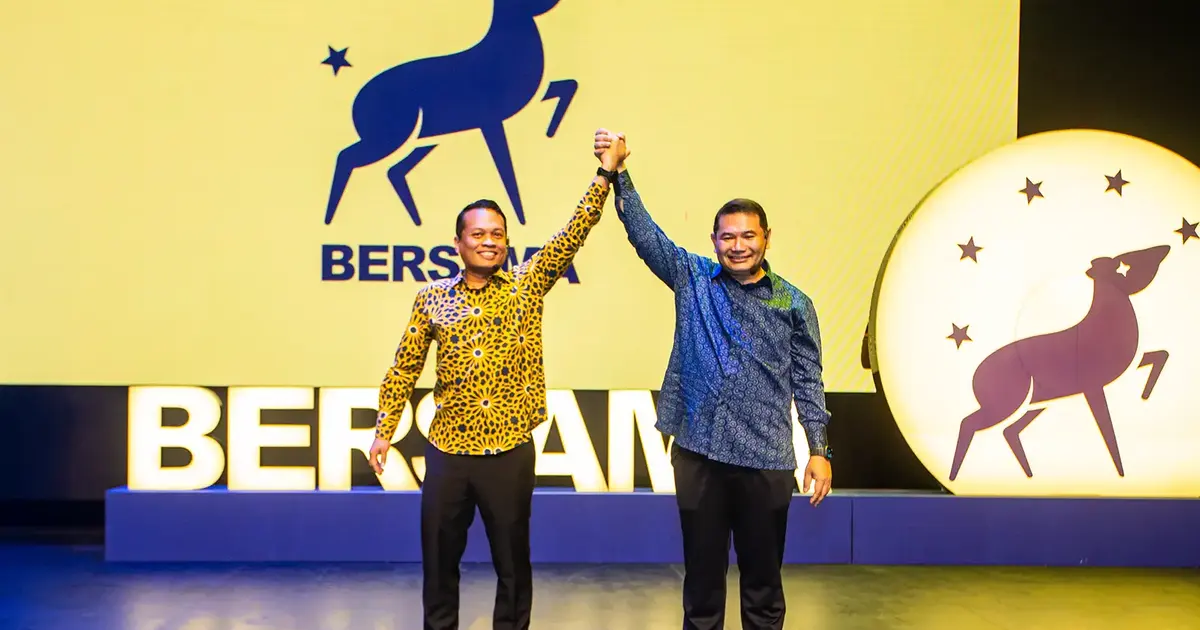
Bersama, the newer entrant to Malaysia's fractious political landscape, is experiencing unexpected momentum among a demographic not typically associated with fresh political ventures: seasoned government administrators stepping back into public life. Party leader Rafizi revealed that the party has fielded significant enthusiasm from recently retired and departed senior civil servants keen to contest in the upcoming Johor and Negeri Sembilan state elections, signalling a potential shift in how electoral politics draws talent from the administrative establishment.
The willingness of former bureaucrats to seek elected office through Bersama represents an intriguing phenomenon in contemporary Malaysian politics. Historically, civil servants maintaining strict political neutrality have been discouraged from candidacy during their tenure. Once retired, however, many possess institutional knowledge, administrative networks, and governance experience that could theoretically translate into effective legislative representation. That Bersama has become an attractive vehicle for this cohort suggests the party is successfully positioning itself as an alternative platform for candidates without deep roots in Malaysia's traditional political machines.
The decision by experienced administrators to explore candidacy under Bersama rather than joining established coalitions carries symbolic weight. Malaysia's civil service, particularly at senior levels, has long embodied institutional continuity and bureaucratic expertise. When such individuals seek electoral office through a relatively new political entity, it potentially indicates dissatisfaction with existing arrangements or a genuine belief that fresh political approaches merit support. This dynamic becomes particularly significant given the upcoming state elections, which will serve as testing grounds for whether voters will embrace candidates drawn from the administrative ranks.
Johor and Negeri Sembilan represent distinct electoral challenges and opportunities. Johor, Malaysia's second-largest state by population and traditionally significant economically, has been contested territory between different political coalitions in recent election cycles. Negeri Sembilan, meanwhile, occupies a strategic position in the Klang Valley's broader political geography. Both states offer potential recruitment grounds for administrative talent, given the concentration of federal and state government presence in these areas. Former civil servants from these regions may possess localized credibility and understanding of constituency-specific governance challenges.
The timing of this development warrants scrutiny within Malaysia's broader electoral cycle. State elections in Johor and Negeri Sembilan will inevitably influence calculations about national political trajectories. Should Bersama successfully field candidates from administrative backgrounds and achieve reasonable electoral performance, it could establish a template for subsequent campaigns. Conversely, if such candidates underperform, it may reinforce perceptions that electoral success requires the established machinery and brand recognition of longer-established parties.
Bersama's apparent appeal to former senior civil servants also reflects practical considerations. Administrative experience translates into campaign competence and legislative effectiveness. Candidates emerging from the civil service typically understand parliamentary procedures, budgeting processes, and administrative implementation mechanisms—skill sets directly applicable to state assembly membership. Moreover, former bureaucrats often retain professional networks spanning governmental, business, and community sectors, providing campaign infrastructure advantages that newer parties typically lack.
For Malaysian voters, the emergence of administrative professionals as candidates through Bersama presents a choice reflecting broader philosophical preferences. Some may view civil service backgrounds as indicators of competence and integrity, freed from the necessity to maintain political neutrality. Others might suspect that former administrators carry institutional baggage or outdated perspectives unsuitable for contemporary electoral representation. These varying perceptions will ultimately shape candidate viability and electoral outcomes.
The regional context adds further complexity. Southeast Asian democracies have witnessed varied experiences with administrative professionals entering electoral politics. Some transitions succeed smoothly, while others reveal that governance expertise does not automatically translate into political effectiveness. Malaysian voters will assess whether former civil servants can articulate distinctive policy platforms or whether their primary appeal relies on administrative credentials alone.
Bersama's receptiveness to these candidates suggests strategic thinking about candidate recruitment. New political parties often struggle to attract experienced, credible personnel willing to assume electoral risks. By opening candidacy opportunities to recently retired senior civil servants, Bersama addresses the perennial challenge of weak candidate benches while tapping into a constituency potentially frustrated with existing political options. Whether this strategy yields electoral dividends remains contingent on campaign execution, party platform clarity, and prevailing voter sentiment toward administrative professionals engaging in partisan politics.
The broader implications for Malaysian governance extend beyond immediate electoral contests. Sustained attractiveness of electoral politics for administrative professionals, particularly through alternative parties, could reshape parliamentary composition and influence governmental effectiveness. Legislatures staffed with members possessing direct administrative experience might approach governance differently than those dominated by career politicians. This potential realignment warrants observation as Johor and Negeri Sembilan elections approach and subsequent state contests unfold across Malaysia's federal system.

