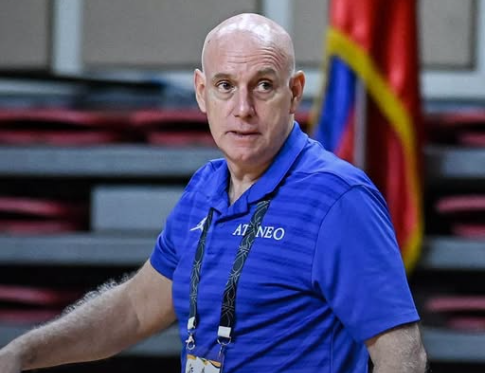
The Philippine National Police Criminal Investigation and Detection Group has moved to charge former Ateneo de Manila University men's basketball team head coach Thomas Anthony 'Tab' Baldwin and ten other team personnel with violating the Anti-Hazing Act. The recommendation stems from an incident on June 8 in Dipaculao, Aurora, where two players, Rene Baterbonia and Divine Adili, drowned during what was officially described as a team training activity. The case marks a significant development in Philippine sports accountability, raising questions about the line between rigorous athletic preparation and dangerous hazing practices.
Beyond Baldwin, those facing potential charges include strength and conditioning coaches Grant Dearns and Ceasar Vicent Javellana Elumba, three assistant coaches named Dean Caesar B. Castaño, Sandro Nicholas Romero Soriano, and Reynaldo Jacinto, two student managers Paolo Manuel Maceda Adevoso and Andrew Lorenzo 'Drew' Bondoc Salud, physical therapist John Eric Quiambao Rueca, and utility staff members Aris Ramos Pronce and Joel 'Boy' Palmiano Rapa. Authorities emphasised that every individual present at the Aurora beach activity shares responsibility for what unfolded, with officials noting that none of the 11 personnel attempted to stop, question, or flag the dangerous nature of the scheduled events.
Investigators have reframed the understanding of hazing in modern sports contexts, moving beyond traditional definitions centred on initiation rituals. Republic Act No. 11053, the Anti-Hazing Act, encompasses forced calisthenics and exposure to hazardous environmental conditions as forms of hazing. Officials explained that the Aurora activity, despite being marketed as team-building, exhibited characteristics that crossed into illegal territory. The definition's expansion reflects growing recognition that psychological and physical suffering need not occur through formal initiation ceremonies to constitute hazing; competitive training environments can mask harmful practices.
The reconstruction of events on June 8 reveals a carefully orchestrated schedule of physical exertion that preceded the fatal seawater activity. Players were required to wake at 4am and run four kilometres before participating in intense physical games with punishments for unsuccessful competitors. This escalating pattern of fatigue and stress continued until approximately 2pm to 2:30pm, when the sea training commenced. The timing proved tragically significant: meteorological data showed the active high tide peaked at 2:27pm, meaning the activity took place during precisely the most dangerous conditions for an open-water exercise involving already-exhausted athletes.
Authorities painted a detailed picture of environmental hazard, emphasising that the Aurora coastline presented rip currents, strong waves, and unpredictable seabed depths. The combination of accumulated physical fatigue from hours of morning activities, exposure to a hazardous maritime environment at peak tidal intensity, and apparent lack of adequate safety protocols created conditions that proved fatal. Investigators argue this was not coincidental misfortune but rather the foreseeable consequence of an activity designed without proper safety considerations or emergency response capacity.
The question of roster selection looms large in the case's interpretation. Authorities revealed that whilst 20 team members participated in the Aurora activity, only 17 would ultimately be submitted to the University Athletics Association of the Philippines as the official roster. This distinction transforms the characterisation from a standard training session into what prosecutors view as a selective assessment disguised as team-building. The activity's actual purpose, according to investigators, was determining which squad members would retain their positions—a reality that suggests pressure and potential coercion underpinned athlete participation, elements central to hazing classifications.
Baldwin's public response came in the form of a nine-minute apology video distributed through Ateneo's official social media channels, yet the coach now faces formal charges rather than the resolution his statement appeared intended to facilitate. The decision to recommend charges despite Baldwin's acknowledgment of responsibility indicates prosecutors view contrition as insufficient when addressing systemic failures that resulted in deaths. This approach reflects evolving standards in Philippine sports governance, where institutional accountability increasingly supersedes individual remorse when multiple officers and staff share culpability.
The investigation's findings regarding the victims' bodies held particular evidentiary weight. When Baterbonia and Adili were recovered, no weights or diving equipment was found attached to them, ruling out scenarios where athletes might have deliberately engaged in deeper water activities. This detail reinforces the narrative that two young players, already fatigued from extensive morning exertion, encountered conditions exceeding their physical and skill capabilities—conditions created by the schedule and location chosen by coaching staff. The absence of external paraphernalia suggests they simply became overwhelmed by natural ocean forces in an uncontrolled environment.
For Malaysian readers and Southeast Asian sports administrators, this case carries cautionary resonance regarding institutional oversight in athletics. Philippine authorities' expanded interpretation of hazing reflects a regional shift toward recognising that harmful practices manifest across varying contexts—not merely through explicit initiation ceremonies but through training protocols that prioritise outcomes over participant safety. The case demonstrates how even prestigious institutions with established reputations can normalise dangerous practices through gradual escalation, where each component seems individually justifiable until their cumulative effect becomes deadly.
The Department of Justice now inherits the case for formal evaluation and preliminary investigation. Their decision will significantly influence how Philippine universities, athletic associations, and professional sports organisations interpret their obligations under the Anti-Hazing Act. Should they proceed with prosecution, the case will establish precedent that institutional liability extends to all personnel present during hazing incidents, regardless of their specific roles or level of direct involvement. Conversely, dismissal would signal that coaching staff might escape serious consequences when athletes perish during high-pressure training activities, potentially encouraging continued reliance on aggressive conditioning methods that blur the boundary between athletic development and dangerous exploitation.
The broader implications extend beyond individual accountability to systemic reform. Universities across Southeast Asia maintain comparable athletic programmes with similar power dynamics between coaches and student-athletes. The case highlights the necessity for robust safety protocols, independent oversight, emergency response readiness, and clear authority structures empowering assistant staff to halt activities when conditions become unsafe. It underscores that institutional success—whether measured through championship performance or roster development—cannot justify methods that place young athletes in preventable danger. The drowning of Baterbonia and Adili represents not merely an isolated tragedy but a watershed moment potentially reshaping how educational institutions approach competitive sports programming.

