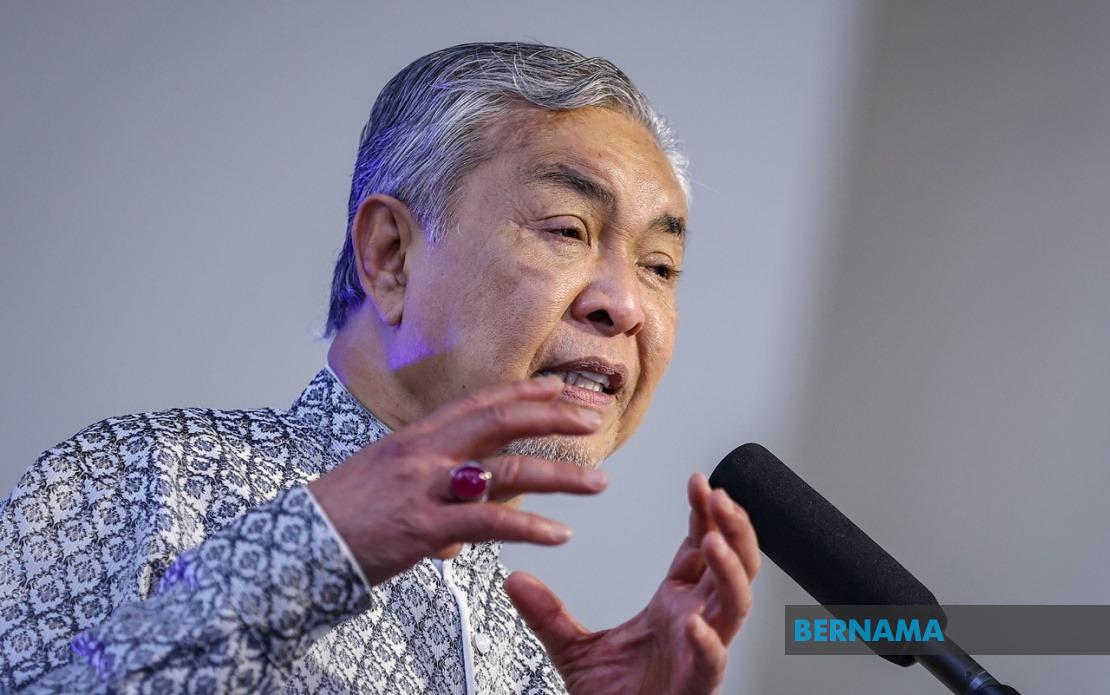
Deputy Prime Minister Datuk Seri Dr Ahmad Zahid Hamidi has urged all political parties involved in the upcoming Johor state election to cease highlighting longstanding grievances and past controversies that bear little relevance to the state's current needs and future direction. Speaking after attending a community engagement in the Kempas state constituency on July 3, the Barisan Nasional chairman stressed the importance of maintaining a politically mature and mutually respectful environment throughout the campaign period, arguing that the contest should be decided on the substantive merits of candidates and their concrete policy platforms rather than rehashed disputes from previous years.
Ahmad Zahid's intervention came at a time when rival coalitions have begun the formal phase of their campaigns ahead of the July 11 poll, with early voting scheduled for July 7. His remarks appeared to be a gentle warning to opposition parties and coalition partners who might be tempted to weaponise historical political conflicts that lack immediate bearing on state-level governance. The comment also reflected broader sensitivities within Malaysia's federal political structure, where several state administrations operate under complex coalition arrangements that require different political parties to cooperate at the national level while contesting fiercely at the state level.
The BN chairman acknowledged that some individuals and entities have launched attacks against UMNO and the broader BN alliance by resurrecting dormant controversies. However, he contended that such tactics are counterproductive and potentially corrosive to the working relationships that coalition partners have built at the Cabinet level. Ahmad Zahid noted that weekly Cabinet meetings involve representatives from multiple parties who are simultaneously competing against each other in state elections, creating an awkward dynamic if old grievances are continually aired in public campaign forums. This observation underscores a recurring tension in Malaysian politics: the difficulty of compartmentalising federal and state-level political competition when the same political figures and parties operate in both spheres simultaneously.
On the substantive front, Ahmad Zahid denied suggestions that BN views itself as a frontrunner or is taking the Johor contest for granted. Instead, he characterised the coalition as adopting an underdog mentality, mindful of the considerable shifts that have occurred in Johor's political landscape over the past decade. The state has experienced significant electoral volatility, with control of the state government changing hands in recent cycles, suggesting that voter preferences remain fluid and unpredictable. This assessment reflects a recognition that demographic changes and evolving voter priorities have reshaped the electoral terrain considerably since the previous state election.
BN's performance target for the election centres on substantially improving its 40-seat tally from the last state contest. With the party contesting all 56 available seats, capturing a significant majority would require a substantial boost in support. Ahmad Zahid highlighted that demographic composition has shifted markedly, with young voters now comprising more than half of the electorate. This structural change necessitates a fundamental reorientation of campaign messaging and policy substance to address the specific concerns and aspirations of younger Malaysians, whose priorities and grievances may diverge substantially from older cohorts of voters.
The BN manifesto, as articulated by Menteri Besar Datuk Onn Hafiz Ghazi, has accordingly placed considerable emphasis on employment generation, skills development, and educational pathways that lead directly to career advancement. Technical and Vocational Education and Training (TVET) features prominently as a mechanism for equipping young Malaysians with marketable competencies in sectors offering competitive remuneration. Ahmad Zahid noted that national unemployment has declined to 2.9 per cent, presenting an optimistic baseline. However, he emphasised that headline unemployment figures mask deeper concerns about employment quality, job security, and wage levels among younger workers, many of whom possess tertiary qualifications but struggle to access positions commensurate with their education.
The coalition's policy positioning reflects a pragmatic understanding that job creation statistics alone carry limited electoral currency if young voters perceive that available positions offer inadequate remuneration or career progression. By prioritising skills training that feeds into higher-wage sectors, BN appears to be attempting to address legitimate concerns about the adequacy and stability of employment opportunities for school leavers and university graduates. This approach also implicitly recognises that young voters increasingly prioritise economic security and living standards over heritage-based or identity-focused appeals that may have resonated with earlier generations.
Ahmad Zahid, who simultaneously holds the ministerial portfolio for Rural and Regional Development, personally appealed to young voters across Johor to support BN candidates in light of these policy commitments. His dual role underscores the government's intention to implement these youth-focused initiatives at both state and federal levels, suggesting a coordinated approach to addressing employment challenges among younger Malaysians. For Johor specifically, such an agenda carries particular weight given the state's status as an economic powerhouse and major employment centre, where job market conditions directly influence voter sentiment and electoral outcomes.
The BN's campaign strategy thus appears calibrated to shift voter attention away from legacy disputes and historical grievances towards forward-looking policy frameworks that promise tangible improvements in economic mobility and opportunity for the state's youngest voters. By framing the contest in terms of competing visions for youth employment and skills development, the coalition hopes to steer the narrative toward substantive governance issues rather than allowing the campaign to become mired in recriminations about past political conflicts. Whether this strategy succeeds will become evident following the July 11 polling, which will determine whether BN can successfully rebuild its influence in Johor against a backdrop of continued political fragmentation at the state level.

