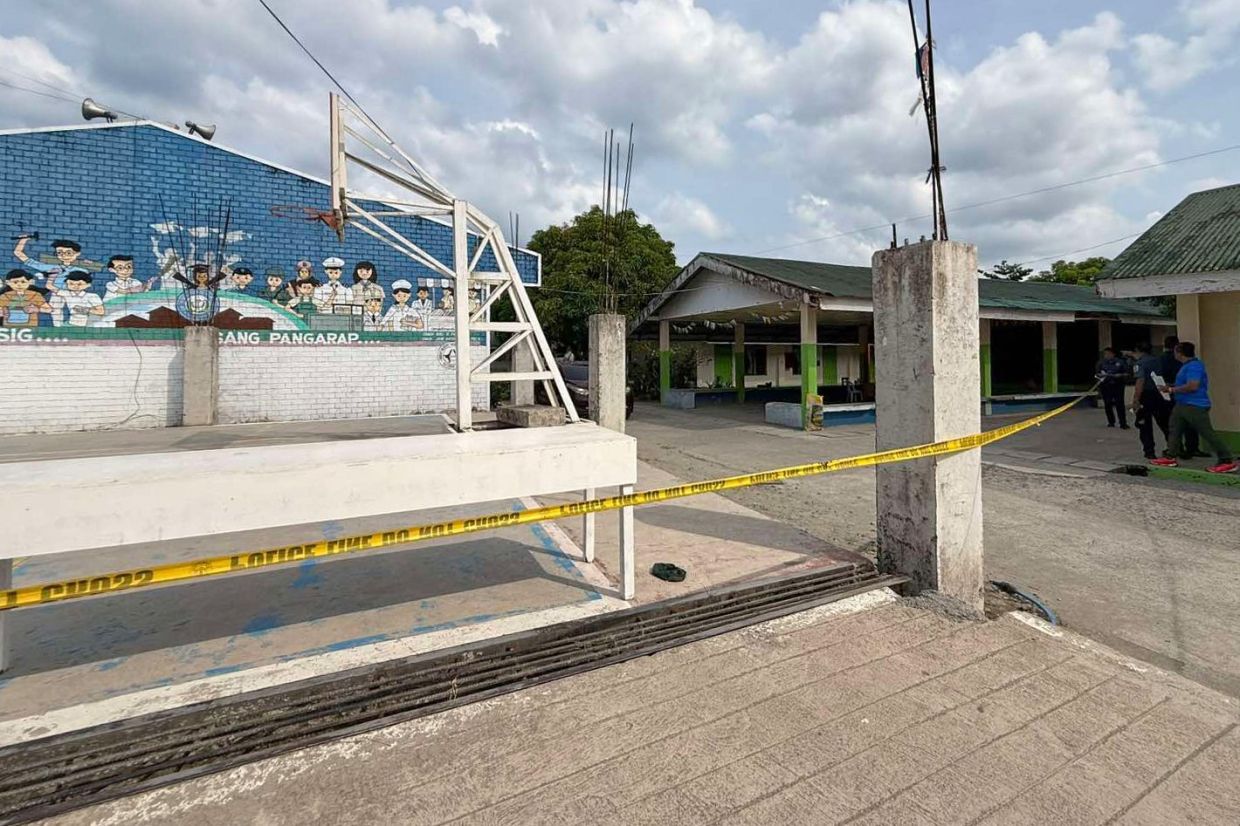
A 14-year-old female student from Tolosa National High School in the Philippines has been taken into police custody following her alleged social media posts threatening violence against her institution. The detention came after Interior Secretary Jonvic Remulla announced the development at a press briefing in Camp Crame on Thursday, noting that the girl had made explicit threats of harm against her schoolmates in posts shared last Wednesday night. The Philippine National Police Criminal Investigation and Detection Group acted on information provided by Senator Bam Aquino when alerting authorities to the disturbing content circulating online.
The threatening messages attributed to the Grade 10 student contained explicit language warning her classmates to "get ready" and be prepared for potential shootings or stabbings at Tolosa National High School. In one portion of the post, the minor allegedly wrote: "Hello. Send this to your friends. Yo, from Tolosa, prepare yourselves, especially to you, as you owe me. Get ready. I will disrupt the school." The message continued with further warnings suggesting imminent violence, stating "You won't know me, but you will recognise me. There is no time nor day. Be prepared for whoever gets shot or stabbed. We don't care. Good luck to you at Tolosa National High School." The inflammatory nature of these statements prompted swift police action and considerable concern among school administrators and parents in the region.
Investigators discovered that the student had allegedly created multiple Facebook accounts to disseminate the threatening messages, making it harder to track the source initially. However, through social media analysis and information gathered from concerned individuals, authorities confirmed the minor's identity as the originator of the posts. Once police managed to reach the girl, she deleted her accounts and the associated posts, though investigators had already documented the evidence. The minor's parents, when approached by officers from the Tolosa Municipal Police Station, initially refused to cooperate or provide additional information about the incident, creating an obstacle to the investigation.
Despite the seriousness of the allegations, the student could not be formally charged with any criminal offense due to the protections afforded by Republic Act No. 9344, the Juvenile Justice and Welfare Act, which shields minors from prosecution in certain circumstances. Consequently, the Philippine National Police transferred custody of the minor to the Department of Social Welfare and Development, and she was subsequently released into her family's care. This legal framework reflects the Philippine justice system's approach to treating youth offenders with consideration for their developmental stage and rehabilitation potential rather than purely punitive measures.
Remulla indicated that investigators had uncovered personal and family difficulties that may have motivated the student to post the threatening messages. Following engagement with her family members, authorities determined that the threat had been "neutralised and inactive," with no evidence suggesting an organised plan or involvement of other individuals in any potential attack. Critically, neither the minor nor her family members had access to firearms, significantly reducing the likelihood that the threats represented an imminent physical danger to the school community. The investigation painted a picture of a troubled teenager acting alone rather than part of a coordinated threat.
The girl's case emerged in the immediate aftermath of a devastating shooting at San Jose National High School in Tacloban City that had occurred just days earlier. On Monday, two students aged 14 and 15 opened fire at their school, killing three fellow students and wounding at least 20 others in one of the most shocking incidents of school violence in recent Philippine history. That tragedy sent shockwaves through educational institutions across the country and heightened security concerns among school administrators, parents, and law enforcement officials. The Tolosa student's threatening posts appeared to have been influenced by media coverage and the social impact of the Tacloban shooting, representing a copycat-style threat in the immediate wake of the actual violence.
A significant detail linking both cases emerged during the investigation: Remulla revealed that the suspects in the Tacloban shooting and the Tolosa student were all "avid fans" of the video game GoreBox, a violent game featuring graphic content. Following the Monday shooting, the Cybercrime Investigation and Coordinating Centre initiated a temporary ban of the game, reflecting growing concern among Philippine authorities about potential connections between violent digital media consumption and real-world threats. While researchers have long debated the causal relationship between violent video games and criminal behaviour, the Philippine government's response suggests a precautionary approach to limiting access to content deemed potentially harmful, particularly for minors.
The incident highlights the challenge facing modern law enforcement in distinguishing between genuine threats and impulsive social media posts made by emotionally troubled youth. The speed at which the minor deleted her accounts once authorities reached her, coupled with her initial hesitation and uncooperativeness, suggested she may not have fully grasped the seriousness of her actions or their potential consequences. Her family's initial reluctance to engage with investigators further complicated the picture, though subsequent cooperation helped authorities determine that the threat lacked credibility and operational capacity.
For Malaysian and Southeast Asian readers, this case underscores the transnational nature of school safety concerns and the particular vulnerability of young people to viral content and online influence. The incident demonstrates how a single school shooting can trigger copycat threats across multiple institutions, creating cascading security challenges for authorities and administrators. It also raises questions about the adequacy of current juvenile justice frameworks in addressing cyber-threats and the appropriate balance between rehabilitation and public safety when minors make violent statements online, issues equally relevant to Malaysia and other regional nations grappling with similar social media-driven security concerns.

