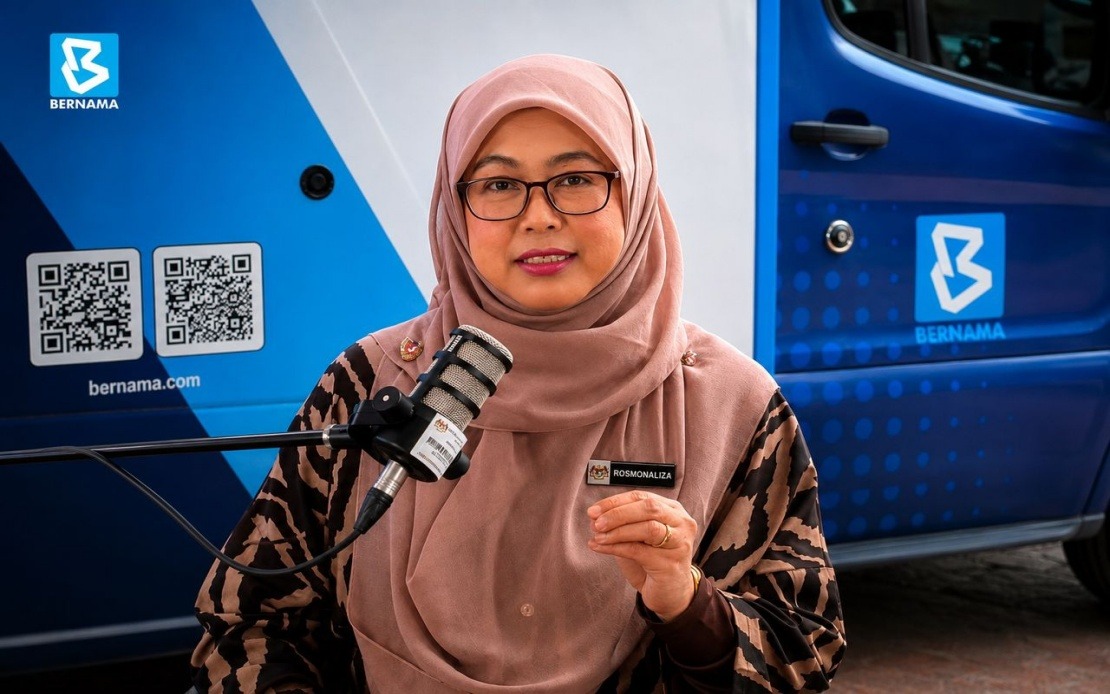
The evolving demands of contemporary family life mean Malaysian fathers must move beyond their traditional financial provider role to become meaningful participants in their children's emotional development and academic journey. Speaking in Kuala Lumpur on June 25, Rosmonaliza Abdul Ghani, director of the Family Well-being Division at the National Population and Family Development Board (LPPKN), outlined how rapidly changing lifestyles have necessitated a fundamental reimagining of paternal responsibilities in the modern household.
Historically, fatherhood in Malaysia has been narrowly defined through economic contribution alone. Yet mounting evidence suggests this framework increasingly fails families navigating complex social pressures, educational demands, and psychological challenges. Rosmonaliza articulated a broader vision in which fathers function as transformational agents capable of fostering cohesion, emotional resilience, and psychological stability within their households. This redefinition recognises that children's development encompasses far more than material provision, extending into domains where paternal presence, attention, and emotional availability prove decisive.
Central to this paradigm shift is the recognition that family communication forms the bedrock upon which healthy parent-child relationships are built. When fathers remain distant or communicate primarily through instruction rather than dialogue, children miss crucial opportunities for emotional validation and guidance during formative years. The LPPKN director emphasised that maintaining relevance as a father in today's context demands intentional effort to bridge generational gaps and create channels through which children feel genuinely heard and supported. Without such engagement, paternal authority naturally diminishes whilst family fragmentation accelerates.
A particularly encouraging development, according to Rosmonaliza, is the increasing willingness of Malaysian men to seek professional help rather than internalising stress or relationship difficulties. More fathers now participate in counselling sessions alongside their wives and children, signalling a cultural softening around mental health and emotional expression among male heads of household. This shift carries significant implications for family stability, particularly when fathers recognise that vulnerability and help-seeking represent strength rather than weakness. LPPKN has responded by developing comprehensive support infrastructure including counselling services, therapeutic interventions, and psychological assessments specifically designed to help fathers confront financial strain, mental health challenges, and other life stressors.
The board's expanded services deliberately create psychologically safe environments where fathers can articulate concerns without judgment or shame. Such spaces prove crucial given that many men historically internalised difficulties rather than seeking support, with devastating consequences for family relationships and individual well-being. By normalising counselling access among male family members, LPPKN works to dismantle lingering stigma and establish help-seeking as a rational coping mechanism rather than an admission of failure.
Social research increasingly validates the consequences of absent or emotionally withdrawn fathers. Those working directly with economically disadvantaged communities and street children observe a compelling pattern: family breakdown, youth delinquency, substance abuse, and chronic poverty frequently trace back to the absence of engaged father figures. When household heads abandon their responsibilities through addiction, incarceration, or deliberate disengagement, children face exponentially elevated risks of academic failure, criminal involvement, and intergenerational poverty. These structural failures demand intervention strategies rooted in compassion and respect rather than punitive approaches that further alienate vulnerable men from social support networks.
Engaging fathers facing substantial life difficulties requires nuanced understanding of male psychology and dignity. Approaches perceived as judgmental or condescending often trigger defensive reactions that entrench problematic behaviour rather than encouraging change. Conversely, interventions grounded in religious values, family obligation, and community respect can catalyse meaningful transformation by reframing paternal responsibility as an expression of personal honour and spiritual commitment. This culturally-informed methodology proves particularly effective across Malaysian society, where religious identity and family standing carry profound significance.
The psychological and material toll of adult responsibilities frequently overwhelms fathers who lack adequate support systems or coping mechanisms. Wives and children occupy critical positions in alleviating this burden through emotional recognition, practical assistance, and affirmation of paternal contributions. When family members actively acknowledge a father's sacrifices, express appreciation for his efforts, and provide emotional reciprocity, the relational foundation strengthens considerably. Conversely, when families take paternal provision for granted or fail to communicate gratitude, fathers may experience profound isolation and resentment that erodes family cohesion.
Rosmonaliza advocated for fundamental attitudinal shifts regarding paternal presence and quality time. Children often derive far greater benefit from meaningful interaction and undivided attention than from material accumulation or financial excess. A father who sits with his child during homework struggles, listens attentively to daily experiences, and offers encouragement provides irreplaceable psychological nourishment that no purchase can replicate. Yet modern pressures frequently conspire against such investment, with demanding work schedules and financial anxieties consuming the mental and temporal resources necessary for engaged parenting.
The timing of family appreciation carries particular weight. Children who wait until adulthood or their father's advanced years to recognise paternal sacrifice often discover these realisations arrive too late for meaningful reconciliation or deepened connection. Similarly, fathers who postpone quality family engagement until retirement may find that years of distance have created relational chasms difficult to bridge. Building strong father-child bonds requires consistent, intentional investment throughout childhood and adolescence when relationships prove most formative.
Malaysia's family policy framework increasingly acknowledges that paternal engagement represents a public good with broad social implications. When fathers actively participate in children's education through school involvement, homework support, and educational aspiration-building, children achieve superior academic outcomes. When fathers model emotional expression and help-seeking, sons learn that vulnerability constitutes acceptable masculinity whilst daughters internalise standards of partner expectation incorporating emotional availability. These cascading effects extend far beyond individual families to strengthen entire communities.
The LPPKN's advocacy for expanded paternal roles reflects international evidence demonstrating that children with engaged fathers display superior emotional regulation, academic performance, behavioural outcomes, and long-term life satisfaction. For Malaysian society grappling with mounting social challenges including rising youth crime, academic underperformance, and family instability, elevating fatherhood from mere breadwinning to comprehensive parental engagement offers substantial leverage for systems-level improvement. This reframing invites Malaysian fathers to recognise their potential as architects of family resilience and agents of social stability.

