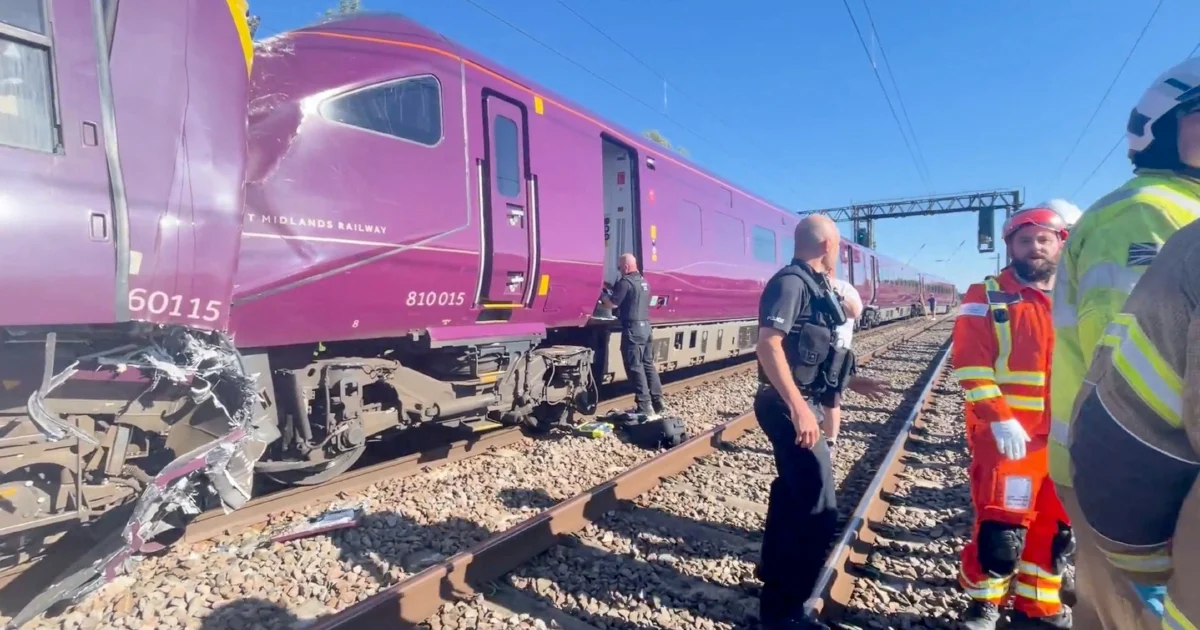
A tragic railway incident unfolded north of London on Friday when two passenger trains collided, resulting in one fatality and leaving dozens of passengers and crew members requiring medical attention. UK emergency services responded swiftly to the scene, where the impact left 11 individuals with injuries described as "very serious" by responders. The scale of the incident has reignited concerns about railway safety in Britain and the critical importance of collision avoidance systems on high-density commuter routes.
The collision occurred during what would typically be a busy afternoon service on one of Britain's busier railway corridors. Both trains involved in the accident carried passengers, indicating that the impact affected a significant number of people. Emergency response teams, including paramedics, firefighters, and police officers, mobilised quickly to the location to provide immediate medical support and begin rescue operations. The deployment of resources was coordinated across multiple emergency services to manage the scale of injuries sustained.
Among the injured, the medical severity varied considerably. Beyond the 11 individuals classified as "very seriously" injured, the remaining passengers and staff members sustained injuries ranging from moderate to minor in nature. Some were treated at the scene by paramedics, while others required transport to nearby hospitals for further assessment and treatment. The incident stretched healthcare facilities in the region as medical teams worked to process and care for the casualties.
This collision marks a significant incident on Britain's rail network, which carries millions of passengers daily across England, Scotland, Wales, and Northern Ireland. The UK rail system, whilst generally considered safe by international standards, continues to face scrutiny over safety protocols and technological safeguards designed to prevent such accidents. Investigators would likely examine factors including speed, signal compliance, train spacing procedures, and whether modern collision avoidance technology was operational on both trains.
For Malaysian and Southeast Asian observers, such incidents serve as important reminders of the critical safety infrastructure required for modern passenger rail systems. As countries throughout Southeast Asia expand their own railway networks—including Malaysia's rapid transit systems and inter-city rail corridors—the lessons from international railway accidents become increasingly relevant. The technical standards, operational procedures, and emergency response frameworks that prevent such tragedies require continuous investment and oversight.
The route where the collision occurred represents one of the UK's key passenger rail corridors, linking London to surrounding counties and facilitating hundreds of thousands of commuter journeys annually. Any disruption to this service ripples through the regional economy and affects the daily routines of dependent commuters. The incident would likely result in significant service disruptions as investigators examined the trains involved and the railway infrastructure at the collision site.
British Rail Accident Investigation Branch (RAIB) would be expected to launch a formal investigation into the circumstances surrounding the collision. Such investigations typically examine technical factors, human decision-making, maintenance records, and systemic issues within railway operations. The findings from these inquiries often lead to recommendations that influence safety standards not only across Britain but internationally, as railway authorities worldwide review and adopt best practices.
The human cost of the incident extends beyond the immediate injuries. Passengers and crew members who witnessed the collision or experienced the impact will likely require psychological support in the aftermath. The incident also weighs on the broader railway workforce, many of whom take considerable professional pride in their safety records. For the families of the deceased and those seriously injured, the consequences will be enduring.
This incident occurs within a broader context of railway safety discussions in Britain, where aging infrastructure in some areas contrasts with modern upgrades in others. Investment in signalling systems, train control technology, and maintenance programmes directly influences safety outcomes. The financial and operational decisions made by rail operators and government bodies responsible for railway oversight have tangible consequences for public safety.
As news of the collision spread, railway authorities across Europe and internationally would have monitored the situation closely, assessing whether similar risks existed on their own networks. The interconnected nature of modern railway safety means that lessons learned from accidents in one jurisdiction inform protective measures elsewhere. For Malaysia and other Southeast Asian nations developing their rail infrastructure, understanding the technical and procedural safeguards employed by established rail systems provides valuable guidance for implementation.
The immediate aftermath of such incidents invariably prompts media scrutiny, public concern, and political attention. Questions about maintenance standards, staff training, and regulatory oversight typically emerge as part of the natural response to transport tragedies. These discussions, whilst sometimes contentious, often drive incremental improvements in safety culture and practice across the industry.

