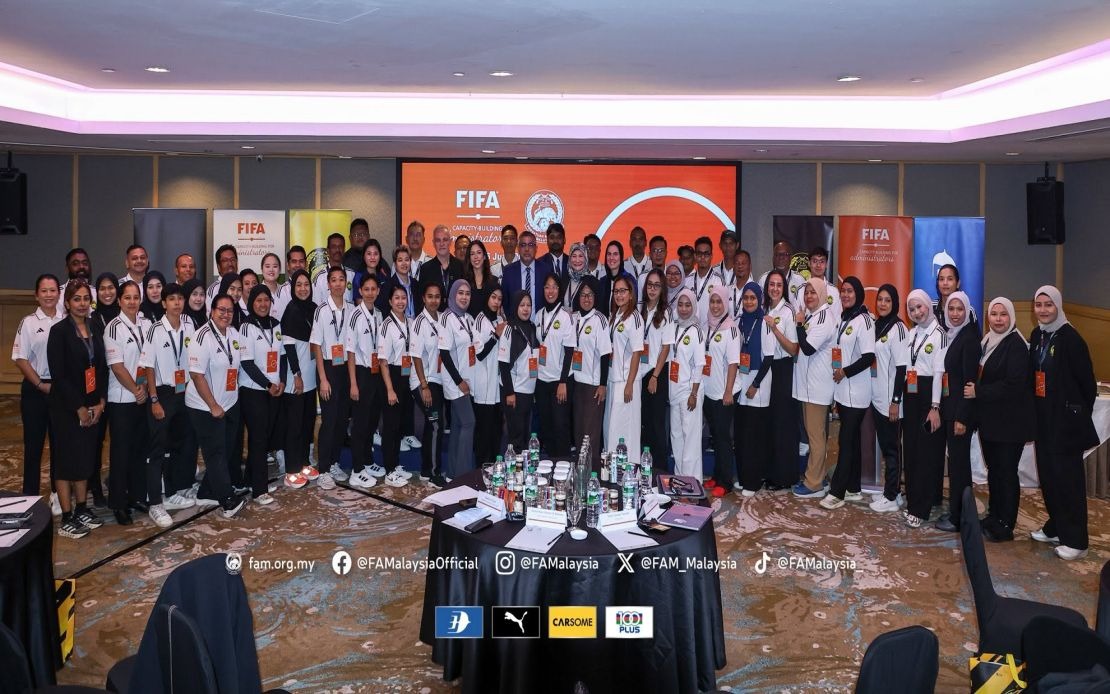
The Football Association of Malaysia is taking a strategic step to reshape the infrastructure underpinning women's football by introducing a comprehensive administrator training initiative that extends far beyond match-day operations. Starting in June 2023, FAM launched FIFA's Capacity-Building For Administrators 2026 programme in collaboration with the world governing body, recognising that sustainable growth in the women's game requires investment in the people and systems managing teams behind the scenes.
This four-day intensive course represents a deliberate pivot towards professionalising the administrative side of women's football in Malaysia. Rather than concentrating solely on tactical and technical coaching development—the traditional focus in most Southeast Asian football nations—FAM has identified a critical gap in management expertise among the officials responsible for team operations, player welfare, and competition organisation. The decision reflects growing international best practice in women's football, where leading nations have discovered that superior governance structures often prove as decisive as superior talent in determining long-term competitive success.
Facilitating the programme are two FIFA Women's Football Development Experts: Safia Abdeldayem and Pema Choden Tshering, lending international credibility and ensuring participants benefit from global knowledge rather than relying solely on domestic experience. Their involvement underscores FIFA's commitment to standardising professional practices across member associations and developing consistent frameworks for women's football management worldwide. For Malaysian participants, exposure to international best practices creates valuable opportunities to benchmark current approaches against global standards and identify areas requiring modernisation.
The curriculum is deliberately comprehensive, addressing multiple dimensions of football administration rather than remaining narrowly focused. Participants will engage with modules on Women's Leadership, equipping managers and administrators with strategies for supporting female athletes and staff in traditionally male-dominated sporting environments. The Women's Competition module provides detailed instruction on structuring and managing league systems and tournaments in ways that maximise participation and maintain competitive integrity. Additionally, training on Club and Players' Rights ensures that administrators understand their legal and ethical obligations, protecting both organisations and athletes from potential disputes or welfare failures.
Strategic Planning forms the final pillar of the curriculum, enabling administrators to develop coherent long-term visions for their teams rather than operating reactively from season to season. This module proves particularly valuable in Malaysia's context, where many teams operate with limited resources and uncertain funding streams. Learning to prioritise investments, identify talent development pathways, and plan infrastructure improvements systematically can help clubs and national teams maximise their impact despite financial constraints that might otherwise seem insurmountable.
FAM's initiative carries particular significance for Malaysian women's football given the sport's historical underinvestment relative to the men's game. While technical coaching for female players has improved incrementally over recent years, the administrative apparatus supporting women's teams has remained comparatively underdeveloped. Many women's teams operate with part-time managers, skeleton administrative crews, and inconsistent support structures that would be unthinkable in men's professional football. By systematising administrator training through an international FIFA programme, FAM signals that women's football administration deserves the same professional standards and career development pathways available to their male counterparts.
The programme's timing aligns with broader regional trends in Southeast Asian football. Nations including Thailand, Vietnam, and the Philippines have invested significantly in developing women's football infrastructure in recent years, recognising both the sport's social benefits and its commercial potential. Malaysia risks falling behind competitors if it fails to professionalsise its management structures. Women's football in these neighbouring countries benefits from more robust administrative frameworks, better-resourced support systems, and clearer career pathways for administrators—advantages that translate into superior team organisation and player development.
Attendance at the inaugural programme included senior FAM officials, signalling institutional commitment to the initiative's success. Datuk Noor Azman Rahman, FAM's secretary-general, along with Datuk Suraya Yaacob, who serves on both FIFA's Women's National Team Competitions Committee and the Asian Football Confederation's Women's Football Committee, provided high-level endorsement. Their participation suggests this programme represents not a peripheral undertaking but rather a centralised strategic priority. Soleen Al-Zoubi, the FAM Women's Football Technical Director, brought technical football expertise to the proceedings, ensuring the administrative training remained contextualised within the realities of developing women's football programmes.
FAM's stated vision extends beyond improving current administrative practice to building a sustainable talent pipeline of skilled managers and leaders. The association explicitly connects administrator development to broader ecosystem strengthening, recognising that a shortage of qualified personnel represents a significant bottleneck for women's football growth. Many potential administrators never enter the field because no clear training pathway or career progression exists. By formalising international-standard training programmes, FAM creates visible career opportunities that might attract talented individuals who otherwise would pursue management roles in different sectors.
The administrator programme aligns with FIFA's global strategic priorities for women's football development. The international federation has committed substantial resources to reducing the gap between men's and women's football across all member associations. Providing capacity-building opportunities at no cost to FAM represents part of this global investment strategy. However, FIFA's support works most effectively when national associations like FAM demonstrate genuine commitment through their own resource allocation and institutional prioritisation—a commitment FAM has clearly made by launching this programme.
For Malaysian women's football to achieve sustained improvement, the sport requires not just better players and coaches but also better-organised clubs and competitions. The FIFA Capacity-Building For Administrators 2026 programme provides a vehicle for achieving this professionalisation. By developing a cohort of trained administrators who understand modern best practices in women's football management, competition structure, and player welfare, FAM creates multiplier effects throughout the ecosystem. These administrators return to their clubs and organisations equipped with frameworks and knowledge that elevate standards across the entire system, benefiting players and fans alike.

