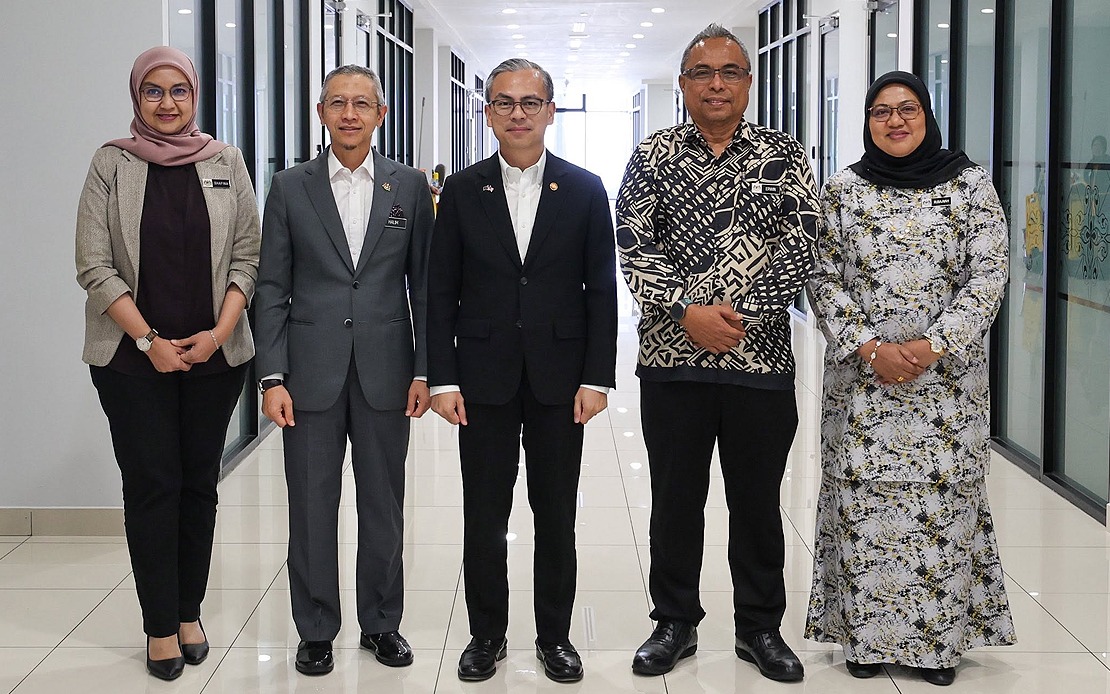
The Information Department (JaPen) has entered a new leadership phase following the official appointment of Erwin Khairul Ahmad as director-general, a transition that comes with significant implications for how Malaysia's government communications machinery will operate in the coming years. Communications Minister Datuk Fahmi Fadzil publicly acknowledged the appointments in Kuala Lumpur on June 22, underscoring the importance of the department's evolving mandate as an information conduit between government and citizens.
Wan Saidatul Shafina Mohd Amin's concurrent appointment as deputy director-general with specific responsibility for Digital Content reflects a strategic recognition within Malaysia's communications hierarchy. The positioning of a dedicated digital-focused deputy signals growing acknowledgment that information dissemination has fundamentally shifted towards online and social media platforms, particularly as younger demographics increasingly consume news through digital channels rather than traditional print or broadcast media.
Fahmi's congratulatory remarks emphasised the qualities he expects from the incoming leadership team. His call for the new leaders to demonstrate dedication, wisdom and high spirit suggests a deliberate emphasis on revitalising institutional morale and public perception of the department. The explicit reference to strengthening JaPen's role as an effective medium for public information delivery indicates that the ministry views these appointments as central to improving government-citizen communication in an era marked by information fragmentation and competing narratives.
The transition represents a changing of the guard that extends beyond mere personnel shuffling. Previous director-general Julina Johan stepped down from the position, and Fahmi's public acknowledgement of her tenure—praising her services, dedication and contributions—follows a diplomatic convention while also signalling continuity in institutional values. Such recognition helps maintain institutional stability during leadership transitions, particularly important in a department whose credibility depends on consistent performance and public trust.
The formal presentation of appointment letters by Tan Sri Wan Ahmad Dahlan Abdul Aziz, director-general of the Public Service Department (JPA), adds procedural weight to these announcements. This ceremonial dimension emphasises that these are not casual reorganisations but carefully considered appointments made through Malaysia's established civil service machinery. The involvement of JPA reinforces that these senior positions represent significant career achievements within the federal administration and carry corresponding responsibilities.
JaPen's evolving role in Malaysia's information ecosystem reflects broader governmental acknowledgement that effective communication requires sophisticated digital strategies. With Wan Saidatul Shafina's appointment targeting digital content specifically, the department appears to be addressing what many observers have identified as a gap in government social media presence and online engagement. This structural change suggests recognition that traditional government information approaches often struggle to compete with independent news sources and social media narratives in shaping public opinion.
The appointment timing carries contextual significance within Malaysia's current political environment. A functioning and credible Information Department becomes increasingly important during periods of political transition or when government initiatives require public understanding and support. Erwin Khairul Ahmad's appointment thus arrives at a moment when effective government communications could materially influence how Malaysian citizens perceive policy changes and institutional developments.
For Southeast Asian observers watching Malaysia's institutional evolution, these appointments illustrate how regional governments are adapting their communications infrastructure to modern realities. Countries across ASEAN face similar challenges in reaching digitally-native populations while maintaining institutional credibility—a balancing act that requires leadership capable of navigating both traditional and emerging media landscapes. Malaysia's decision to explicitly highlight digital content expertise at the deputy director-general level suggests regional recognition that governments ignoring digital communication strategies do so at considerable political risk.
The structural integration of digital content expertise into JaPen's senior management also reflects pragmatic acknowledgement that information in the 21st century moves at velocities that government bureaucracies traditionally struggle to match. By positioning digital content as a core deputy director-general responsibility rather than treating it as peripheral or secondary function, the ministry signals that this is not a temporary adjustment but a fundamental recalibration of how the department understands its mission. This reorientation could have implications for how other Malaysian government departments approach their own communication strategies, potentially setting a template for similar digital-focused appointments elsewhere in the civil service.
Looking ahead, the effectiveness of these appointments will likely be measured not through ceremonial assessments but through tangible improvements in how Malaysian citizens perceive government information accessibility and reliability. Both Erwin Khairul Ahmad and Wan Saidatul Shafina Mohd Amin inherit an institution operating within a complex media environment where government pronouncements compete constantly with independent journalism, citizen commentary and alternative information sources. Their success will depend on whether they can enhance JaPen's capacity to serve as a trustworthy information source while respecting the boundaries between government communication and political advocacy—a distinction that remains crucial to institutional credibility across Southeast Asia.

