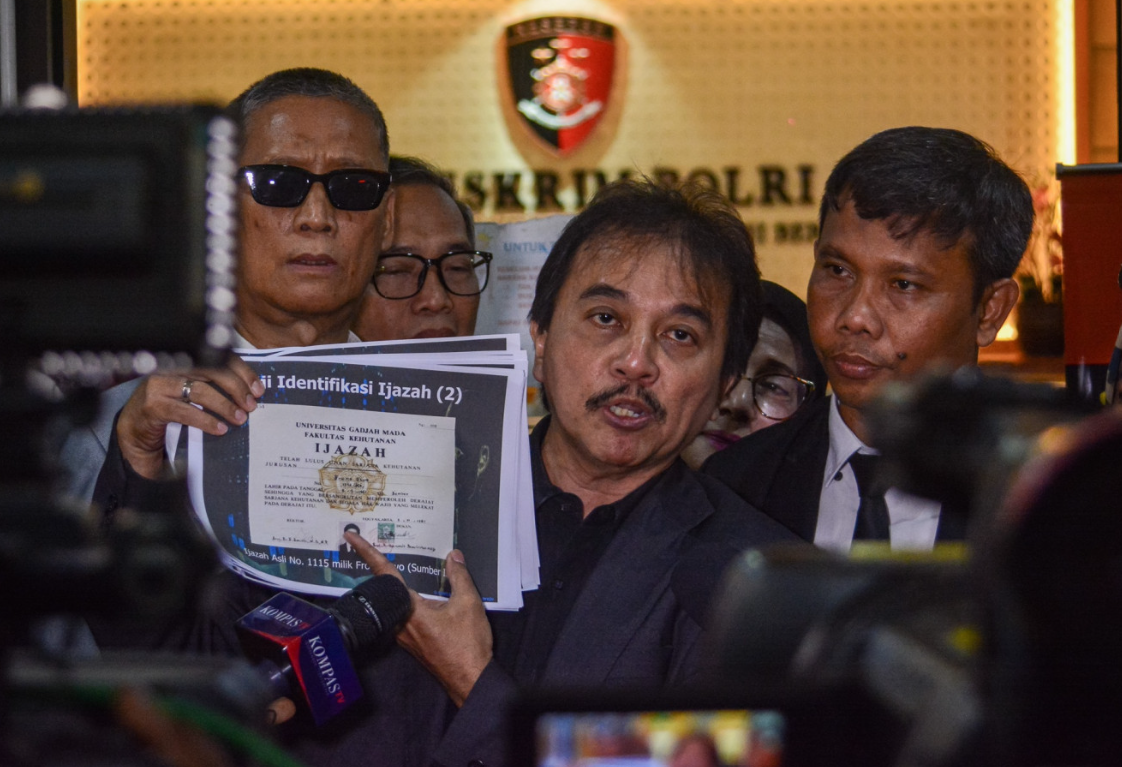
The detention of former Indonesian youth and sports minister Roy Suryo and activist Tifa Tyassuma by Jakarta Police on Friday morning represents a significant turning point in one of Indonesia's most persistent political controversies. Both suspects were arrested at their residences as part of what authorities describe as standard procedure ahead of transitioning their case to the Jakarta Prosecutor's Office, following completion of the police investigation phase. The arrests underscore the contentious nature of allegations surrounding the authenticity of ex-president Joko Widodo's university credentials, a matter that has divided Indonesian society and captured headlines repeatedly since emerging on social media platforms in 2019.
According to Roy's legal representative Ahmad Khozinudin, the morning arrests followed months of investigative work by the Jakarta Police's General Crimes Directorate. The detained suspects face charges related to defamation and allegations of falsifying Jokowi's diploma credentials. Beyond the core defamation charge, Roy and Tifa have also been accused of manipulating electronic documents to substantiate their claims that the former president's academic qualification is fraudulent. Investigation director Sr Comr Iman Imanuddin characterised the detention as a procedural necessity rather than punitive action, explaining that standard administrative requirements necessitate custodial measures before transferring cases to prosecutors.
The investigation director outlined that the detention served multiple procedural objectives, including preventing unnecessary delays within Indonesia's criminal justice system and completing final verification steps such as medical examinations and comprehensive evidence documentation. These explanations reflect the technical justifications authorities advance for apprehending suspects at this stage of investigations, though such reasoning has drawn criticism from defense counsel who argue that detained individuals who have consistently appeared for summonses and maintained compliance with reporting obligations should remain free pending prosecution.
Roy, who previously held ministerial rank during Susilo Bambang Yudhoyono's presidency, has emerged as a prominent voice challenging the official narrative regarding Jokowi's educational background. The dispute traces its origins to 2019 when social media users first questioned whether the former president's diploma from Gadjah Mada University possessed legitimate authenticity. Over subsequent years, the controversy transformed from informal online speculation into a formal legal dispute, encompassing civil litigation filed in 2022 and multiple criminal investigations commencing in 2025. This evolution demonstrates how contemporary political controversies in Indonesia increasingly transition from digital platforms into institutional legal frameworks.
The National Police formally declared Jokowi's diploma authentic in May 2025, simultaneously closing their initial investigation into forgery allegations. However, this official determination failed to extinguish the controversy. A subsequent case review conducted in July 2025 provided an opportunity for critics, including Roy, to reassert their objections to police findings and maintain their position that documentary evidence contradicts official conclusions. The persistence of skepticism despite police verification illustrates the challenge authorities face in conclusively resolving politically sensitive disputes that have generated substantial public discourse and entrench competing institutional perspectives.
Roy's defense counsel, Refly Harun, mounted an immediate challenge to the detention, characterizing it as procedurally excessive and unnecessary. Harun emphasized that his clients had demonstrated consistent cooperation throughout the investigative process, never evading summonses or neglecting to fulfill reporting obligations. The lawyer questioned the logic of detention when case transfer to prosecutors remained scheduled for Monday, suggesting that custodial measures served no legitimate preventive purpose. This criticism highlights ongoing tensions in Indonesia between investigative authorities and defense counsel regarding appropriate use of pretrial detention, particularly in high-profile cases with political dimensions.
The broader investigation has encompassed numerous individuals who challenged Jokowi's diploma authenticity or participated in disseminating such claims. Police initially named six individuals as suspects under the Electronic Information and Transactions Law, which prescribes maximum sentences reaching six years imprisonment. However, authorities subsequently dropped charges against three suspects—Eggi Sudjana, Damai Hari Lubis, and Rismon Sianipar—following mediation efforts. This selective prosecution approach, wherein some suspects face prosecution while others achieve charge dismissal through settlement negotiations, raises questions about consistency in investigative standards and whether political considerations influence prosecutorial decisions.
The diploma controversy reflects deeper currents within Indonesian politics regarding accountability for former high officials and institutional credibility. Jokowi's tenure as president concluded in October 2024, yet legal proceedings targeting critics of his academic credentials intensify during his post-presidential period. This temporal pattern invites speculation about whether prosecutions aim primarily at establishing factual truth regarding the diploma's authenticity or represent retaliatory measures against individuals who challenged an incumbent president's official narrative. For Southeast Asian observers, the case illustrates how political disputes in major regional democracies increasingly weaponize legal mechanisms, potentially compromising judicial independence and chilling public discourse concerning public figures.
The utilization of the Electronic Information and Transactions Law to prosecute diploma critics represents another significant dimension of the controversy. Originally designed to address serious cybercrime and digital fraud, the statute has increasingly served as a tool for pursuing political opponents and silencing critical voices across Indonesian civil society. By charging Roy and Tifa under this legislation rather than traditional defamation statutes, authorities employ a framework that carries severer penalties and reflects evolving practices wherein digital-era legislation supersedes conventional legal instruments. This prosecutorial approach carries implications extending beyond individual cases, potentially influencing whether Indonesian citizens risk engaging in political criticism on social media platforms.
From a Malaysian perspective, the Jokowi diploma controversy and the resulting prosecutions merit careful observation. While Indonesia's political system operates under different constitutional frameworks than Malaysia's, both nations share challenges concerning judicial independence, political prosecutions, and the expansion of legal instruments targeting dissent. The willingness of Indonesian authorities to detain and prosecute former ministers and activists who questioned official narratives demonstrates patterns that warrant monitoring by regional observers concerned with democratic norms and institutional accountability. Furthermore, the case illustrates how controversies originating in digital spaces increasingly generate institutional legal responses, a phenomenon affecting multiple Southeast Asian jurisdictions navigating tensions between digital freedom and state authority.

