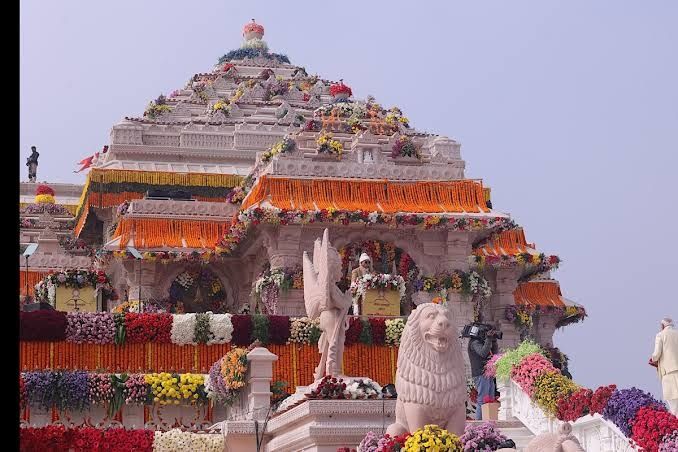
Police in Lucknow have arrested eight individuals in a widening scandal centring on the mishandling of funds at the Ram Mandir, the grand Hindu temple in northern Uttar Pradesh that was ceremonially inaugurated by Prime Minister Narendra Modi in 2024. The arrests followed a criminal investigation launched on Thursday, June 25, after allegations surfaced regarding irregular practices in how the shrine manages the substantial donations it receives from millions of devotees across India and abroad.
The Ram Mandir occupies immense symbolic importance in India's contemporary religious and political landscape. Constructed on a plot in Ayodhya where the Babri Mosque stood for approximately five centuries before its demolition in 1992, the temple's completion represents the culmination of a decades-long campaign by Hindu nationalist organisations. Modi's personal attendance at the inauguration ceremony underscored the project's significance to his government's ideological vision and electoral appeal among India's Hindu majority population.
Those detained in custody are accused of breach of criminal trust, theft, criminal conspiracy, and corruption. Police records indicate that most of the accused held positions involving direct contact with the temple's financial operations, particularly those responsible for tallying and securing the considerable volumes of cash and precious metals—including gold and silver ornaments—that devotees routinely deposit as religious offerings. The precise quantum of allegedly stolen or misappropriated funds has not been officially confirmed by government authorities, yet multiple credible media investigations and opposition political figures have claimed the figure could surpass US$20 million, a sum that would constitute a significant fraction of the temple's operational budget.
The financial dimensions of the Ram Mandir project itself contextualise the gravity of the allegations. The construction phase alone consumed approximately US$240 million in expenditure, with all funding derived from voluntary contributions solicited from the Hindu community through an extensive national and international fundraising campaign. This reliance on public generosity means that allegations of internal malfeasance strike at the heart of the trust relationship between donors and custodians of the sacred facility.
The scandal has visibly shaken devotional confidence in the institution. Viti Saxena, a 44-year-old homemaker who had personally contributed to the temple, articulated the widespread disillusionment now evident among the faithful. She expressed profound dismay that a shrine of such paramount spiritual significance has become the subject of criminal investigation and negative international publicity, and voiced genuine uncertainty about whether her own donated funds reached the temple's accounts or were diverted through corrupt channels. Beyond individual disappointment, Saxena articulated a collective sense that the controversy has inflicted reputational damage extending beyond India's borders, diminishing the temple's standing in the eyes of a global Hindu diaspora.
Uttar Pradesh Chief Minister Yogi Adityanath, whose state government constituted a special investigation team to examine the allegations, has publicly committed to pursuing perpetrators with vigour. In official statements released following the arrests, Adityanath vowed that individuals found culpable would face the full rigour of the law and would not escape accountability through political interference or administrative obstruction. His pronouncement reflects an apparent recognition that the matter demands decisive action to restore institutional credibility.
The theological and historical foundations of the Ram Mandir give the present crisis unusual dimensions within Indian public discourse. According to Hindu belief systems embraced by hundreds of millions of adherents, the deity Ram incarnated in human form in Ayodhya more than seven millennia ago, establishing that location as one of Hinduism's holiest pilgrimage sites. The 16th-century Babri Mosque, erected during the reign of the Mughal emperor Babur, came to occupy a site that Hindu activists increasingly viewed as illegitimately positioned over Ram's natal shrine, a historical grievance that animated religious and communal tensions for centuries.
The demolition of the Babri Mosque in December 1992, carried out by Hindu activist groups with tacit political support, fundamentally altered the trajectory of Indian electoral politics. Narendra Modi's Bharatiya Janata Party, then confined to opposition benches in parliament, proved instrumental in channelling popular Hindu sentiment through mass mobilisation campaigns that successfully framed the mosque's destruction as rectification of historical wrong. This political movement ultimately coalesced into an unstoppable electoral force that dislodged the Indian National Congress party, which had dominated India's governance structures since independence from Britain in 1947, replacing it with BJP-led administrations that have consolidated power through successive electoral victories.
For Malaysian and Southeast Asian observers, the Ram Mandir embezzlement allegations present instructive lessons regarding institutional corruption, the vulnerability of religiously motivated fundraising campaigns to misappropriation, and the intersection of sacred institutions with political power structures. India's multi-confessional society, though fundamentally different from Malaysia's constitutional framework, shares certain tensions around religious institutions, public accountability, and the relationship between political movements and faith communities.
The arrests represent an attempt by authorities to contain reputational damage and restore legitimacy to an institution that has become central to the ruling party's ideological project. However, the scandal threatens to undermine the moral authority that accompanies stewardship of spiritually significant spaces, potentially influencing donation patterns and public participation in future fundraising initiatives. The investigation's trajectory and any subsequent prosecutions will likely generate continued scrutiny both domestically and internationally regarding how sacred institutions balance spiritual mission with transparent financial governance.

