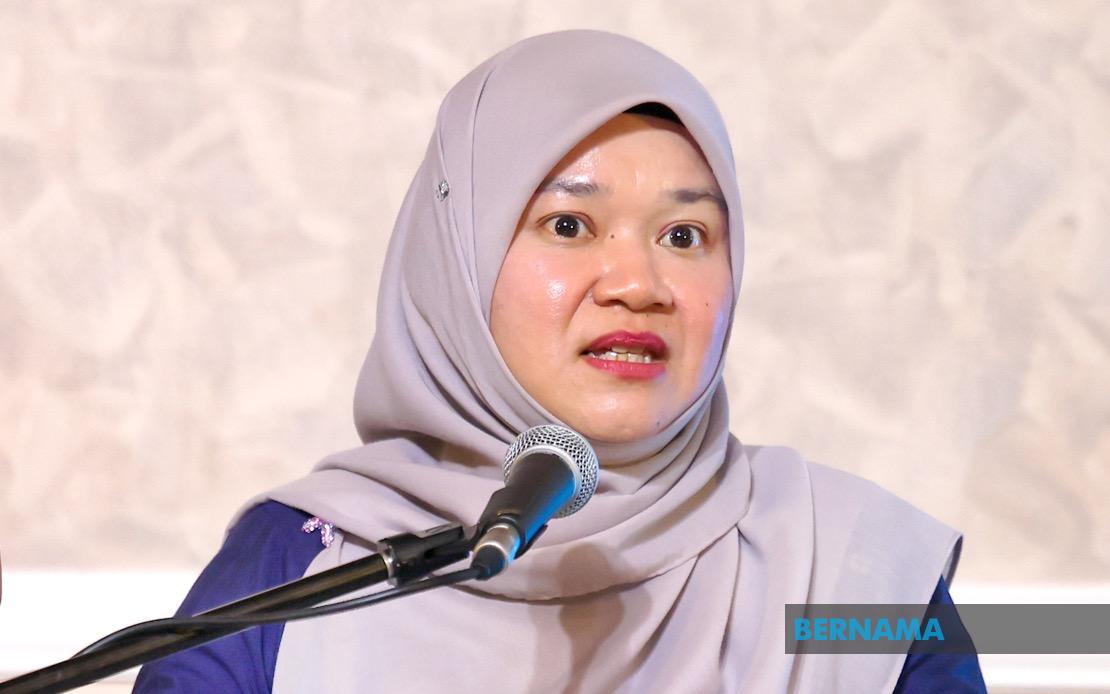
Education Minister Fadhlina Sidek, who also holds the position of chief for PKR Wanita, has initiated legal action by filing a police report in response to the distribution of an artificially generated video containing false and damaging claims directed at her. The incident highlights growing concerns about the weaponisation of artificial intelligence technology for spreading misinformation and personal attacks against public figures, particularly women in political office.
In a statement released today, Fadhlina expressed her displeasure regarding the nature and intent behind the video's circulation. She characterised the dissemination as malicious and motivated by an explicit desire to undermine her professional standing and personal integrity. The Education Minister's decision to pursue formal legal recourse demonstrates a proactive stance against what she perceives as coordinated attempts to damage her reputation through technology-enabled harassment.
The circulation of synthetic media—videos created or manipulated using artificial intelligence techniques—represents an emerging challenge for Malaysian politics and public discourse more broadly. Such content can spread rapidly across social media platforms and messaging applications, reaching thousands of individuals before fact-checking mechanisms or official clarifications have opportunity to take effect. The challenge is particularly acute for public figures who may lack immediate channels to counter false narratives before they gain traction within online communities.
Fadhlina's police report initiates a formal investigation into the video's creation, distribution, and the individuals or entities responsible for its circulation. She has specifically called upon law enforcement authorities to conduct a thorough inquiry and to pursue appropriate legal action consistent with Malaysian legislation governing defamation, character assassination, and online harassment. This escalation to formal police involvement indicates the seriousness with which the Education Minister regards the allegation and the potential consequences of such attacks on her professional functioning and personal wellbeing.
Beyond the immediate incident, Fadhlina has used the occasion to advocate for a broader cultural and institutional shift regarding how Malaysia's political establishment and civil society address defamation and harassment targeting women in elected office. She has explicitly called upon all stakeholders—political parties, government agencies, civil society organisations, and ordinary citizens—to adopt firm and uncompromising positions against slander, character assassination, and sexual harassment directed at female politicians. This appeal recognises that such attacks disproportionately affect women and can function as a form of suppression that discourages women's participation in public life.
The targeting of women politicians through sexually explicit or demeaning content generated via artificial intelligence has been documented across multiple democracies in recent years. Such attacks serve multiple purposes simultaneously: they damage the reputation of individual targets, they discourage other women from entering or remaining in politics, and they contribute to a broader erosion of trust in democratic institutions. Malaysia's experience in this regard reflects global patterns in how technology is being repurposed to undermine women's political participation and leadership.
The technical sophistication of artificial intelligence-generated content poses particular challenges for existing legal and regulatory frameworks. Malaysian law criminalises defamation and harassment under various statutes, but the application of these laws to synthetic media created using AI tools presents novel jurisdictional and evidentiary questions. Investigators must identify not only who distributed the content but also who created it, using what tools and data, and with what explicit intent—a multi-layered investigative process that requires specialised technical knowledge.
Fadhlina's public response and police filing may influence how other Malaysian political figures and public officials respond to similar incidents in future. Her willingness to engage legal mechanisms rather than simply dismissing the attack establishes a precedent that such misinformation campaigns may be met with formal state response. Simultaneously, her framing of the issue as a matter affecting not only her personally but also broader questions of women's safety and political participation elevates the discourse beyond individual grievance toward systemic concern.
The incident also raises questions about platform responsibility and content moderation. Social media companies and messaging applications through which such videos circulate face increasing pressure—both from government authorities and civil society—to develop more sophisticated mechanisms for identifying and removing synthetic media content. The technical challenges involved in automated detection of AI-generated videos remain substantial, creating a lag time during which harmful content circulates before being removed or fact-checked.
Stakeholders across Malaysia's political spectrum will likely monitor the outcome of the police investigation and any subsequent legal proceedings with considerable interest. The case may establish important precedent regarding how Malaysian law applies to synthetic media and AI-generated defamatory content, with implications extending beyond this specific incident. As artificial intelligence technology becomes increasingly accessible and capable of generating realistic multimedia content, the legal system's capacity to respond quickly and effectively becomes a matter of considerable public importance.
For women in Malaysian politics specifically, Fadhlina's action represents both a symbolic and practical assertion that such attacks will not be permitted to proceed without institutional response. Her elevation to the Education Ministry position places her in a high-visibility role, making her both a more prominent target and someone with greater platform to advocate for systemic protections against technology-enabled harassment. The success or difficulty of her legal complaint may substantially influence whether other women politicians feel emboldened to pursue similar formal action or whether the practical burden of doing so proves prohibitive.

