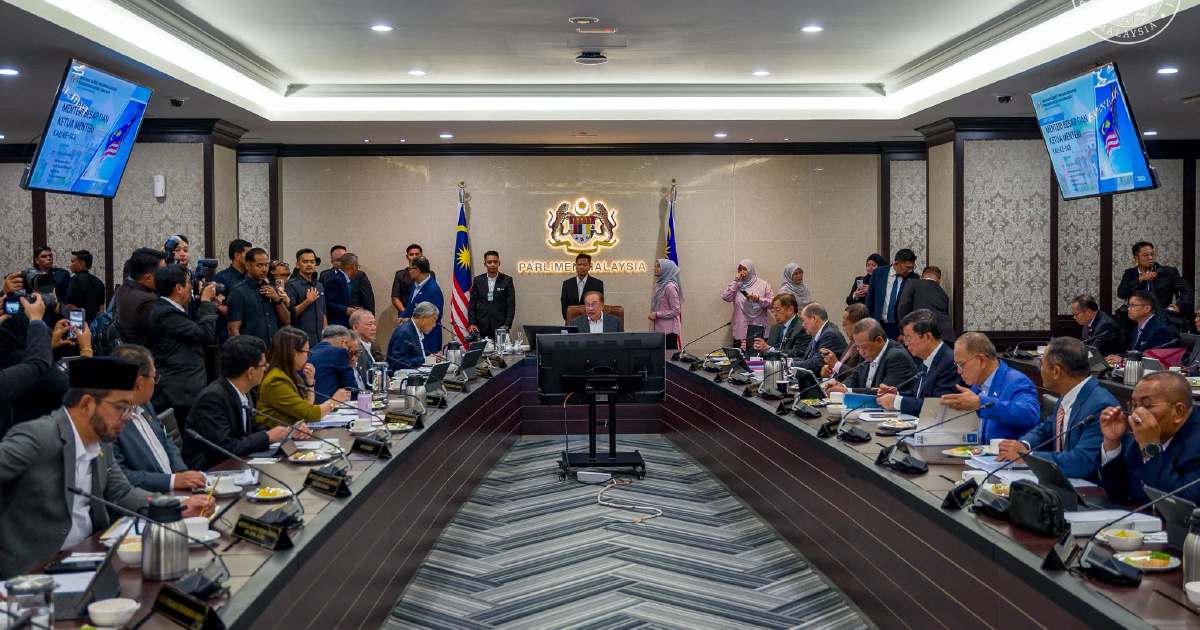
Prime Minister Datuk Seri Anwar Ibrahim brought together Malaysia's regional leaders at the Parliament building to tackle pressing economic concerns during the 149th convening of Menteris Besar and Chief Ministers. The gathering underscored the government's commitment to coordinated action across state and federal levels as the nation navigates a period of heightened international volatility stemming from ongoing tensions in the Middle East.
The timing of this high-level assembly reflects growing apprehension within Malaysian policymaking circles about spillover effects from geopolitical instability. Global commodity markets have grown increasingly turbulent, supply chain vulnerabilities have been exposed, and investor sentiment remains fragile across the region. By convening state leaders who command significant influence over local economic policies and development initiatives, the Prime Minister signalled that economic recovery requires alignment from all tiers of government.
Malaysia's economy has demonstrated resilience in recent quarters, yet growth trajectories remain modest compared to pre-pandemic expectations. The diversified structure of the Malaysian economy—spanning petroleum, palm oil, semiconductors, and tourism—means that international disruptions carry outsized consequences. State governments play crucial roles in facilitating business investment, supporting small and medium enterprises, and ensuring local economic stability. Their participation in federal-level strategic discussions ensures that recovery measures account for regional variations in economic structure and capacity.
The emphasis on economic revival signals recognition that while Malaysia has avoided the worst of recent global shocks, the margin for complacency has narrowed considerably. Manufacturing sectors have faced input cost pressures, the tourism industry continues nursing pandemic-related losses, and consumer spending patterns have shifted. State-level policymakers must coordinate with federal authorities to ensure coherent messaging to investors and businesses, preventing a fragmented approach that could undermine confidence.
Global uncertainty stemming from Middle East conflicts introduces variables that extend beyond traditional economic forecasting. Insurance costs rise when geopolitical risk premiums increase, shipping routes through crucial waterways face potential disruption, and oil price volatility becomes more pronounced. For a trading nation like Malaysia that depends heavily on maritime commerce and energy imports, these factors warrant careful attention. The meeting provided a forum where state leaders could share intelligence about sector-specific vulnerabilities and coordinate contingency planning.
The discussion also implicitly acknowledged the interconnectedness of state economies within Malaysia's broader federation. When one state experiences economic slowdown, effects ripple through supply chains and labor markets affecting neighbouring regions. Coordinated stimulus measures, aligned regulatory approaches to business licensing and industrial development, and shared infrastructure investments become more effective when states work in concert rather than pursuing isolated agendas.
Investor confidence depends substantially on clear, consistent policy signals from government. By demonstrating that federal and state administrations can convene regularly and present unified positions on economic priorities, the meeting contributes to a perception of stability and competence. Multinational corporations and portfolio investors scrutinise the coherence of governance structures; fragmented messaging between levels of government creates uncertainty that manifests in higher capital costs and delayed investment decisions.
The Middle East dimension warrants particular scrutiny for Malaysia specifically. The country maintains longstanding trade relationships with Gulf Cooperation Council states, significant expatriate communities in those regions remit income back to Malaysia, and petroleum price movements directly influence government revenues and fiscal capacity. Conversely, some Malaysian business sectors have benefited from investment flows seeking alternatives to conflict zones. The meeting likely explored both risks and opportunities in this complex geopolitical landscape.
Statewide variations in economic structure mean that revival strategies cannot adopt one-size-fits-all approaches. Peninsular states with developed urban economies face different challenges from Sabah and Sarawak, which depend more heavily on commodities and resource extraction. Industrial states like Selangor and Penang have distinct needs compared to largely agricultural regions. By assembling all state leaders, the forum creates space for tailored discussion of how federal initiatives can be adapted to serve diverse local economies effectively.
The convening also serves important political functions beyond economics. Regular meetings of Menteris Besar and Chief Ministers institutionalise federal-state dialogue, reducing chances that parochial state interests override national coordination. In Malaysia's context of competitive federalism where states of different ruling party affiliations govern alongside federal authorities, such formal mechanisms become especially valuable for maintaining functional cooperation.
Moving forward, the outcomes of this meeting will likely manifest in specific initiatives targeting economic sectors identified as priorities. Whether through infrastructure spending, regulatory reform, targeted tax incentives, or workforce development programmes, the measures adopted should reflect the collective wisdom of state governments closest to ground realities. The real test lies not in the convening itself but in translating commitments into coherent action that meaningfully improves economic prospects across Malaysia.
The emphasis on economic revival during this period of global uncertainty positions Malaysia as seeking stability and growth rather than adopting defensive postures. This forward-looking orientation, coupled with demonstrated commitment to coordinated governance across federal lines, may help reassure both domestic and international stakeholders that Malaysia remains a well-managed investment destination even as regional geopolitical headwinds persist.

