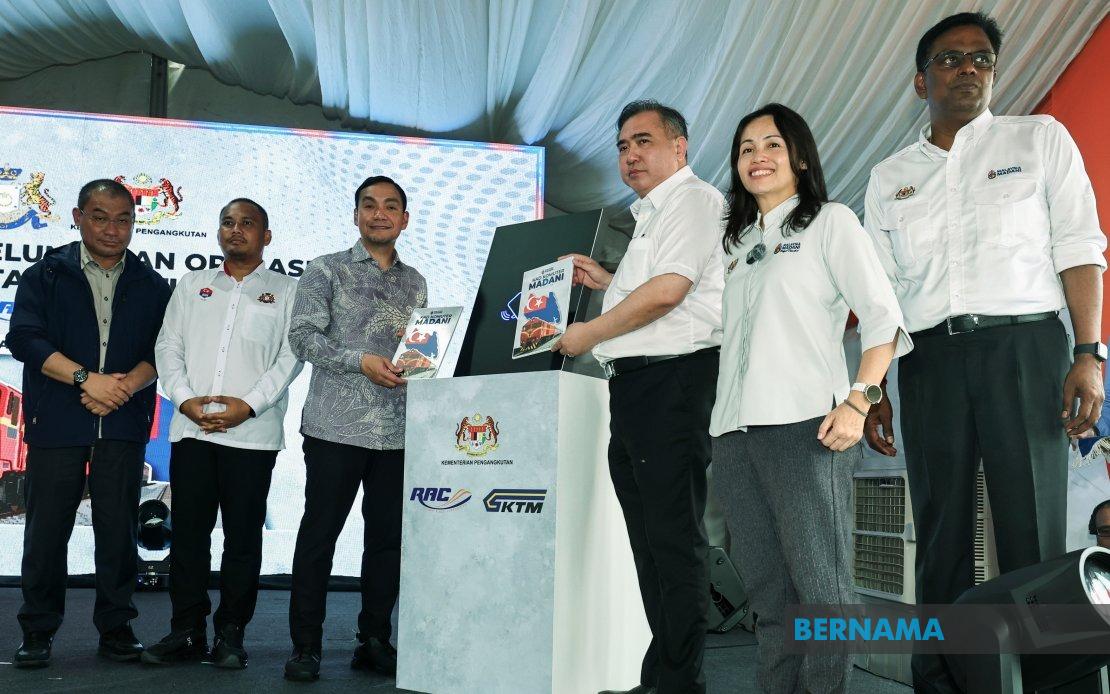
Johor Menteri Besar Datuk Seri Onn Hafiz Ghazi has flagged the Elevated Autonomous Rapid Transit (E-ART) project as a cornerstone measure to avert severe congestion in Johor Bahru when cross-border passenger volumes surge following the launch of the Johor Bahru-Singapore Rapid Transit System (RTS) Link next year. Speaking at the inauguration of the Southern Shuttle train service at KTM Kulai Station, Onn Hafiz underscored that the E-ART initiative represents a strategic, long-term investment essential to bolster the city's transport infrastructure and accommodate anticipated increases in commuter demand once the RTS Link becomes operational.
The Menteri Besar's remarks come against the backdrop of mounting transport pressures in Johor Bahru, a sprawling metropolitan area home to approximately 1.8 million residents—a population figure nearly equivalent to the entire state of Penang. This demographic scale, combined with the city's role as Malaysia's primary international gateway serving high volumes of cross-border traffic, underscores the urgent need for a robust, multi-modal public transport ecosystem capable of distributing passenger flows efficiently across the urban landscape.
While the state government has already rolled out immediate and intermediate interventions—including enhanced Park & Ride facilities and sophisticated traffic management systems at JB Sentral—Onn Hafiz acknowledged that these stopgap measures offer only temporary relief. The existing road infrastructure, already straining under current usage patterns, would face exponential pressure once the RTS Link begins shuttling thousands of additional commuters daily between Johor Bahru and Singapore. Without complementary capacity-building initiatives, the anticipated surge in cross-border movement threatens to overwhelm conventional traffic arteries and negate the accessibility gains delivered by the new transit link.
The E-ART project addresses this infrastructure gap by introducing an elevated, driverless transit system designed to move passengers swiftly above conventional street-level congestion. By establishing a separate transportation corridor independent of road networks, the E-ART would create an alternative high-capacity channel for distributing the passenger influx that the RTS Link is expected to generate. This dual-pronged approach—combining cross-border rail connectivity with internal city mobility—reflects a coordinated strategy to prevent the paradoxical outcome of building a major transport facility only to have its effectiveness diminished by surrounding congestion.
For Malaysian readers, the E-ART initiative carries broader implications beyond Johor Bahru's borders. The project exemplifies how regional transport integration with Singapore necessitates complementary domestic infrastructure investments. Without the E-ART, the RTS Link risks becoming a bottleneck generator rather than a congestion reliever, as international passengers would still depend on road-based transport to reach their final destinations within the city. The project thus represents a test case for how Malaysia manages the transport externalities of its most economically vibrant border region.
Onn Hafiz's emphasis on federal intervention and swift execution reflects frustration with the pace of large-scale infrastructure projects in Malaysia. By framing the E-ART as a tangible federal contribution directly benefiting Johor residents, the Menteri Besar sought to reframe federal responsibility for regional transport planning. This political messaging—linking infrastructure delivery to measurable improvements in daily quality of life—indicates the weight both state and federal authorities now attach to solving Johor Bahru's mobility crisis before international passenger flows stress the system beyond capacity.
The timeline for the RTS Link's commencement next year creates urgency around E-ART implementation. Unlike conventional rail infrastructure requiring years of planning and construction, any delay in advancing the E-ART project would mean the city faces the full congestion impact of RTS operations without benefit of the mitigating autonomous transit system. This synchronization challenge demands that federal and state entities accelerate the E-ART's development pipeline to ensure operational readiness coincides with or precedes the RTS Link launch.
From a Southeast Asian perspective, Malaysia's approach to managing cross-border transport integration offers instructive lessons. The RTS Link represents the region's most ambitious urban rail connection spanning national boundaries, creating unprecedented mobility integration between two major cities. However, transportation planners across the region now recognize through the Johor Bahru case that international connectivity requires equally sophisticated domestic transport solutions. Cities throughout Southeast Asia contemplating similar cross-border projects would benefit from Malaysia's experience in recognizing that external links must be accompanied by proportionate internal capacity increases.
The convergence of these infrastructure projects—the RTS Link externally and the E-ART internally—shapes Johor Bahru's economic trajectory over the coming decade. Successful implementation of both systems would position the city as a regionally competitive transport hub capable of handling integrated cross-border and intra-city mobility demands. Conversely, failure to deliver the E-ART alongside RTS operations risks reinforcing perceptions of planning inadequacy and might discourage further cross-border investment or corporate relocation decisions by companies seeking efficient worker mobility.
Onn Hafiz's explicit call for accelerating the E-ART project signals that state leadership has recognized this infrastructure gap cannot be addressed through conventional traffic management alone. The willingness to advocate for major new transport systems demonstrates political commitment to solving what has become Johor Bahru's defining policy challenge. Transport Minister Anthony Loke's presence at the Southern Shuttle launch, alongside Onn Hafiz, suggests federal and state alignment on the importance of the E-ART initiative, though translating this consensus into rapid project execution remains the critical test ahead.