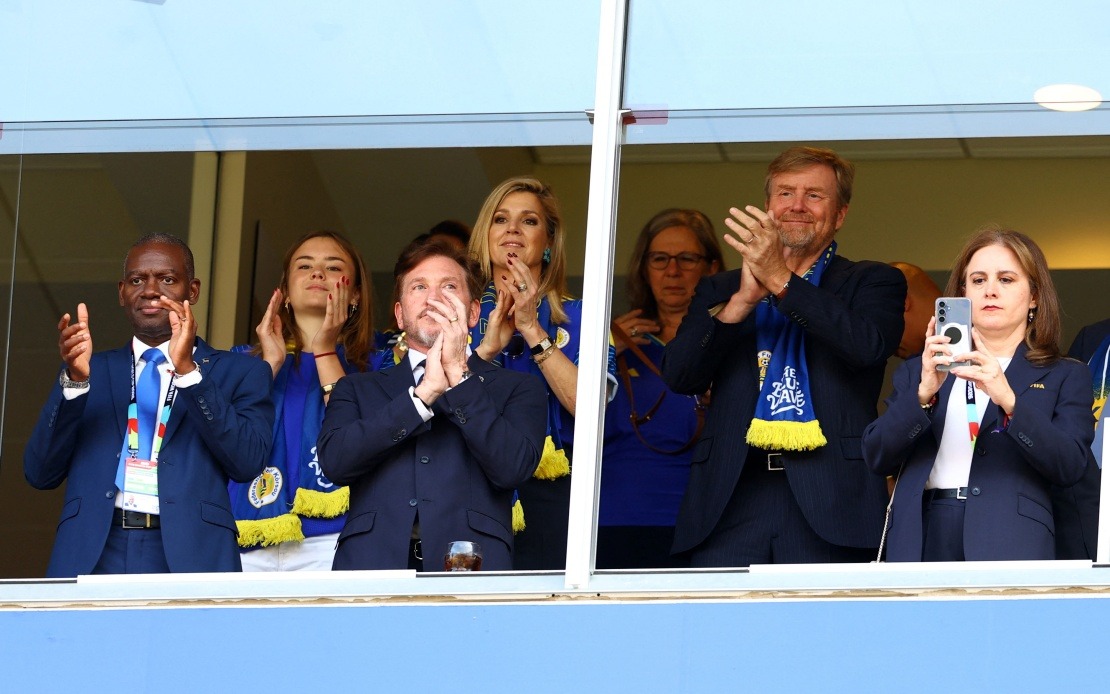
King Willem-Alexander and Queen Máxima of the Netherlands seized an unusual World Cup opportunity on Saturday, attending two matches separated by several hours and hundreds of kilometres to support the Dutch national team and Curaçao in a remarkable display of royal commitment to football. The couple's ambitious itinerary reflected the unique constitutional relationship between the Netherlands and its constituent countries within the kingdom, with the 56-year-old monarch serving as head of state for both nations competing in the tournament.
The royal pair began their day in Houston, where they witnessed the Netherlands deliver a dominant performance against Sweden, securing a commanding 5-1 victory that substantially advanced their prospects of advancing from the group stage. Demonstrating their allegiance, they dressed in the traditional orange colours associated with the Dutch national team, a visual affirmation of support that resonated throughout the stadium as their subjects took control of the match. This emphatic result positioned the Netherlands favourably ahead of their final group fixture against Tunisia, where a positive outcome would virtually guarantee their progression to the knockout rounds.
Several hours later, the monarchs embarked on a journey to Kansas City, where Curaçao was preparing to face Ecuador in a Group B encounter with significant implications for the Caribbean side's tournament hopes. The timing and geographical separation between the two stadiums required meticulous planning and coordination, yet the royals demonstrated their commitment to acknowledging both nations within their realm. Upon arriving in Kansas City, they exchanged their orange attire for Curaçao's distinctive blue kit, a symbolic gesture that underscored their impartiality and genuine support for both teams.
Curaçao's encounter with Ecuador yielded a surprise result, with neither team able to break the deadlock in a tightly contested match that ended 0-0. This point proved valuable for the Caribbean islanders' qualification ambitions, though they recognised that a subsequent victory against Ivory Coast would be essential to secure passage to the knockout stages. The draw represented a creditable outcome for an underdog nation competing against more established footballing nations, and the presence of the royal couple in the stadium elevated the occasion for the team and their supporters.
Following the final whistle at the Kansas City venue, filmed evidence captured the warm celebrations that unfolded in the dressing room, where King Willem-Alexander and Queen Máxima danced and mingled with the Curaçao squad. These images, distributed by the Curaçao Football Association, demonstrated the personal connection between the royals and the team, transcending the formality typically associated with official state functions. The impromptu celebration illustrated how sporting moments can forge genuine human connections, breaking down hierarchical boundaries that might otherwise characterise formal royal engagements.
During an interview with a broadcaster, the King articulated his enthusiasm for the unusual circumstances facing the Dutch monarchy during this tournament. He remarked that the World Cup held special significance precisely because it provided the opportunity to support two nations representing the kingdom simultaneously, effectively doubling the number of teams worthy of royal patronage and national pride. This observation reflected the sometimes overlooked reality that the Netherlands comprises multiple constituent countries, each with their own identity while remaining part of the broader Dutch kingdom, a constitutional arrangement that occasionally produces precisely these kinds of sporting occasions.
Willem-Alexander further expressed his hope that both the Netherlands and Curaçao would progress as far as possible through the tournament, demonstrating evenhanded support for each nation's aspirations. Such impartial backing, while diplomatically appropriate, also reflects the genuine affection the monarch holds for both his subjects, irrespective of their geographical location or cultural background. The King's willingness to travel such distances in a single day underscored the importance he assigns to these teams and the communities they represent within his realm.
The royal couple's tournament engagement extended beyond Saturday's double-header. Earlier in the week, Willem-Alexander and Queen Máxima had attended the Netherlands' first group match, a 2-2 draw against Japan, an encounter made particularly significant by the parallel attendance of Japan's Emperor Naruhito and Empress Masako. That meeting occurred whilst the Japanese imperial couple were undertaking an official state visit to the Netherlands, adding a further layer of diplomatic importance to what might otherwise have been a routine sporting engagement. The convergence of two reigning imperial and royal couples at a World Cup fixture provided a rare moment where international relations, state protocol, and sporting passion intersected.
The Netherlands' dominant victory over Sweden positioned them as genuine contenders for advancement from their group, with their five-goal haul demonstrating attacking prowess and defensive solidity. The Swedish side's inability to contain the Dutch offensive threat suggested vulnerability that other group opponents might attempt to exploit. For the Dutch team, this performance provided momentum and confidence heading into their remaining matches, while also validating the royal family's investment in supporting the squad both symbolically and through their physical presence at the stadium.
Curaçao's situation presented a more precarious pathway to the knockout stages. The draw against Ecuador, whilst respectable, placed the onus on them to overcome the more fancied Ivory Coast in their final group encounter. However, the support demonstrated by the monarchy, manifested through the King and Queen's attendance and subsequent celebrations, provided psychological encouragement and validation for a team representing an island nation with limited previous World Cup exposure. Such visibility and royal endorsement can prove invaluable for smaller football associations seeking to raise their profile and generate domestic enthusiasm for international competition.

