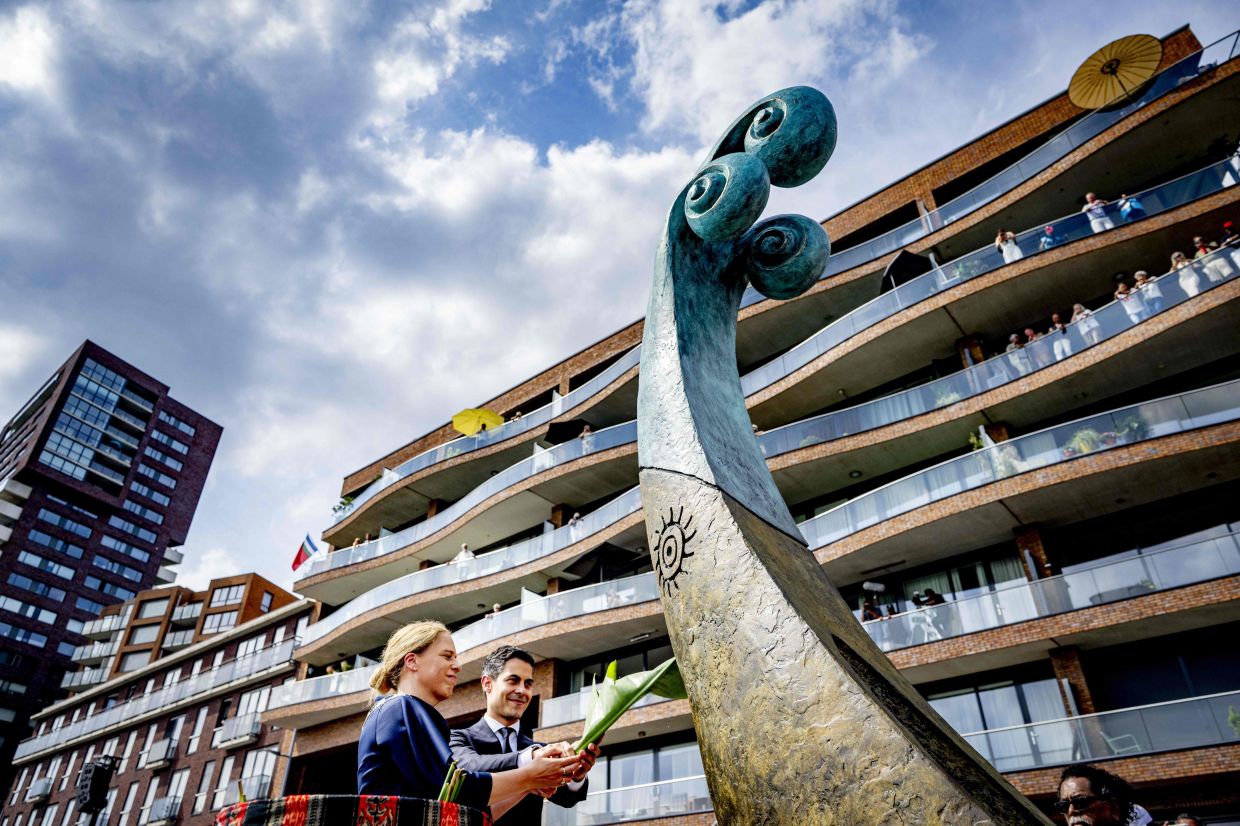
Dutch Prime Minister Rob Jetten delivered a formal state apology on Sunday to members of the Moluccan community, acknowledging generations of mistreatment by the Netherlands in the aftermath of Indonesian independence. Speaking at a solemn ceremony in Rotterdam, Jetten addressed hundreds of Moluccans gathered to witness the unveiling of a monument honouring a deeply painful chapter in both Dutch and Southeast Asian history. The apology represents a significant moment of reckoning for a nation rarely associated with confronting its post-war colonial legacy, particularly regarding its obligations to the indigenous populations that supported its military interests during the struggle for Indonesian sovereignty.
The Moluccans, hailing from the spice islands of eastern Indonesia, held a uniquely complicated position in the independence struggle. As colonial subjects who had served in the Dutch colonial army following World War II, they found themselves trapped between competing national loyalties when Indonesia secured independence in 1949. Many feared reprisals from Indonesian nationalists who viewed them as collaborators with the departing colonial power. The Dutch government, recognising this vulnerability, orchestrated a state-sponsored transfer programme that brought approximately 12,500 Moluccans to the Netherlands under the premise that their stay would be temporary.
The fundamental promise underpinning this arrangement was unambiguous: the Moluccans would remain in the Netherlands only long enough for conditions to stabilise in their homeland, after which they would be repatriated to an independent Moluccan state. This understanding was enshrined in negotiations between Dutch officials and the Indonesian government during the transition period. However, this commitment proved to be merely diplomatic rhetoric, and the Dutch government subsequently abandoned any serious effort to honour its pledge. The promised independent Moluccan state never materialised, and the temporary sojourn transformed into a prolonged, unwanted exile that would span decades.
The material conditions of their reception in the Netherlands starkly contradicted the humanitarian rhetoric that had justified the transfer. Upon arrival, those Moluccans who had served in the colonial army were immediately discharged from military service without ceremony or acknowledgment. Rather than integrating them into civilian Dutch society with government support, authorities systematically housed them in former concentration camps, the very facilities that had been used by Nazi occupiers to detain Jewish populations during World War II. The psychological impact of placing Asian minority refugees in spaces darkened by Holocaust history cannot be overstated, though this aspect received limited contemporary attention.
Despite comprising a significant immigrant population within the Netherlands, the Moluccan community received minimal government effort towards employment or social integration. They were essentially warehoused on the periphery of Dutch society, denied the resources and official support necessary to establish themselves within their adopted country while simultaneously being denied the right to return home. This policy contradiction created a peculiar form of institutional abandonment: they were neither accepted as Dutch citizens with full rights and opportunities, nor were they permitted to reclaim their place in Indonesia. The inadequacy of housing, combined with systematic marginalisation and the official refusal to acknowledge them as permanent residents requiring full integration, created generations of psychological and social trauma.
By the 1970s, younger Moluccans born in exile or brought to the Netherlands as children began expressing their accumulated grievances through increasingly militant means. Second-generation Moluccans, who had no direct memory of their homeland yet remained excluded from full participation in Dutch society, undertook a series of violent actions including hostage-takings and armed demonstrations. These confrontations, while attracting international attention, ultimately failed to move Dutch governments towards meaningful policy change or repatriation efforts. The violence, however, represented not random criminality but rather a desperate assertion of identity and justice by a community that felt thoroughly abandoned by both their nation of origin and their nation of refuge.
The Ulu Kora monument unveiled at the Lloydkade in Rotterdam carries profound symbolic weight, as this location marks the precise spot where the first ships transporting Moluccans arrived in 1951. The monument thus anchors Dutch acknowledgment of Moluccan suffering to the very geography of arrival and false hope. Jetten's presence at the ceremony, his visible emotional engagement, and his carefully chosen language all signal a deliberate governmental choice to elevate this apology to formal state significance rather than treating it as a peripheral historical footnote.
In his address, Jetten enumerated the specific injustices that the Dutch state inflicted through both action and negligence. He apologised explicitly for inadequate reception and housing standards, for the systematic invisibility and abandonment that characterised official policy, for the persistent longing for home that was never allowed resolution, and for the cascading intergenerational trauma that fractured countless families. The specificity of these apologies distinguishes this statement from generic expressions of regret, suggesting that Dutch authorities have genuinely confronted the granular realities of how their policy choices harmed identifiable individuals and communities.
However, Jetten was careful to calibrate expectations, emphasising that an apology, while necessary, cannot retroactively undo historical wrongs or materially alter the present circumstances of Moluccan Netherlanders. This acknowledgment of apology's limitations demonstrates political sophistication; the Dutch government appears to understand that communities bearing the burden of injustice require honest recognition that neither sentiment nor symbolic gestures can fully compensate for seventy years of broken promises and marginalisation. The presence of many Moluccans clutching photographs of deceased relatives underscored the irreplaceable losses that no formal ceremony can address.
For Malaysia and broader Southeast Asia, this Dutch reckoning with its post-colonial obligations carries instructive implications. The Moluccan case demonstrates how independence movements, while successful in securing formal political sovereignty, can leave vulnerable populations stranded across borders with no adequate institutional protections or pathways toward resolution. It illustrates the profound risks that emerge when former colonial powers make temporary arrangements that become permanent through governmental indifference. Malaysia's own post-independence period involved its own population movements and boundary questions; the Dutch experience offers cautionary lessons about the importance of honouring commitments to displaced populations and the persistence of resentment when governments renege on solemn promises.
The apology also reflects a broader European trend toward acknowledging colonial-era injustices, though such reckonings remain selective and often tardily offered. Whether this formal apology will translate into substantive policy changes for Moluccan Netherlanders or serves primarily as symbolic closure remains an open question. Nevertheless, Jetten's statement represents an important recognition that the responsibilities of former colonial powers extend into the post-independence period, and that debts owed to populations displaced by imperial transitions do not expire simply because decades have elapsed. The gathering in Rotterdam thus marks not a conclusion but potentially a beginning, as the Dutch government acknowledges debts it cannot fully repay but must at least explicitly own.

