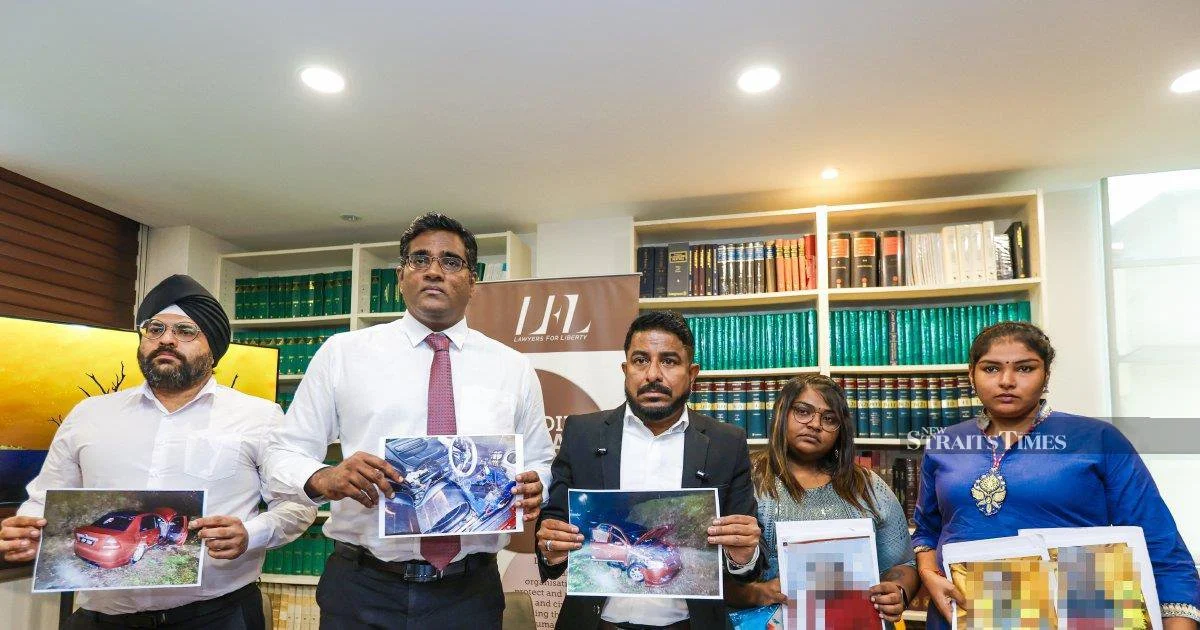
The bereaved families of three men who died in a police shooting incident in Durian Tunggal, Melaka, have escalated their pursuit of accountability by formally requesting the Malaysian Anti-Corruption Commission to investigate what they contend is a cover-up surrounding the case. The families' move represents a significant shift in strategy, moving beyond initial complaints to implicate institutional mishandling and suggesting possible corruption in how the case has been managed since the fatal confrontation.
The incident, which resulted in the deaths of the three individuals at the hands of police officers, has remained a sensitive matter in Melaka, drawing scrutiny from civil society groups and raising serious questions about police protocols during armed encounters. The families have grown increasingly vocal about their belief that the official narrative does not adequately explain the circumstances surrounding the shooting, and they now seek independent oversight from Malaysia's premier anti-corruption body to uncover what they believe are inconsistencies in the official account.
The decision to involve MACC signals that the families view the matter as extending beyond simple questions about the shooting itself. Their grievance appears centred on how the case has been investigated, documented, and reported by relevant authorities in the aftermath of the deaths. This approach reflects growing awareness among Malaysians that institutional accountability often requires multi-layered investigation, particularly when public trust in initial findings proves wanting.
For Southeast Asian observers, the case underscores persistent concerns about police conduct and the mechanisms available to citizens seeking redress when they believe authorities have acted improperly. Malaysia's institutional framework includes MACC, which has been increasingly called upon to examine allegations spanning from corruption to institutional misconduct, reflecting evolving expectations about transparency in law enforcement.
The families' escalation also comes amid broader regional and international attention to police use of force. Human rights organisations have consistently flagged concerning patterns in how some law enforcement agencies conduct and subsequently justify armed operations, particularly in situations involving marginalised communities or contested circumstances. The Durian Tunggal case has become emblematic of these broader concerns within Malaysian civil society.
Institutional responses to such incidents vary significantly across Southeast Asia. In Malaysia, where MACC has expanded its mandate beyond traditional corruption investigations, the families are leveraging an available mechanism to demand greater scrutiny. However, the effectiveness of such investigations depends heavily on genuine independence, adequate resources, and political will to pursue findings wherever they lead, factors that remain inconsistent across the region.
The families' formal demand represents a critical juncture in how the case will be perceived and handled going forward. Should MACC accept the referral, it would signal official willingness to examine not merely the shooting incident itself but the institutional processes that followed, including investigation procedures, information disclosure, and the chain of accountability within relevant agencies. This distinction matters considerably for establishing systemic safeguards.
For Malaysian society, the case reflects deeper questions about transparency in security force operations and the adequacy of existing mechanisms for public accountability. Police shootings are inherently sensitive, requiring meticulous documentation and impartial investigation to maintain public confidence. When families express doubt about official explanations, their resort to independent investigation bodies suggests erosion of trust in primary investigative channels.
The involvement of MACC could prove instructive for establishing precedent regarding institutional oversight of law enforcement conduct. If the commission determines that misconduct occurred in case handling, it may influence how future sensitive incidents are managed and investigated, potentially strengthening procedural safeguards and transparency standards across Malaysian law enforcement agencies.
Regionally, Malaysia's approach to such cases is observed by neighbouring countries grappling with similar challenges around police accountability. The willingness of authorities to allow independent investigation and act on findings sends important signals about institutional maturity and commitment to rule of law principles that extend beyond electoral cycles and political considerations.
The families' persistent advocacy also demonstrates the crucial role played by bereaved relatives in holding state institutions accountable. In many Southeast Asian contexts, families pursuing justice face considerable obstacles, from resource constraints to institutional resistance. The Durian Tunggal families' determination to escalate their demands through available legal and administrative channels reflects both their conviction and their understanding that systemic accountability requires sustained pressure and strategic use of institutional mechanisms.
Moving forward, the response from MACC and relevant authorities will provide important indicators of Malaysia's genuine commitment to transparent investigation of sensitive security force incidents. The case serves as a test of whether independent anti-corruption bodies can effectively examine institutional conduct beyond traditional financial misappropriation, and whether Malaysian society can establish meaningful accountability mechanisms that command public confidence and deter future misconduct.