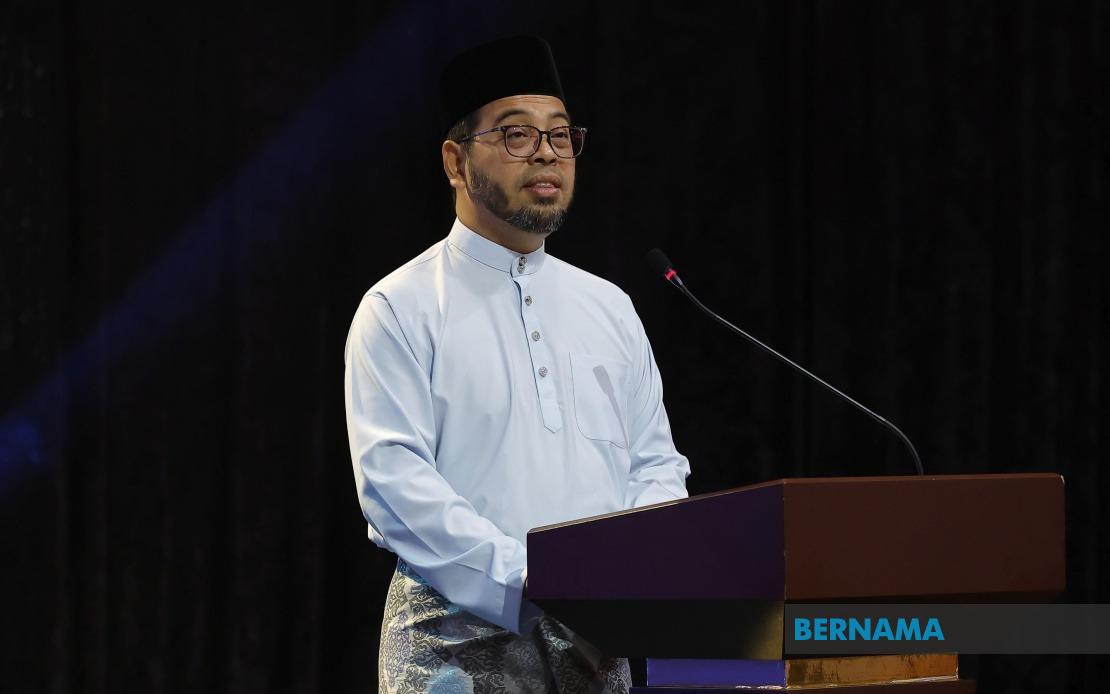
The Minister in the Prime Minister's Department (Religious Affairs), Dr Zulkifli Hasan, has issued a call for Malaysian Muslims to move beyond existing divisions and resolve lingering tensions that fragment community strength. Speaking at the national-level Maal Hijrah 1448H/2026M celebration held at Putra Mosque in Putrajaya on June 17, the minister emphasised that overcoming such rifts is essential for the ummah to withstand the mounting complexities of the contemporary global landscape. The ceremony, themed "MADANI Dihayati, Ummah Diberkati", drew prominent attendance including Sultan Nazrin Shah of Perak and Deputy Prime Minister Datuk Seri Fadillah Yusof, underscoring the occasion's significance within Malaysia's religious and political calendar.
Dr Zulkifli articulated a vision of profound social progress that demands foundational change at the individual level. According to his remarks, transformation across intellectual, emotional, and moral dimensions must occur within each person before meaningful collective advancement can materialise. This framing suggests that institutional reforms and policy initiatives, while necessary, remain insufficient without corresponding shifts in personal character and spiritual awareness among members of society. The minister's emphasis on internal development reflects a holistic understanding of nation-building that extends beyond material or economic considerations.
Communal solidarity, the minister contended, yields tangible benefits for all constituents while fragmentation brings suffering and weakens national resilience. This argument carries particular resonance in Malaysia's multicultural context, where religious cohesion among Muslims remains a priority area for policymakers and civic leaders. By positioning unity as both a moral imperative and a pragmatic necessity, Dr Zulkifli linked spiritual principles to concrete national interests, a rhetorical strategy designed to motivate broad-based participation in community-strengthening efforts.
The timing of this appeal reflects genuine apprehension about Malaysia's vulnerability to global economic disruptions and uncertainties. Supply chain fragmentation and financial instability affecting international markets have created headwinds for the Malaysian economy, generating domestic anxieties about prosperity and livelihood security. The minister implicitly suggested that social cohesion and mutual support systems offer buffers against external shocks, making community unity not merely a religious or cultural good but an economic asset in increasingly volatile times. This framing connects spiritual and material welfare in ways likely to resonate across diverse segments of the Muslim population.
Dr Zulkifli specifically appealed to Malaysians to sustain backing for governmental programmes aimed at safeguarding Muslim interests and ensuring Islamic principles remain vibrant within the nation's institutional and social fabric. This request for continued support came amid broader discussions about government effectiveness and legitimacy—themes of persistent importance in Malaysian political discourse. By tying community unity to backing for official initiatives, the minister positioned religious harmony as mutually reinforcing with state capacity and policy implementation.
The minister offered a reframed understanding of hijrah that transcends the historical Islamic concept of physical migration. Rather than confining hijrah to a past event, he presented it as an ongoing spiritual and behavioural journey involving the conscious abandonment of destructive practices and the deliberate cultivation of virtues that bind communities together. This contemporary interpretation makes the classical Islamic concept relevant to modern Malaysians navigating complex social environments and cultural transitions. The hijrah framework thus becomes a lens through which Muslims can evaluate personal choices and collective responsibilities.
Dr Zulkifli asserted that strengthening communal bonds creates the conditions necessary for Islamic values to be promoted and upheld more successfully across society. This perspective suggests that institutional efforts to advance Islamic principles will prove more effective when they operate within a context of genuine social unity rather than fragmentation. The causal relationship he outlined—moving from unity to efficacy in value promotion—reflects recognition that top-down policy instruments have limited impact without grassroots support and cohesion.
Importantly, the minister acknowledged that citizens of diverse beliefs and backgrounds share fundamental responsibilities regardless of their religious affiliations. This inclusive framing, while emphasising Muslim unity, simultaneously recognised the multi-religious character of Malaysian society and the shared stakes all communities hold in maintaining peaceful coexistence, institutional stability, and economic prosperity. Such rhetorical balance proves important in Malaysia's delicate constitutional framework, which grants Islam special status while guaranteeing religious freedom for other communities.
The award presentations during the ceremony highlighted Malaysia's engagement with global Islamic intellectual and spiritual leadership. The National Tokoh Maal Hijrah award, bestowed upon International Islamic University Malaysia Rector Prof Emeritus Datuk Dr Osman Bakar, recognised significant contributions to Islamic knowledge and education within the Malaysian context. Concurrently, the International Tokoh Maal Hijrah award conferred upon Moroccan scholar Dr Ahmad Al-Raysuni acknowledged the transnational dimensions of Islamic scholarship and the value of cross-cultural intellectual exchange within the global Muslim community. These recognitions positioned Malaysia as both a participant in international Islamic discourse and a centre of Islamic thought and practice.