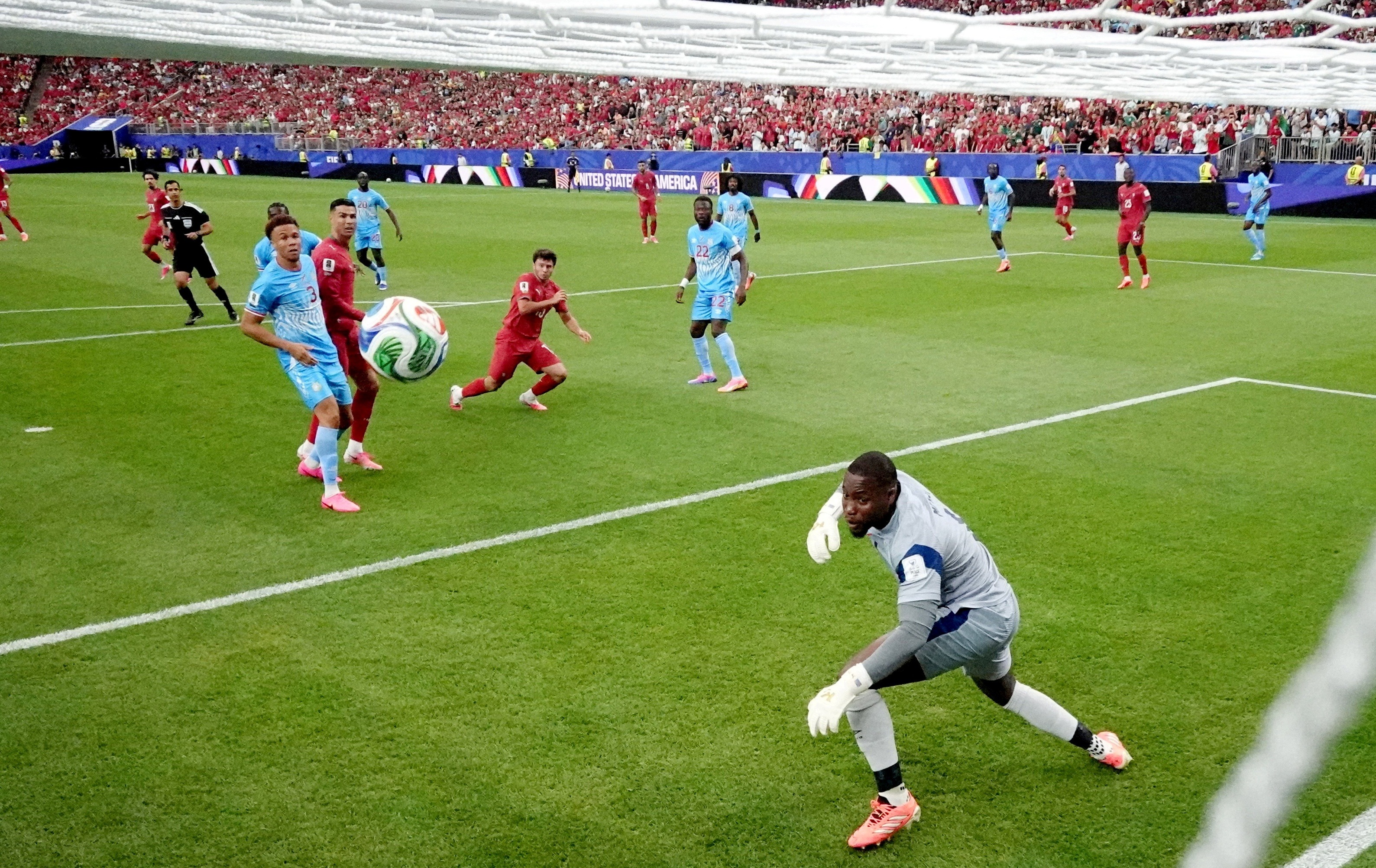
In a stunning display of resilience against continental heavyweights, the Democratic Republic of the Congo defied expectations by holding Portugal to a 1-1 draw in their Group K fixture of the 2026 FIFA World Cup on Wednesday at Houston Stadium. The result marks a watershed moment for the Central African nation, which had endured five decades without a single point in World Cup competition since their inaugural tournament appearance in 1974, when they competed under the name Zaire. For DR Congo's travelling supporters and football-starved public back home, the parity achieved against one of Europe's most accomplished sides represents vindication of their national team's development trajectory.
Portugal struck first through the clinical finishing of midfielder Joao Neves, who opened the scoring in the sixth minute with a well-directed header capitalising on a precisely delivered cross from winger Pedro Neto down the left flank. The early goal appeared to set the stage for a demonstration of European football superiority, with the Portuguese possession-dominant approach favouring a side accustomed to controlling matches against less technically proficient opponents. However, the anticipated cascade of further Portuguese goals failed to materialise as the team, despite sustained pressure throughout the opening period, struggled to translate territorial advantage into clear-cut opportunities.
The momentum shift came unexpectedly in the dying stages of the first half when DR Congo's Yoane Wissa rose highest to direct a powerful header past Portugal goalkeeper Diogo Costa in the 45th minute of added time. This equaliser carried profound symbolic weight—not merely as a goal that levelled the scoreline, but as a break in a historical curse that had haunted the nation's World Cup participation. Since their debut tournament appearance 52 years earlier, DR Congo had never managed to put the ball in the back of the net at football's most prestigious competition, a statistic that underscored the gulf between aspiring nations and established football powers.
The second half unfolded as a more balanced contest, with both teams seeking breakthrough moments but neither proving decisive in the final third. Portugal's attacking forays, frequently orchestrated through Cristiano Ronaldo's creative contributions, failed to penetrate the DR Congo defensive structure with the precision needed to reclaim the lead. Ronaldo's involvement in the match represented a focal point for Portuguese hopes, with the veteran forward's experience and goal-scoring prowess traditionally serving as a guarantee of success against teams with modest pedigree in international football. Yet on this occasion, even his presence could not produce the decisive moment the Portuguese camp desperately sought.
The final whistle saw an inversion of typical World Cup script—the historically dominant European side left frustrated by an inability to overcome persistent resistance, while the African challenger emerged with tangible evidence of progress. DR Congo's supporters erupted in celebration as the magnitude of the achievement registered, recognising that their team had not merely competed respectably but had extracted a genuine reward through tactical discipline and clinical finishing at a crucial juncture. The narrative of underdog triumph resonated deeply for a nation where football serves as a cultural unifying force and an outlet for collective aspiration.
The mathematical consequences of the draw placed DR Congo temporarily atop Group K, a position of considerable psychological importance early in the tournament. Portugal's second-place standing, whilst still representing a respectable position, carried the sting of dropped points against an opponent ranked considerably lower in the FIFA hierarchy. In World Cup group dynamics, such early draws can prove consequential when final placings are determined by narrow goal differences or head-to-head records. Both teams now face critical matches ahead that will determine advancement prospects, yet the psychological terrain has shifted fundamentally.
For Southeast Asian observers and Malaysian football followers, the DR Congo result carries broader implications regarding tournament unpredictability and the narrowing technical gaps between established and emerging football nations. The draw illustrates how disciplined defensive organisation, tactical coherence, and clinical conversion of limited opportunities can neutralise even experienced opponents. In regional context, this resonates with ongoing efforts across ASEAN to develop competitive national teams capable of challenging traditionally dominant sides. The performance suggests that with proper preparation, institutional investment, and tactical acumen, nations without deep historical World Cup pedigree can achieve competitive outcomes against more celebrated opponents.
The encounter also demonstrated Portugal's vulnerabilities despite their strong squad composition and pedigree. The Portuguese struggled with defensive solidity in transition moments and proved unable to dominate possession into decisive advantage—weaknesses that more ruthless opponents in their remaining group fixtures may seek to exploit. Conversely, DR Congo's organisational structure and composed execution when chances arose suggest a team environment of growing sophistication, potentially indicating trajectory improvement within African football more broadly. The result suggests that the 2026 tournament may prove more unpredictable than traditional power-based hierarchies would suggest, offering hope to nations embarking on competitive development pathways. For DR Congo, the point secured represents not merely a statistic but a definitive marker of progress and a psychological foundation upon which continued tournament ambitions can be constructed.