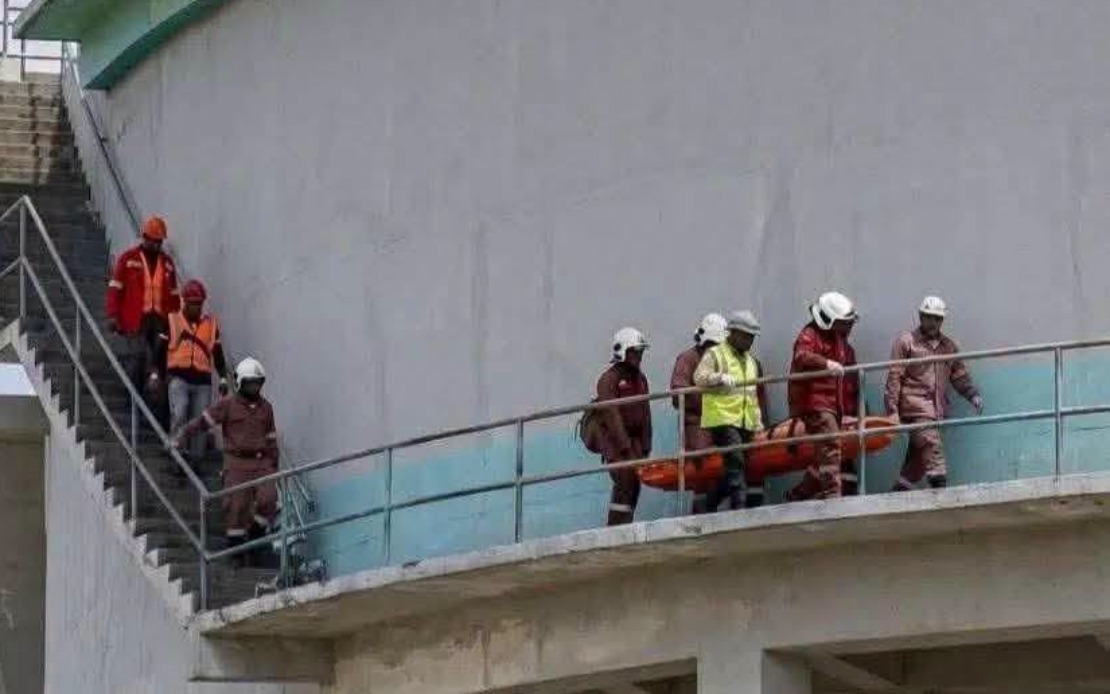
A fatal workplace accident involving an industrial trainee at a water tank cleaning operation in Sungai Buloh has triggered a formal investigation by Malaysia's Department of Occupational Safety and Health. The incident occurred on June 16 at Menara Saujana Perdana 1, a commercial facility in Selangor where routine maintenance work was underway. DOSH director-general Hazlina Yon confirmed that investigators from the department's Selangor office have commenced a comprehensive examination of the circumstances surrounding the death, with the accident scene immediately cordoned off to preserve evidence.
The investigation is being conducted under the framework of Sections 15, 17 and 18 of the Occupational Safety and Health Act 1994, which establish the legal obligations of employers, self-employed individuals, and other responsible parties regarding worker protection and public safety at work sites. Hazlina emphasised that the inquiry extends beyond the immediate cause of death to encompass a broader assessment of whether applicable safety regulations were followed during the execution of the work. Investigators are systematically collecting statements from witnesses present at the site, building a comprehensive factual record that will inform any subsequent enforcement decisions.
The DOSH director-general has explicitly warned that regulatory action will follow if the investigation uncovers breaches of occupational safety legislation. This signals that the department intends not merely to document what happened, but to hold accountable any parties found responsible for negligence or violations. Such enforcement actions can range from formal warnings and improvement notices to prosecution and substantial penalties, depending on the severity of breaches identified and their causal relationship to the fatality.
Confined space work represents one of the most hazardous categories of industrial activity, and the Sungai Buloh incident underscores the risks involved when proper precautions are not meticulously observed. Water tank cleaning specifically creates multiple simultaneous dangers: workers face potential exposure to toxic residues or gases, oxygen depletion in enclosed environments, falls, and complications from sudden medical emergencies where rescue becomes extremely difficult. Hazlina's public statement emphasised that all confined space work must be preceded by comprehensive risk assessments, formal permit systems, implementation of control measures, and strict adherence to established safe work procedures before any worker enters such an environment.
For industrial trainees and new workers, the regulatory framework places particular responsibility on employers to provide thorough occupational safety and health training tailored to the specific tasks they will perform. This training requirement is not merely a compliance checkbox but a fundamental protection mechanism designed to ensure that inexperienced personnel understand the hazards they face and the procedures they must follow. Hazlina stressed that competent supervision is equally critical, particularly for workers unfamiliar with industrial operations or the specific workplace environment. Without adequate instruction and oversight, even conscientious trainees may inadvertently place themselves in danger through gaps in their understanding or unfamiliarity with emergency protocols.
The incident reflects broader concerns about workplace safety standards in Malaysia's industrial maintenance sector. Water tank cleaning and similar confined space operations are frequently contracted to third-party service providers, creating complex accountability structures where primary responsibility may be diffused across multiple entities. Employers who engage such contractors bear ultimate responsibility for ensuring that all work is conducted safely, yet coordination failures between principal contractors and their subcontractors remain a recurrent problem. The presence of an industrial trainee at such a hazardous site raises further questions about whether appropriate supervision hierarchies were established and whether the trainee's involvement in the specific task was properly justified given their experience level.
The regulatory environment governing confined space work in Malaysia has evolved significantly following previous fatal incidents, with DOSH issuing increasingly detailed guidance on permit systems, atmospheric testing, rescue provisions, and worker competency requirements. Despite these regulatory advances, fatal incidents continue to occur, suggesting that knowledge of regulations does not automatically translate into consistent workplace practice. Compliance remains inconsistent across industrial sectors, with smaller operations and contract workers particularly vulnerable due to resource constraints or pressure to minimise safety expenditures. The Sungai Buloh case will likely generate renewed scrutiny of how confined space permits are issued and monitored, and whether facilities management companies adequately assess contractor competency before awarding safety-critical contracts.
For Malaysian employers across all sectors, this investigation carries immediate implications regarding their legal and moral obligations. Hazlina's statement functioned partly as a compliance reminder, partly as a warning. Facilities managers, building owners, and maintenance contractors should conduct immediate audits of their confined space procedures to identify potential gaps between documented policies and actual practice. Risk assessment documentation should be reviewed to ensure it addresses all identified hazards comprehensively. Competency verification systems for supervisors and workers should be validated to confirm that personnel genuinely possess the knowledge and experience required for their assigned responsibilities.
The broader Southeast Asian context reveals that confined space fatalities remain disturbingly common across the region, often concentrated in developing industrial areas where regulatory enforcement is sporadic and worker awareness is limited. Malaysia's regulatory framework is comparatively rigorous, yet enforcement remains inconsistent, particularly for smaller operations or informal work arrangements. The Sungai Buloh fatality demonstrates that size or apparent routine nature of work provides no immunity from serious consequences. A water tank cleaning operation—routine maintenance work that many facilities undertake—resulted in loss of life, suggesting that complacency and assumption of minimal risk are dangerous attitudes.
An additional dimension concerns the role of industrial trainees within the workplace safety ecosystem. Traineeships are essential for developing skilled workers and introducing young people to employment, yet trainees occupy a vulnerable position because they simultaneously lack experience and may feel pressure to comply with instructions without questioning safety protocols. Employers must recognize that placing trainees in high-risk environments like confined spaces represents a significant decision requiring careful consideration of alternatives, enhanced supervision, and explicit confirmation that the trainee has received comprehensive training addressing the specific hazards of their assigned task.
As the DOSH investigation proceeds, outcomes will likely influence how enforcement approaches confined space work regulations in coming months. If systemic failures are identified—inadequate permits, insufficient atmospheric testing, missing rescue equipment, or inadequate worker training—the department may intensify regulatory scrutiny across similar operations. Conversely, if the investigation reveals isolated procedural lapses by individual companies, enforcement may focus on those specific entities. Either way, the incident serves as a stark reminder that occupational safety is not an abstract compliance obligation but a practical matter directly affecting whether workers return home safely to their families.
Workers, supervisors, and employers in Malaysia's industrial maintenance sector should treat this investigation as a wake-up call to reassess their own confined space operations with fresh urgency. The regulations exist because previous incidents taught the workplace safety community hard lessons about the consequences of inadequate precautions. Compliance with those regulations is fundamentally about preventing the recurrence of tragedy, a motivation that should transcend mere regulatory obligation.

